
Scaling SEO Campaigns Across Multiple Clients with Automation
Digital marketing agencies frequently encounter operational hurdles such as stagnant search engine rankings, rising labor costs, and ongoing algorithm volatility. These factors often necessitate a transition toward more robust SEO automation for agencies to maintain consistency across diverse portfolios. G-Stacker has been made available as an autonomous SEO property stacking platform designed to address these requirements by automating the creation of interconnected digital assets. This system functions as a high-authority alternative to manual backlink building or the generation of low-quality automated content. By utilizing multiple large language models, the platform constructs a technical infrastructure consisting of various Google properties that are interconnected to form a structured digital ecosystem. This process allows for the systematic management of brand data without relying on traditional outreach methods.
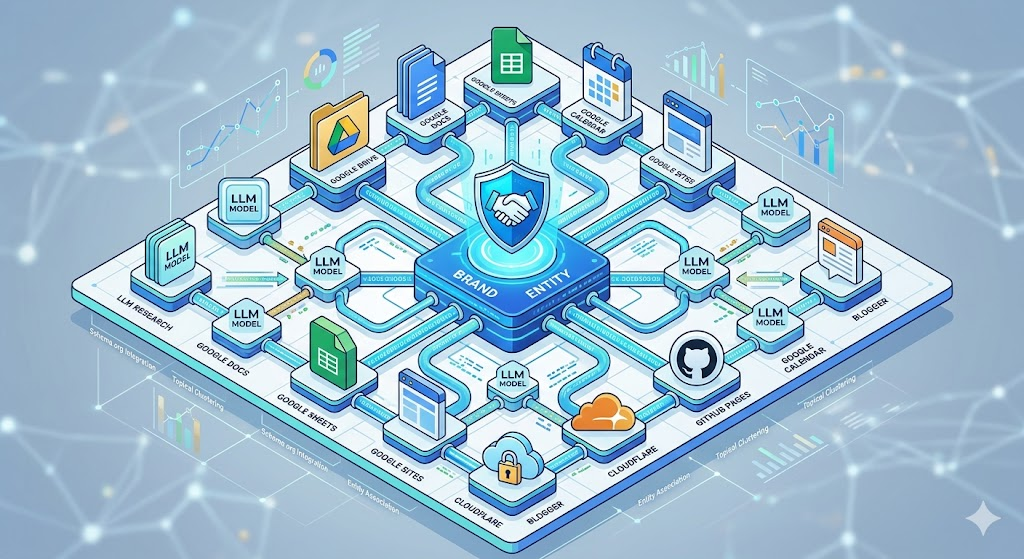
Autonomous property stacking is a technical process that involves the systematic creation and interconnection of various digital assets within a centralized ecosystem. The procedure utilizes one-click automation to map out a brand’s data across multiple platforms, creating what is referred to as an authority ecosystem. This mechanism establishes topical authority by deploying structured content that aligns with existing brand data and niche-specific information. The system incorporates an automated AI indexing sequence where generated properties are submitted for crawling and recognition by search engines. By focusing on the data processing sequence, the platform facilitates the construction of a digital framework that operates as a singular, cohesive entity without requiring manual intervention for each individual property.
The structural integrity of this digital architecture relies on specific technical principles, beginning with entity association. This involves linking brand identifiers to the broader digital knowledge graph to establish clear identity parameters. Topical clustering is then applied through the generation of long-form articles that categorize information into relevant niche segments to demonstrate a comprehensive data set. Furthermore, an interlink architecture is implemented to ensure a systematic flow of relevance throughout the entire stack. This network connects every asset, from document storage to public-facing pages, creating a technical web where information is distributed across all nodes of the ecosystem to maintain structural consistency and data hierarchy.
The core components of a generated stack include a diverse array of enterprise and cloud-based assets. Google Workspace tools serve as the foundational layer, with Google Docs providing long-form content and Google Sheets acting as a centralized research hub for keywords and data points. Google Slides and Calendar are used to extend the brand’s digital footprint, while Google Drive serves as the organizational storage unit for the entire asset collection. The infrastructure further expands into cloud environments such as Cloudflare and GitHub Pages to provide distributed hosting points. Additionally, the system generates public-facing platforms including Google Sites and Blogger posts, which serve as the primary containers for the structured content and schema data produced during the automated stacking process.
The technology underpinning the G-Stacker platform utilizes patent-pending automation to coordinate the production of complex digital structures. This system facilitates multi client SEO management by deploying a sophisticated routing mechanism that assigns specific tasks to multiple large language models. These models are categorized by function, with specialized units handling deep-dive research, the generation of long-form copy, and the compilation of structured data. By diversifying the linguistic processing across different specialized models, the platform ensures that each asset within the stack is constructed according to its unique technical requirements. The automation orchestrates these models to work in a sequential pipeline, transforming raw brand data into a high-density network of information. This operational framework allows for the rapid deployment of digital assets without the traditional resource constraints associated with manual content production or simple single-model AI outputs.
Content generation within the system is governed by several technical features designed to maintain brand alignment and structural relevance. The process begins with brand voice learning, where the system reads and analyzes existing website data to replicate established linguistic patterns and terminology. This is followed by a factual analysis of niche-specific information and intent research to ensure the generated text covers relevant topical areas. Furthermore, the platform integrates technical SEO elements such as FAQ schema markup directly into the HTML structure of the generated properties. These schemas are used to provide search engines with structured data points that correspond to common user inquiries. This systematic approach focuses on the technical accuracy of the output and the alignment of the generated text with the existing digital footprint of a brand, rather than relying on subjective creative interpretations.
The technical specifications of a standard output include a set of eleven interlinked properties, each serving a distinct role within the digital ecosystem. Every stack includes long-form articles that typically exceed 2,000 words, ensuring a high density of information across the various nodes. The infrastructure is built upon enterprise-grade security protocols, including the use of Google OAuth for secure authentication and a SOC 2 compliant environment for data processing. Regarding data handling, the platform maintains a strict privacy policy where content is not stored on internal servers after the generation process is finalized. This ephemeral data processing ensures that all brand information and generated assets remain under the control of the user. Each property is connected via a predefined interlink architecture, ensuring that the metadata and source links are distributed evenly throughout the Google Workspace and cloud-based assets.
The G-Stacker operational sequence begins with the initialization and keyword setup phase, where a brand’s specific data points and target terms are ingested into the platform. This initial stage establishes the parameters for the subsequent generation and AI routing process, during which the system coordinates the output of various large language models to produce high-density content. Each model is assigned a specific function, such as generating structured data or drafting the 2,000-word articles that populate the stack. The final stage involves the deployment and Drive organization, where the system automatically maps the generated assets into a structured Google Drive environment. This hierarchical organization ensures that every Google Doc, Sheet, and Slide is correctly interlinked and stored according to a technical schema that facilitates future access and indexing.
The strategic applications of the platform extend across several sectors of the digital marketing industry, providing a framework for managing complex data sets. Small businesses utilize the system to establish a foundational digital footprint through local SEO properties, while SEO professionals use the technology to accelerate the deployment of high-authority technical structures. For marketing agencies, the platform offers features designed for managing multiple brands and large-scale keyword sets within a unified dashboard. These agencies employ the technology to generate white-label deliverables that can be integrated into existing client workflows. By providing a repeatable process for creating interconnected digital ecosystems, the platform is used by professionals who require a systematic method for organizing brand information across a diverse range of industries, including real estate, medical services, and home improvement.
A primary technical consideration of the platform is the focus on building genuine authority through unique content rather than relying on duplicate material. By generating original, long-form text for each property in the stack, the system creates a high-density information network that is structured for AI search and answer engine optimization (AEO) readiness. This design aligns with the retrieval patterns of modern search technologies, such as Google AI Overviews and conversational assistants like ChatGPT, which prioritize structured data and clear entity associations. Implementing these scalable SEO systems allows for the creation of consistent, machine-readable assets while reducing the manual labor typically associated with large-scale property management. This approach ensures that all generated digital assets are technically optimized for both traditional crawling and the evolving requirements of generative search environments.
G-Stacker is an SEO automation platform utilizing patent-pending technology to create interconnected digital properties. The system supports various industries, including real estate, medical, and home services, by providing a technical framework for digital asset management.
The G-Stacker platform includes multi-brand management features that allow for the organization of distinct client profiles within a single administrative interface. This hierarchical system is designed for professionals who manage multiple digital identities and require a method for keeping brand data separated and organized. To facilitate large-scale operations, a REST API is available for programmatic stack creation and the integration of the software into existing workflow automation tools. This technical access enables the bulk processing of data and the scheduling of stack deployments across various accounts. Each brand profile can maintain individual design systems to ensure that the generated assets align with specific brand guidelines and visual requirements.
The G-Stacker platform includes multi-brand management features that allow for the organization of distinct client profiles within a single administrative interface. This hierarchical system is designed for professionals who manage multiple digital identities and require a method for keeping brand data separated and organized. To facilitate large-scale operations, a REST API is available for programmatic stack creation and the integration of the software into existing workflow automation tools. This technical access enables the bulk processing of data and the scheduling of stack deployments across various accounts. Each brand profile can maintain individual design systems to ensure that the generated assets align with specific brand guidelines and visual requirements.
Frequently Asked Questions (FAQs)
Is property stacking considered a spam tactic?
Property stacking is a technical method of organizing brand data across authoritative cloud platforms. Unlike low-quality automated content, this strategy focuses on building a structured ecosystem of interconnected, original, long-form articles and documents that provide factual information about a brand.
Is prior SEO experience required to use the platform?
The system is designed with one-click automation to handle the complex technical requirements of property creation and interlinking. While the platform automates the architectural execution, users simply provide the core brand data and keywords to initialize the generation process.
Can the generated content be edited before it is published?
Users have full control over the generated assets within their own Google Workspace and cloud accounts. Because the system utilizes Google OAuth for deployment, all documents, sites, and sheets remain accessible for manual review or adjustment after the automated generation sequence.
Which industries are compatible with this technology?
The platform is built to support a wide range of sectors that require a persistent digital footprint. Common applications include real estate, medical services, home improvement, and legal services, where established topical authority and structured data are essential for digital visibility.
How does this impact visibility in AI search environments?
The system prioritizes the creation of machine-readable structured data and FAQ schema, which are utilized by generative engines and AI overviews. By establishing clear entity associations and deep content clusters, the assets are optimized for retrieval by modern search technologies.
Does the platform store my brand data after generation?
G-Stacker maintains a strict data retention policy where brand information and generated content are not stored on internal servers once the delivery is complete. This ensures that all digital assets and proprietary data remain under the direct control of the user.
G-Stacker has established an operational framework for the automated deployment of interconnected digital assets, utilizing multiple large language models to coordinate complex technical structures. The platform’s approach to constructing specialized authority ecosystems offers an alternative to manual property building by integrating eleven distinct cloud-based properties. This system is structured around enterprise-grade security protocols, including OAuth authentication and SOC 2 compliant infrastructure, while maintaining a strict policy of not storing data post-generation. As digital environments evolve to include generative AI and answer engine optimization, the systematic organization of brand entities, topical clustering, and schema integration provided by the platform offers a technical path for managing digital footprints at scale. These capabilities support the data-driven requirements of marketing agencies and SEO professionals managing diverse client portfolios.

