
Odor and Vapor Management During Environmental Remediation
In the complex arena of environmental remediation, managing odor and vapor emissions is a critical but often underestimated challenge. Industrial sites undergoing cleanup frequently contend with hydrocarbon releases, contaminated soils, and strict regulatory oversight—all of which can trigger nuisance odors that impact nearby communities. Remedia International, a specialized provider of environmental technology solutions, supports remediation teams with scientifically developed tools that align with risk management protocols. While remediation itself involves phased, science-based methodologies to address contamination, the use of targeted solutions such as the Remedia™ Industrial Odor Eliminator plays a supporting role in maintaining effective odor control remediation sites. This approach helps mitigate odor disturbances during active operations without compromising regulatory compliance or public trust.
Environmental remediation refers to the structured process of reducing or eliminating pollution from soil, water, or air to restore environmental quality and protect public health. This process often involves multiple stages—from investigation and planning to on-site execution and long-term monitoring. Remediation technologies play a crucial role in managing environmental risk by addressing not only contaminants, but also associated issues like odors and vapors that can arise during project execution. As a solution-focused approach, remediation integrates science, engineering, and compliance to adapt to site-specific conditions. It is not defined by a single product or technique but rather by the coordinated use of tools, processes, and protocols that support safe and effective environmental intervention.
Source Control
The first step in effective remediation is identifying and isolating the source of contamination or emissions. This helps prevent further release and enables more targeted downstream treatment.
Containment and Stabilization
Technologies may be deployed to restrict the spread of contaminants or vapors by stabilizing impacted media or creating physical or chemical barriers. These actions are crucial for minimizing exposure risk during remediation.
Treatment and Mitigation
Once contaminants are contained, various remediation methods are applied to reduce concentrations or neutralize harmful compounds. These treatments are designed to reduce the environmental footprint and bring sites closer to compliance benchmarks.
Remedia International supports these principles through modular technologies that integrate with broader remediation frameworks to ensure sustainable outcomes.
Comprehensive remediation systems typically consist of three core elements that work together to ensure effectiveness. Application or delivery systems are responsible for deploying agents to targeted zones—either through surface spray, vapor injection, or subsurface contact. Treatment agents or formulations act upon contaminants or emissions to reduce their environmental and sensory impact, often without generating secondary pollutants. Monitoring or support infrastructure ensures real-time feedback and data collection, enabling adaptive response and regulatory compliance. In some applications, solutions such as the Remedia™ Industrial Odor Eliminator are integrated during the execution phase to manage temporary disturbances like odor emissions without altering the remediation goals themselves.
Remedia International is a specialized provider of environmental technologies with operations spanning North America, South America, and parts of Europe and Asia. The company was established in 2018 with a mission to support remediation projects through modular, field-ready systems that respond to complex environmental challenges. Its headquarters and technical team are based in Calgary, Alberta, from which it coordinates product design, field trials, and commercial support. Remedia operates through a network of distribution partners and project collaborators in both the private and public sectors. The company’s industrial odor neutralization tools are developed for deployment in active remediation zones, landfills, industrial work sites, and environmental containment operations. Remedia’s work emphasizes practicality, regulatory alignment, and ease of integration—supporting environmental professionals through targeted technologies that address project-phase risks and community-level impacts.
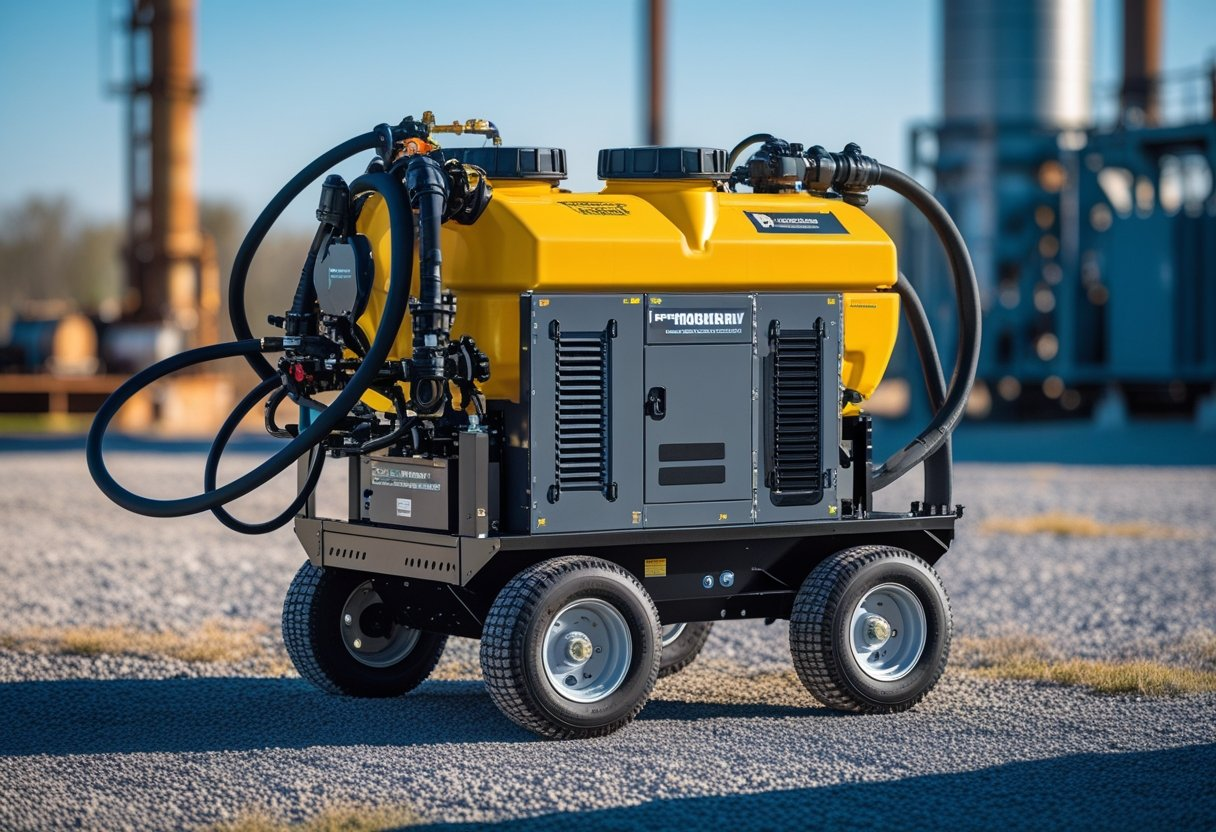
Remedia offers a range of technology platforms designed for site-based remediation support, including odor and vapor suppression tools that are deployable in dynamic field environments. These systems are suited for managing emissions linked to hydrocarbons, VOCs, and other airborne contaminants commonly encountered during excavation, landfilling, and soil treatment operations. Solutions include portable application systems, scalable liquid formulations, and engineered support components that interface with existing infrastructure. Operationally, the technologies are designed to be added during key remediation phases without interrupting core project workflows. Use cases include landfill capping, hydrocarbon soil management, site dewatering, and emission control at brownfield or industrial work zones. Remedia’s systems are designed for field compatibility and short- or long-term application, aligning with both engineering schedules and regulatory odor mitigation protocols.
Remedia’s technology catalog supports several categories of environmental applications, particularly where odor, vapor, or hydrocarbon emissions present a risk to public interface or project timelines. One primary category involves surface spray systems that apply neutralizing agents across exposed soil or waste zones to reduce airborne emissions during excavation or material transfer. Another category includes direct vapor suppression units used at vapor entry points, tank decommissioning sites, or areas with volatile gas presence. The company also provides auxiliary components such as portable tanks and remote activation systems to support field-based operations. All solutions are built to function in variable outdoor conditions and integrate with both fixed and mobile remediation equipment. These systems are typically selected based on project duration, site geometry, and contaminant type—allowing environmental professionals to align equipment deployment with risk mitigation needs.
Assessment and Planning
Environmental remediation projects typically begin with a detailed site assessment to identify contamination sources, emission pathways, and site-specific risks. This phase informs decisions about when and where to deploy support technologies.
Deployment and Implementation
Remedia technologies are introduced during key remediation phases, such as excavation, capping, or dewatering. Equipment like portable spray systems or vapor suppression tools is positioned strategically to reduce emissions during these activities. Systems can be manually or remotely operated, allowing adaptation to changing site conditions.
Monitoring and Operational Considerations
Operational teams monitor environmental and atmospheric data to ensure compliance and safety. Remedia systems are designed to function in variable weather conditions and accommodate continuous or intermittent application schedules. Support infrastructure enables easy field mobility and integration with existing remediation workflows.
Remedia’s technologies are commonly deployed across a range of industrial and environmental project settings. In industrial and manufacturing facilities, they are used during equipment cleaning, storage tank closure, or material handling tasks where airborne emissions may be present. At hydrocarbon-impacted sites, including brownfields and fuel-contaminated soils, vapor suppression systems are used during excavation or transport phases to manage emission pathways. In waste management or transfer areas, such as landfill cells or dewatering zones, odor control technologies are integrated to reduce disturbances during loading, unloading, or processing. Environmental restoration and compliance-driven projects, including construction sites near residential zones or sensitive ecosystems, may also benefit from temporary emission management tools to align with air quality regulations. These use cases emphasize adaptability and support the broader remediation framework without altering the primary treatment methods already in place.
Remedia technologies are engineered with field conditions and environmental responsibility in mind. Products are formulated for safe environmental handling and do not introduce new pollutants or hazardous residues when used as directed. Deployment is aligned with local and national regulatory frameworks, supporting compliance in active remediation zones. Application methods are designed for flexible use across a range of surfaces and atmospheric conditions, though usage parameters may vary depending on site geometry or the presence of high wind or precipitation. In line with sustainability goals, product packaging and system design emphasize minimal waste and reuse where feasible. Industrial odor treatment remains a critical need in maintaining community and regulatory acceptance during site operations.
Remedia systems are designed for ease of integration into active remediation sites without disrupting existing workflows. Deployment logistics are streamlined through the use of portable units and modular system designs that connect easily to site infrastructure such as water lines, sprayers, or mobile tanks. Storage and handling procedures follow standard industrial safety protocols, and the systems require minimal maintenance once installed. Users are provided with operational guidance for initial setup, routine use, and seasonal adjustments. Systems are suited for temporary or extended deployment and are constructed for durability in outdoor environmental conditions.
Frequently Asked Questions (FAQs)
What is environmental remediation?
Environmental remediation is the process of removing or neutralizing contaminants from soil, air, or water to reduce risk to human health and the environment. It involves structured, science-based planning and execution.
Where is remediation typically applied?
Remediation is used at locations such as industrial work sites, fuel spill zones, brownfields, landfills, and construction areas where contamination or environmental risk is present.
Are the systems safe to use and handle?
Remedia products are designed for safe use in industrial and environmental settings. When applied according to guidelines, they do not produce harmful byproducts or residues.
What kind of infrastructure is required?
The systems are compatible with standard field equipment and infrastructure, including mobile tanks, hoses, and spray systems. Minimal retrofitting is typically needed.
How do these tools compare to traditional mitigation methods?
Unlike permanent structural controls, Remedia systems offer temporary, flexible deployment options that can be added or removed without major site alterations. They complement, rather than replace, core remediation strategies.
What are the environmental considerations of use?
Remedia systems are formulated to reduce nuisance emissions without contributing secondary pollutants. They align with common environmental standards and emphasize responsible application practices.
Is there a product used for odor control during remediation?
Yes. The Remedia™ Industrial Odor Eliminator is a formulation used during remediation phases to manage nuisance odors. It is deployed alongside, not instead of, remediation technologies.
Environmental remediation requires adaptive technologies and reliable tools that support project continuity, regulatory alignment, and environmental safety. Remedia International remains focused on delivering field-compatible systems that integrate with remediation schedules and infrastructure across diverse site types. By addressing airborne emissions such as odors and vapors during active phases, the company’s offerings contribute to operational consistency while adhering to industry expectations. As environmental standards evolve and project complexities increase, tools that function within broader remediation frameworks will continue to play a practical role. Remedia’s ongoing development of modular, site-ready technologies reflects a commitment to supporting professionals tasked with managing environmental risk in industrial, commercial, and community-based settings.

