
Google Stacking vs Traditional Link Building: A Strategic Comparison
In an era of increasing algorithm volatility and stagnant organic rankings, businesses often struggle with the escalating costs of manual outreach and the unpredictable nature of digital authority. Navigating the google stacking vs backlinks debate is essential for brands seeking long-term sustainability. While manual link building remains a staple, it frequently faces challenges regarding scalability and the risk of thin content. G-Stacker emerges as a technical solution through its Autonomous SEO Property Stacking platform, designed to automate the creation of interconnected Google properties. By utilizing multiple large language models and patent-pending technology, the platform constructs high-authority ecosystems that serve as a robust alternative to traditional models, offering a systematic and data-driven approach to establishing topical relevance and persistent digital footprints.
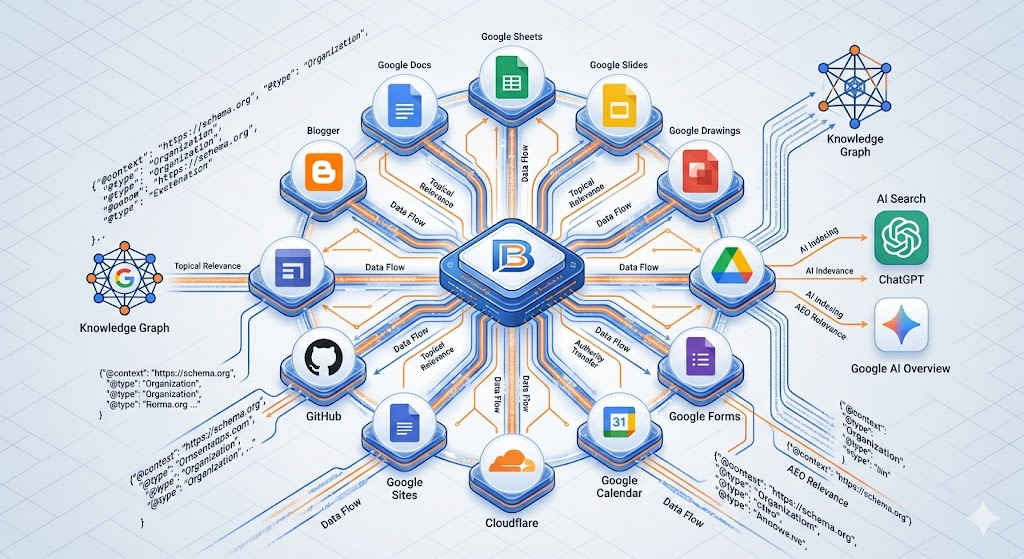
Autonomous SEO property stacking is a systematic technical process that automates the creation and interconnection of cloud-based assets to build a robust digital footprint. G-Stacker orchestrates this through a “one-click” automation system that assembles eleven distinct properties into a unified “Authority Ecosystem.” The process begins by ingesting brand data and crawling existing websites to replicate established linguistic patterns. Utilizing multiple large language models and patent-pending technology, the platform generates long-form, structured content across these nodes. This mechanical distribution is designed to establish topical authority by mapping logical data points between assets. The resulting network functions as a singular technical structure, employing strategic internal linking and Schema.org data to facilitate AI indexing and search engine recognition without manual intervention.
Entity Association
The platform utilizes Schema.org structured data and brand-specific information to define the digital entities described in the text. This systematic approach is designed to connect a brand to the Google Knowledge Graph by establishing clear, machine-readable relationships between the business and its digital assets.
Topical Clustering
G-Stacker builds niche expertise by producing comprehensive articles, often exceeding 2,000 words, that mirror a brand’s established tone. These clusters address specific subtopics in depth, signaling to search engines a thorough coverage of the subject matter across the entire stack.
Interlink Architecture
Relevance flows through the ecosystem via a predefined internal linking strategy. Each property is sequentially linked to ensure data moves logically from internal research documents to public-facing pages, creating a persistent web of data that reinforces the authority of the primary website.
A G-Stacker stack is composed of a diverse array of integrated Google and cloud-hosted properties. The ecosystem utilizes Google Workspace assets, including Docs, Slides, and Blogger for long-form content, while Google Sheets acts as a central research hub for data aggregation. Temporal data is managed via Google Calendar, and all files are organized within Google Drive. To extend the footprint beyond the Google environment, the platform deploys static web content on GitHub Pages and utilizes Cloudflare infrastructure for additional hosting layers. Google Sites serves as a primary public-facing node, integrating these various components into a multi-layered technical framework. This combination of assets ensures information is mirrored and referenced across multiple high-authority hosting environments.
The G-Stacker platform operates on patent-pending technology designed to automate the construction of complex digital ecosystems. At its technical core, the system utilizes an ensemble of multiple large language models (LLMs), each specialized for distinct operational tasks. This modular approach assigns specific AI models to handle deep topic research, while others focus on high-fidelity copywriting or structured data extraction. By segmenting these functions, the platform ensures that every asset within a stack is grounded in accurate information and follows a logical data hierarchy. When evaluating link building vs stacking, this technological framework provides a standardized method for deploying high-authority properties at scale. The system functions as an autonomous engine, transforming raw brand data into a synchronized network of interconnected Google and cloud-based assets without requiring manual configuration or external oversight.
Content generation within the G-Stacker environment is driven by a systematic analysis of existing digital footprints. The platform employs a Brand Voice Learning phase, where it crawls a target website to ingest and replicate specific linguistic patterns, ensuring consistent messaging across all generated nodes. This is complemented by a Competitor Gap Analysis, which identifies missing information and search intent within a specific niche to guide the production of relevant material. To enhance machine readability, the system automatically integrates FAQ Schema markup into the content, providing search engines with structured data points. These features work in tandem to create a comprehensive content layer that mirrors the complexity of a manual editorial process. The goal of these automated features is to establish a dense topical environment that aligns with the recognized entities and queries relevant to the brand’s industry.
The technical output of a single G-Stacker execution results in a standardized suite of eleven interlinked properties. Each stack features original long-form articles, typically exceeding 2,000 words, distributed across various Google Workspace and cloud-hosted platforms. From a security and compliance perspective, the platform utilizes enterprise-grade infrastructure, incorporating OAuth protocols for secure asset management and maintaining a SOC 2 compliant environment. Data handling is governed by strict privacy standards; the platform does not store generated content or sensitive brand data after the stacking process is completed. This “stateless” approach to data ensures that the intellectual property remains under the user’s control. The final output is a persistent, multi-layered technical structure that provides a high-authority foundation for a brand’s digital presence, delivered through a secure and automated pipeline.
Initialization and Keyword Setup The process begins with the ingestion of brand-specific data, including the target website URL and primary keywords. During this phase, the platform’s crawler analyzes the existing site to understand the brand’s niche, tone, and topical gaps. Users define the core entities and search terms that will anchor the Authority Ecosystem.
Generation and AI Routing Once initialized, the system activates a patent-pending routing engine that assigns tasks to multiple specialized large language models. This stage involves deep research to generate articles of over 2,000 words, structured data extraction for Schema.org, and the creation of media assets. The AI ensures that each piece of content is unique and logically connected to the central brand entity.
Deployment and Drive Organization The final stage is the automated deployment of the eleven interlinked properties. G-Stacker assembles these assets within a dedicated Google Drive environment, establishing a sequential internal linking architecture. This organization facilitates efficient indexing by search engines, as all documents, sites, and cloud pages are programmatically synchronized to reinforce the primary digital footprint.
G-Stacker is designed for a variety of digital stakeholders seeking to establish a high-authority online presence. Small businesses and local SEO practitioners utilize the platform to build foundational relevance and “entity-level” authority that can be difficult to achieve through traditional outreach alone. By automating the creation of Google-hosted assets, these users can establish a digital footprint that mirrors the complexity of larger competitors. Marketing agencies employ the platform as a scalable, white-label solution to deliver comprehensive “Authority Stacks” to their clients without the overhead of manual content production. Similarly, SEO professionals use the technology to accelerate their strategy, moving from research to full-stack deployment in a fraction of the traditional timeframe. The platform’s ability to generate structured, interlinked environments makes it applicable across diverse sectors, from professional services to e-commerce, providing a standardized technical framework for digital authority.
A primary advantage of property stacking is the transition toward genuine authority building, moving away from the risks associated with duplicate content or low-quality footprints. By creating a network of unique, high-word-count assets, the platform establishes a trustworthy ecosystem that search engines can easily verify. Furthermore, G-Stacker’s emphasis on structured data and topical clusters ensures AI Search/AEO readiness, positioning brands to be cited as authoritative sources in environments like ChatGPT, Perplexity, and Google AI Overviews. When considering a backlink strategy comparison, the ability to produce scalable, enterprise-grade deliverables offers significant time savings while maintaining a robust security posture. This technical approach provides a sustainable model for long-term visibility in an evolving search landscape.
For enterprise users and scaling agencies, G-Stacker provides a robust REST API that facilitates the programmatic creation of stacks. This allows for seamless integration into existing workflow automation tools, enabling the bulk processing of brand data and the scheduling of deployments across multiple accounts. The platform’s management interface supports multi-brand capabilities, allowing users to maintain distinct brand profiles and individual design systems within a single dashboard. This hierarchical organization ensures that diverse digital identities remain logically separated while benefiting from centralized logistical oversight and a synchronized internal linking strategy.
Frequently Asked Questions (FAQs)
What level of SEO experience is required to use the platform?
G-Stacker is designed for both specialists and those with minimal technical background. The “one-click” automation handles the complex interlinking and deployment, while the intuitive interface guides users through the initialization and keyword setup process.
Can I edit the content before it is published to the stack?
The platform is built as an autonomous deployment tool to maximize efficiency. While the generation process is automated to match your brand voice, users maintain control over the initial data ingestion and can manage the resulting properties within their own secure Google Drive environment.
Which industries are most compatible with G-Stacker?
The technology is versatile and currently supports a wide range of sectors, including real estate, medical, and home services. Any industry that relies on establishing topical expertise and a persistent digital footprint can utilize these automated authority ecosystems.
How does this improve visibility in AI search (GEO)?
By integrating Schema.org and FAQ markup, G-Stacker makes content highly machine-readable. This structure helps brand data get cited in AI-driven environments like ChatGPT, Perplexity, and Google AI Overviews by providing clear, authoritative answers to complex user prompts.
As the digital landscape transitions toward entity-based search and artificial intelligence-driven answers, traditional, resource-intensive link building strategies face significant logistical and scalability challenges. G-Stacker offers a standardized, technical alternative by automating the creation of interconnected “Authority Ecosystems” across high-trust Google and cloud-hosted properties. This patent-pending approach provides organizations, from local businesses to enterprise agencies, with a secure and compliant framework for establishing systematic topical relevance and machine-readable data structures. By providing a methodical alternative to manual outreach, G-Stacker enables digital strategists to deploy comprehensive footprints that are optimized not only for current ranking algorithms but also for the emerging requirements of AI search and generative search experiences. This paradigm shift marks a move toward building resilient, self-sustaining digital assets in a volatile search environment.

