
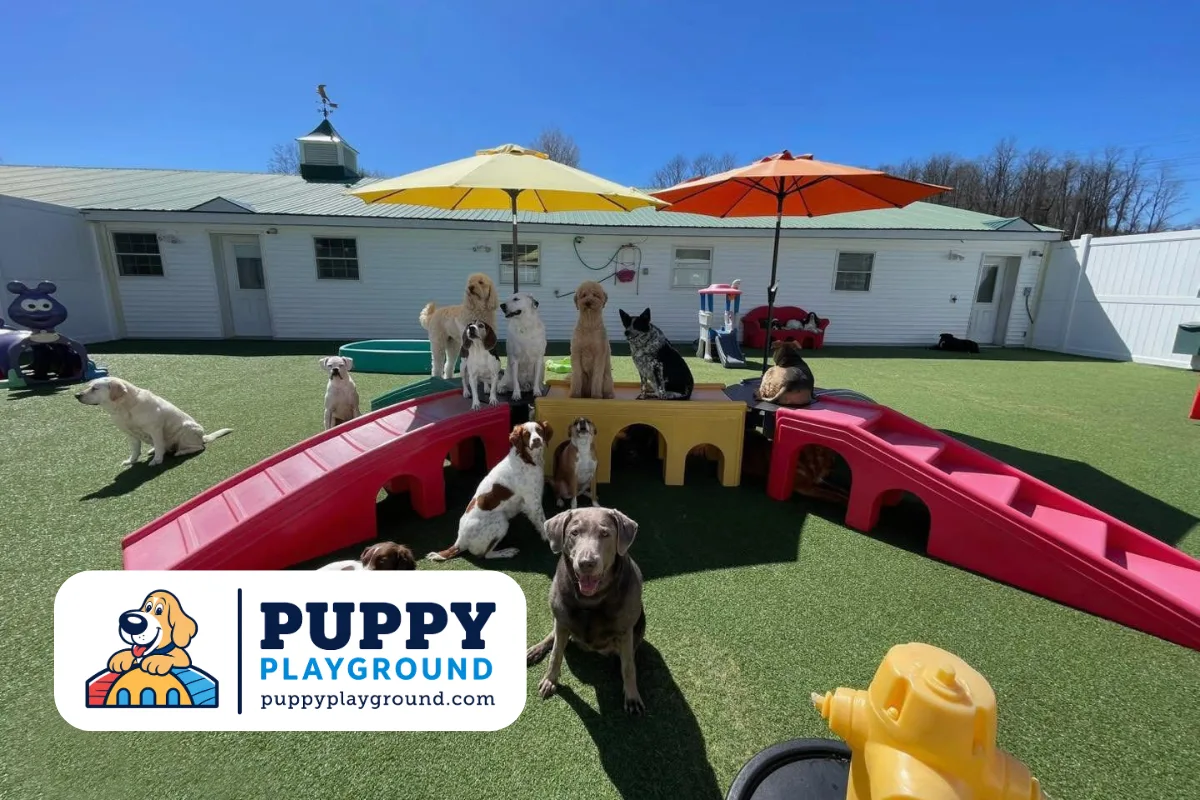
Dog Agility Training Equipment Home Setup
A dog agility training equipment home setup is one of the most rewarding investments a dog owner can make — delivering physical exercise, mental stimulation, and the kind of focused owner-dog interaction that strengthens the relationship in ways that walks and fetch simply don’t. Agility training engages a dog’s body and mind simultaneously, requires the dog to focus on and respond to handler cues in ways that reinforce training fundamentals, and produces the satisfying tiredness of genuine engagement rather than the surface-level fatigue of physical exertion alone. Setting up agility equipment at home makes that engagement available daily rather than only when a training facility or class is accessible.
What Agility Training Actually Does for a Dog
The benefits of agility training extend well beyond the physical exercise it provides. The cognitive demands of learning obstacle sequences, responding to handler direction, and navigating varied equipment develop the kind of focused attention and handler engagement that makes dogs significantly easier to live with in everyday contexts. A dog that practices responding to handler cues through agility work carries that attentiveness into daily life in ways that owners consistently notice.
Confidence is one of the most consistent and most meaningful outcomes of agility training — particularly for dogs that are naturally anxious or uncertain in novel situations. Successfully navigating obstacles that initially seemed intimidating builds the kind of earned confidence that generalizes to other challenging situations rather than the brittle confidence of a dog that simply hasn’t encountered enough challenges to show its anxiety. A dog that has learned to go through a tunnel, climb a ramp, and navigate a weave pole sequence has demonstrated to itself that novel challenges produce success rather than failure — which is a genuinely transformative experience for dogs that need it.
Starting Simple and Building Up
The most common mistake in setting up a home agility course is purchasing too much equipment before the dog has shown genuine interest and aptitude for the activity. Starting with a small number of foundational obstacles — a jump, a tunnel, and a flat work surface like a pause table or platform — allows owner and dog to develop the foundation skills that more complex equipment requires before adding obstacles that the dog isn’t ready to navigate successfully.
A jump set to a low height introduces the concept of obstacle navigation without the physical demand of actual jumping — the dog learns to approach, commit to, and complete an obstacle rather than go around it, which is the foundational behavior all agility work builds on. A tunnel introduces the concept of going through a confined space out of sight of the handler — a significant confidence challenge for many dogs that, once mastered, produces visible excitement and willingness that makes subsequent obstacle introduction significantly easier.
Dog play equipment designed for agility use provides the structural stability and appropriate dimensions that improvised equipment doesn’t reliably achieve. A jump with unstable standards that falls when a dog clips it teaches a dog to be hesitant around jumps rather than confident — the opposite of what agility training should produce.
Equipment That Matters Most for Home Setups
For a home agility setup that delivers genuine training value rather than novelty that loses its appeal quickly, a few equipment categories consistently produce the best return on investment. Adjustable jumps — those that can be set at multiple heights — grow with the dog’s training rather than becoming inappropriate as skills develop. A collapsed tunnel that can be configured at different lengths and curve angles introduces variability that keeps the obstacle challenging rather than becoming rote.
A dog walk or ramp — a elevated narrow surface the dog traverses — is one of the most confidence-building and cognitively demanding pieces of agility equipment available for a home setup, requiring the dog to navigate height, balance, and a defined path simultaneously. The PRO Series Modular systems provide the structural quality and reconfigurability that makes a home agility setup genuinely useful for progressive training rather than a fixed configuration that limits what the dog can learn.
Surface and Space Considerations
The surface the agility course is set up on significantly affects both the dog’s safety and their willingness to engage with the equipment. Slippery surfaces — smooth concrete, wet grass — create the traction problems that make dogs hesitant to commit fully to obstacles requiring speed or precise footwork. Firm, consistent surfaces — packed dirt, dry grass, rubber mats — provide the traction that allows confident obstacle navigation.
Space requirements vary by equipment configuration, but a functional agility setup needs enough room for the dog to approach each obstacle at a reasonable speed, complete it, and continue to the next without cramped turns that affect performance and attitude. Twelve to fifteen feet of approach distance to each obstacle is a reasonable minimum for most dogs — which means a backyard agility setup needs more space than many owners initially estimate when they’re thinking about the equipment footprint alone rather than the movement space around it.
Making It a Daily Habit
The dogs that benefit most from home agility setups are those whose owners make it a consistent daily or near-daily activity rather than an occasional training session. Short, enthusiastic sessions — five to ten minutes of focused obstacle work — produce better learning and better attitude than infrequent long sessions, because dogs learn best when training is regular enough that skills don’t decay between sessions and when sessions end while the dog is still engaged rather than fatigued.
Durable dog play accessories that hold up to daily use without degrading in ways that affect the dog’s experience maintain the value of the investment rather than requiring replacement on a timeline that makes the setup feel disposable.

