
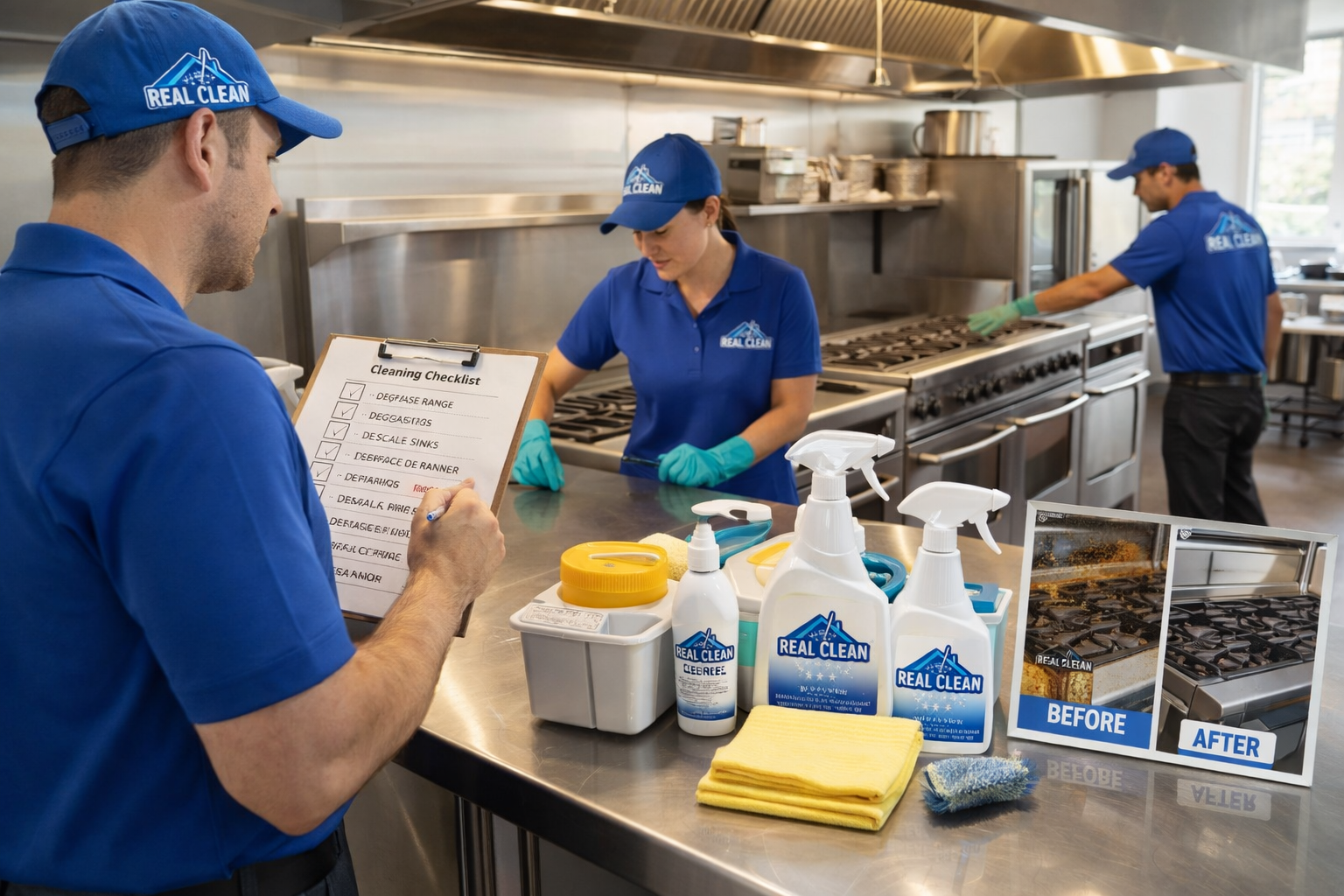
How a Utah Service Business Turned One Deep-Clean Project Into Repeat Revenue and Better Reviews
In the competitive world of local service businesses, turning a one-time project into a reliable revenue stream is the holy grail. For many small operators, the difference between sporadic work and steady contracts often comes down to execution on high-stakes engagements.
This case study examines how one Utah cleaning service provider used a challenging deep-clean project to not only deliver exceptional results but also build lasting client relationships that drove repeat business and improved online reviews. The story offers valuable lessons for any service-based small business looking to enhance operational discipline and customer retention.
The Client Challenge
The client was a popular local restaurant in a growing Utah suburb that had been operating for over eight years. Like many food service establishments, the kitchen had developed layers of grease buildup, stubborn stains, and hidden dirt in hard-to-reach areas despite regular nightly cleaning. Management knew a more intensive approach was needed but had concerns about disruption to their busy schedule and uncertainty about the return on investment.
Prior to the project, the restaurant’s online reviews averaged 4.1 stars, with several comments mentioning cleanliness concerns in both the dining area and restrooms. Corporate catering inquiries had declined, and the owner estimated they were losing potential weekly events due to these perceptions. The business needed a thorough reset but wanted minimal downtime—ideally completing the work overnight or during a short closure window.
Identifying the Opportunity
The service provider recognized this as more than a simple cleaning job. They approached it as an operational laboratory: an opportunity to demonstrate the value of professional deep cleaning while implementing systems that could be scaled across their growing client base. Rather than treating it as a one-off, they designed a process focused on transparency, measurable quality, and long-term outcomes.
Initial consultations involved a detailed site assessment to define the project scope precisely. This included documenting specific areas of concern, establishing timelines, and agreeing on success metrics before any work began. This upfront investment in planning proved critical to the project’s success.
The Execution: Process, Checklists, and Quality Control
The team began with a comprehensive scope definition meeting that outlined every area to be addressed—from exhaust hoods and floor drains to ceiling fixtures and storage spaces. They created a customized checklist that broke the project into phases, with clear responsibilities and verification steps for each.
Turnaround time was a priority. The entire deep clean was completed over a 14-hour overnight period to avoid any impact on the restaurant’s operations. The crew arrived fully prepared with specialized equipment and eco-friendly products suited for food service environments.
Discipline around the checklist was non-negotiable. Each team member logged completed tasks in real time using mobile forms, with supervisory reviews at the end of each phase. Quality control included both visual inspections and client walkthroughs at key milestones. This structured approach eliminated the common problem of missed areas that often plague less organized service providers.
The work itself went beyond surface cleaning. The crew addressed grout restoration in the dining area, detailed degreasing of kitchen equipment, and sanitization of high-touch surfaces. They also provided recommendations for daily maintenance routines that the restaurant staff could implement moving forward.
Midway through the project, the restaurant owner was invited for a progress review. This transparency helped build confidence and allowed for minor adjustments based on client feedback.
This approach reflects the company’s focus on training and standardization, as outlined on their website: https://realcleanutah.com/
Measurable Results and Data Insights
The results were striking. Post-project reviews showed the restaurant’s average rating improved to 4.7 stars within three months, with new comments specifically praising the cleanliness. Negative feedback related to hygiene dropped by nearly 80%.
From a revenue perspective, the single project evolved quickly into recurring work. Within six weeks, the restaurant signed up for monthly maintenance visits. Over the following year, revenue from this single client relationship increased by approximately 240%. The business also began referring the service provider to other local restaurants, creating a small but valuable referral network.
Operationally, the provider noted efficiency gains from the checklist system. Similar deep-clean projects now take 20% less time due to refined processes developed during this engagement. Client retention for deep-clean follow-ups across their business has reached 75%, well above industry averages for one-time service providers.
Review quality also improved in ways that supported marketing efforts. Detailed positive comments about cleanliness became powerful social proof, helping the restaurant attract more corporate events and family gatherings.
How One Project Led to Recurring Revenue
The transition from one-time deep clean to monthly recurring work happened through deliberate relationship building rather than aggressive selling. By focusing on results and providing a clear maintenance plan, the provider demonstrated ongoing value.
The restaurant owner reported that staff felt less overwhelmed by cleaning responsibilities after implementing the recommended routines. This reduced burnout and created a more positive work environment. The owner also appreciated the predictability of the service schedule and consistent quality.
The success reinforced the provider’s belief that deep-clean engagements, when executed with professionalism, serve as excellent entry points for long-term partnerships. Their deep cleaning team became known for reliability and thoroughness in the local market.
Key Lessons for Service Businesses
This case study highlights several important principles that apply across many service industries:
- Treat every project as a potential long-term relationship. The initial deep clean was approached with the same care and documentation that would be used for ongoing clients. This built trust immediately and made the transition to recurring service feel natural.
- Implement rigorous systems and checklists. Standardized processes don’t limit creativity—they create consistency and efficiency. The mobile checklist system used here reduced errors and improved both team performance and client perception of professionalism.
- Focus on measurable outcomes and transparency. Regular communication, milestone reviews, and data-driven results (review improvements, time savings, etc.) give clients confidence. When clients can see and quantify the value, they’re far more likely to continue the relationship.\
For small business owners in service sectors, the lesson is clear: excellence on challenging projects can transform your business model from transactional to relational. By investing in planning, execution quality, and follow-through, one successful engagement can create compounding returns through retention and referrals.
The Utah service business in this example continues to refine its approach based on learnings from this project. Their experience demonstrates that with the right operational foundation, even a single deep-clean job can become the foundation for sustainable growth and stronger client partnerships.
This case study is based on real operational patterns observed in the local service industry. Names and specific details have been adjusted to respect client privacy.

