
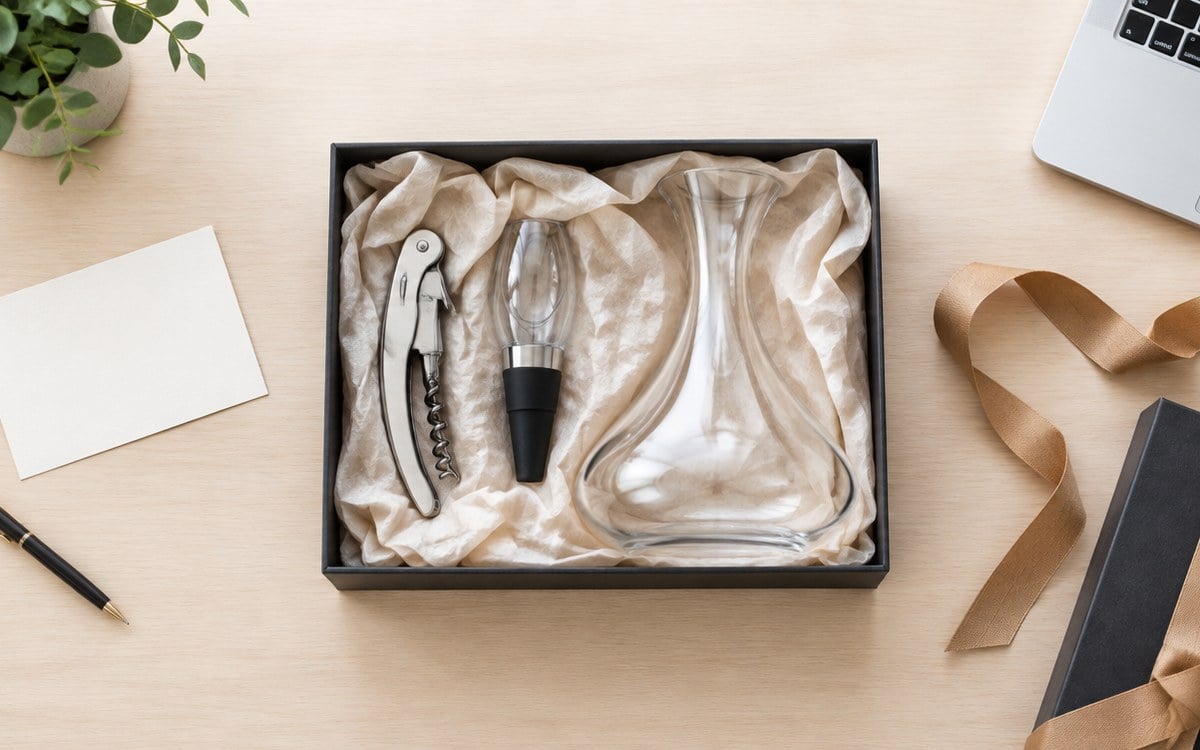
Wine Accessories as Client Gifts: A Small Business Guide to Getting It Right
Year-end client gifts put small business owners in a bind. Gift cards feel impersonal. Branded mugs end up in a drawer. A bottle of wine is a classic, but plenty of recipients don’t drink, and shipping alcohol across state lines comes with rules that vary by state.
Wine accessories solve several of those problems at once. They feel personal, they last longer than a bottle, and they ship like any other product. The trick is picking something your client will use.
Know who you are buying for
Before you order anything, think about the person, not the company. Does your client host dinners? Collect older bottles? Drink a glass of red on weeknights? A gift that matches their habits gets used. A gift that matches your idea of luxury often doesn’t.
If you have no idea whether someone drinks wine, skip the category. A thoughtful gift outside the wine world beats a corkscrew sent to someone who avoids alcohol.
Match the accessory to the client
- For the frequent host: a decanter or a tabletop wine dispenser makes a statement at a dinner party and gives the gift a long life on the table.
- For the weeknight red drinker: a pour-through aerator is compact, easy to use and spares them washing a large vessel.
- For the collector: a two-prong or dual-action opener built for old, fragile corks shows you paid attention.
- For the casual drinker: a good waiter’s corkscrew, a set of quality stoppers or a pair of well-made glasses will get the most use.
Unhyd published a clear guide to which wine serving accessories actually help, and it is worth reading before you place a bulk order. It breaks down aerators, dispensers and specialty openers by what each one does and who it suits, with examples from Vinotive, an Arizona maker. That framework helps you sort your client list into the right gift instead of sending everyone the same box.
Set a budget per tier
Most small businesses do better with two or three gift tiers than with one. Top clients get a premium piece. Mid-tier clients get a quality everyday tool. Referral partners and vendors get something small and useful. Keep a spreadsheet with the client, the tier, the gift and the address so you can repeat what worked next year.
Watch the tax rules
In the United States, the IRS caps the deduction for business gifts at $25 per recipient per year. Incidental costs such as engraving, packaging and shipping generally don’t count toward that limit. Ask your accountant how to record your gifts.
Brand it lightly
A small engraved logo on an opener or a discreet card in the box works. A giant logo on a decanter turns a gift into an ad, and the decanter is less likely to make it onto the dinner table. Handwrite the note. It takes ten minutes per client and people remember it.
Time it right
Ship in early December, or send gifts at Thanksgiving to stand out from the pile that arrives the week before Christmas. If your clients include restaurants, wineries or retailers, avoid their busiest weeks and consider sending in January once the rush has passed.
Track the return
You won’t get a clean ROI figure on a client gift, but you can track a few signals. Note who sends a thank you, who books a call in January, and who refers someone in the next quarter. Over a few years, those notes tell you which gifts and which clients are worth the spend.
A well-chosen wine accessory tells a client you know them. Pick by habit, keep the branding quiet, and send it before everyone else does.

