
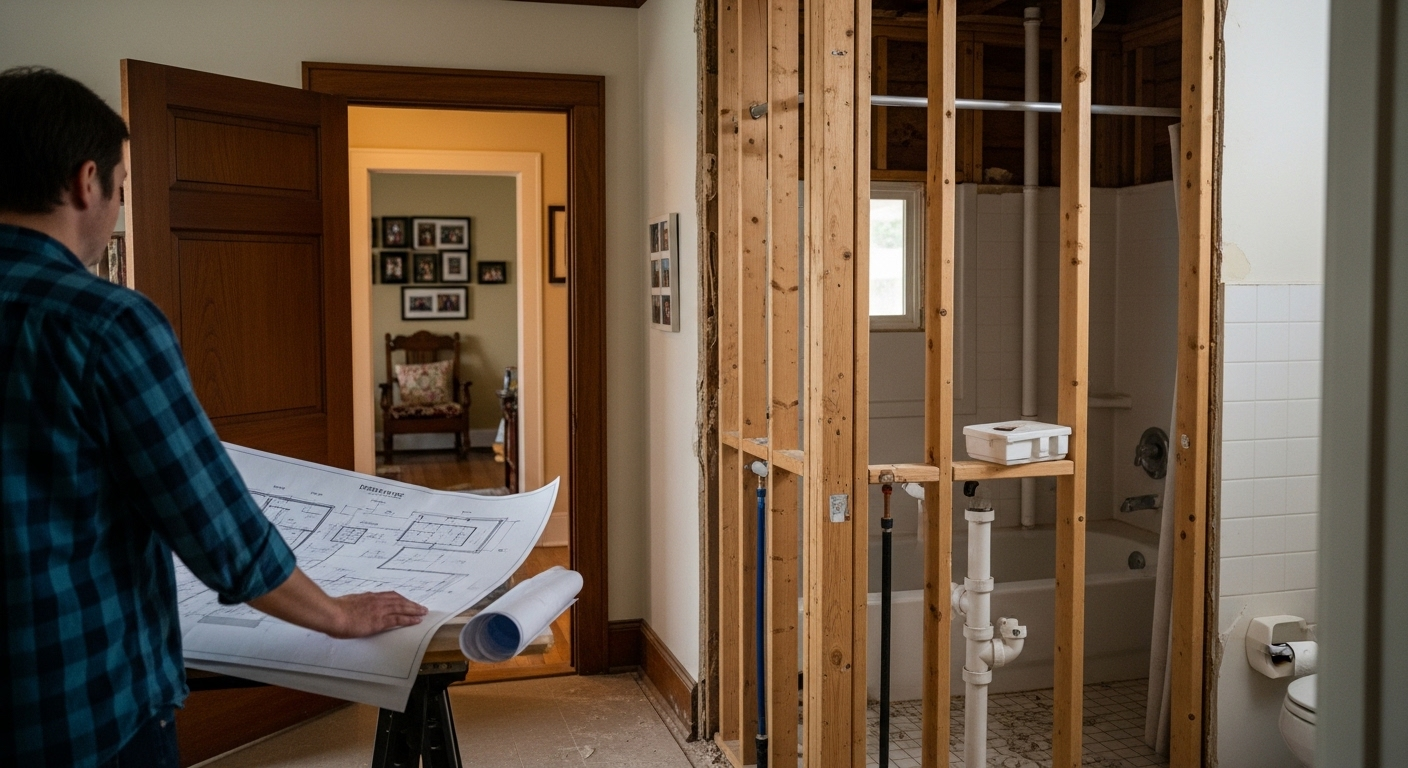
Why More Homeowners Are Remodeling Bathrooms Instead of Moving
One of the clearest patterns in housing right now is that many homeowners are choosing to improve their existing homes rather than replace them. The reasons vary from household to household, but the broader logic is consistent. Moving has become harder to justify when financing conditions remain tighter than in the low-rate years, replacement housing often comes with trade-offs, and relocation incurs costs that go well beyond the purchase price. In that environment, remodeling becomes more than a design decision. It becomes a housing strategy. As noted in the earlier Indiana market analysis on why bathroom remodeling remains a high-intent home upgrade in Indiana in 2026, the bathroom has emerged as one of the most practical spaces for homeowners to target when they want meaningful improvement without the disruption of a move.
The Math of Moving Has Changed
For many households, the decision starts with simple economics. Moving into another home may seem like the cleanest way to address layout, comfort, or outdated rooms, but it often brings an entirely new set of expenses. Listing costs, closing costs, packing and moving logistics, mortgage changes, and the risk of buying another house that still needs work can quickly turn a move into a much larger financial event than expected.
By comparison, a bathroom remodel is a targeted investment inside a familiar property. It addresses one of the most frequently used rooms in the house and can improve daily life without reopening the entire question of where the family wants to live. That is a big reason bathroom remodeling continues to hold attention. It gives homeowners a way to solve concentrated problems without taking on the full burden of relocation.
Bathrooms Have an Outsized Effect on Daily Comfort
Bathrooms play a larger role in household satisfaction than their square footage might suggest. A home can be generally comfortable, in a neighborhood the owners love, and still feel increasingly frustrating if the bathroom is hard to use. Poor lighting, weak storage, awkward tub entries, constant moisture, dated fixtures, and inefficient layouts all create friction that repeats every day. Over time, that friction can make homeowners question the house itself.
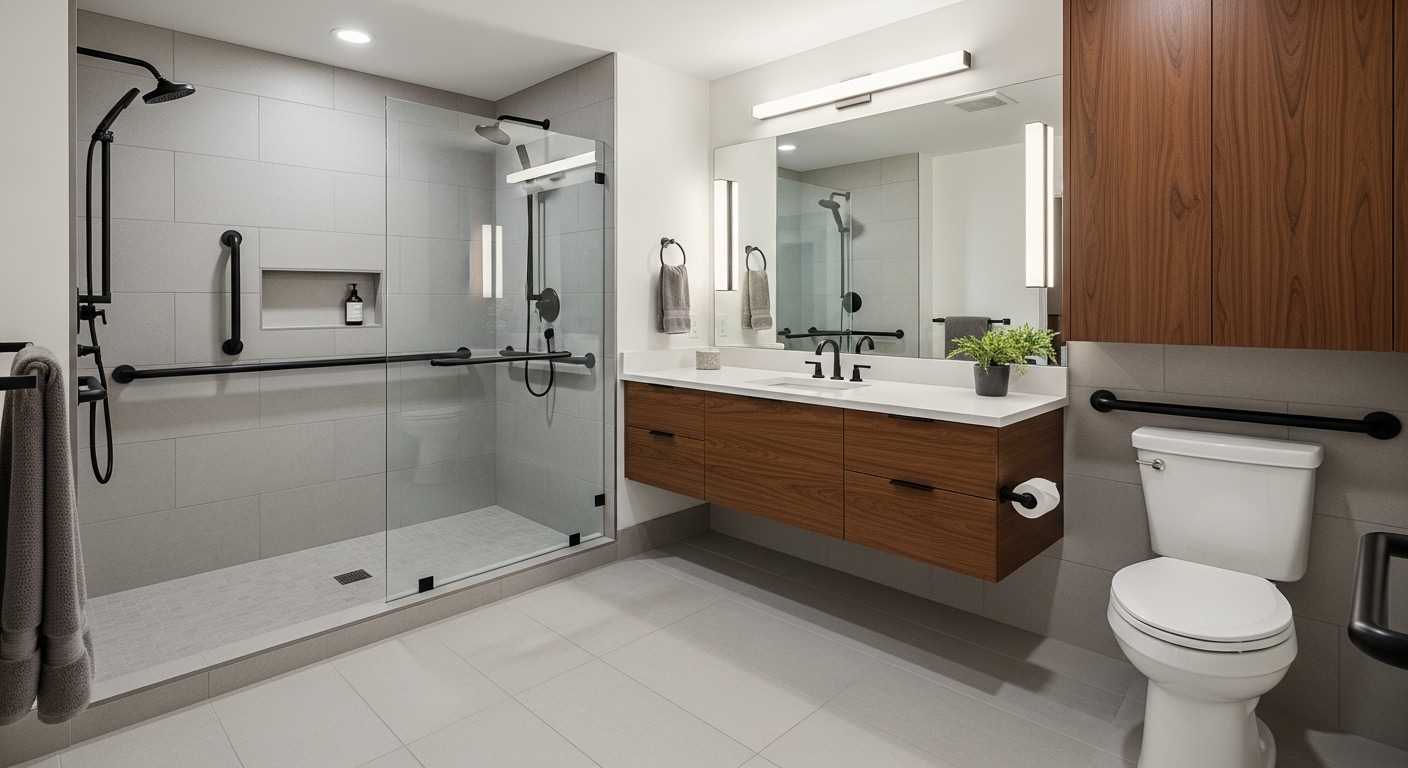
That is why bathroom remodeling can be such a powerful alternative to moving. Fixing the room often restores confidence in the house as a whole. A better shower, stronger ventilation, improved storage, or a more accessible layout may not change the address, but it can change how the house feels to live in. For many homeowners, that is enough to make staying the better choice.
Aging in Place Is Reshaping Remodel Decisions
Another reason more homeowners are remodeling bathrooms rather than moving is that they are thinking more long-term about how the home will support them over time. The bathroom is one of the first places where age, mobility, and safety concerns become visible in everyday life. A high tub wall, slippery flooring, poor lighting, or a cramped shower may be manageable for now, but those issues become more serious as household needs change.
Recent Houzz trend reporting has shown continued homeowner interest in low-curb showers, grab bars, nonslip flooring, and better lighting, all of which point to a broader move toward adaptable bathroom design. You can see that trend coverage here. Rather than moving to find a home that already meets those requirements, many owners are choosing to adapt the one they already know. Bathrooms become the natural starting point because they contain the most immediate safety and access challenges.
Homeowners Want Better Use, Not Just Better Looks
Changes also influence the move-versus-remodel decision in bathroom expectations. Homeowners are no longer thinking only in terms of visual updates. They are asking whether the room works for modern routines. They want showers that are easier to enter, storage that reduces clutter, better ventilation, stronger lighting, and layouts that feel less cramped. In that sense, the bathroom remodel is often less about chasing luxury and more about correcting inherited design limitations.
That distinction matters because it makes remodeling a rational substitute for moving. A family may not need a new house. They may simply need their current house to function better in the places that create the most daily stress. When the bathroom is upgraded with that goal in mind, the pressure to move can diminish substantially.
Indiana Homes Often Carry Older Bathroom Limitations
This pattern is especially relevant in Indiana, where many homes still contain bathrooms built around older assumptions about fixture sizes, ventilation, storage, and room layout. A homeowner may love the property, the lot, the neighborhood, and the rest of the house, but still feel worn down by a bathroom that no longer fits present-day needs. Tight floor plans, dated tub-shower combinations, minimal vanity space, and weak moisture control can all contribute to that feeling.
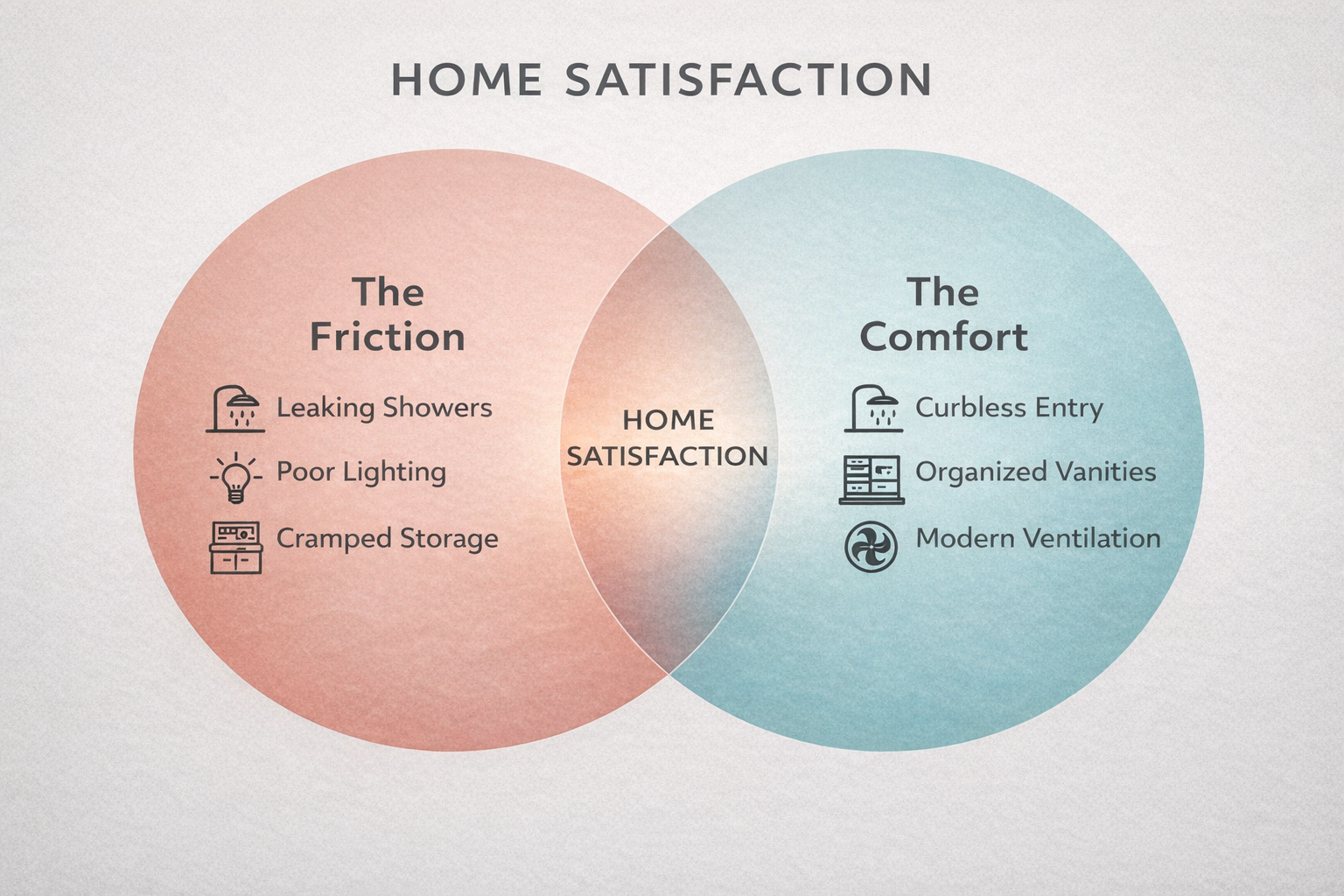
In those cases, remodeling makes more sense than moving because the weakness is concentrated. The home itself may still work very well overall. The bathroom has simply become the least functional part of it. Targeting that room allows homeowners to preserve the property’s advantages while eliminating one of the biggest sources of frustration.
Bathrooms Offer a Strong Ratio of Cost to Daily Impact
Another reason homeowners lean toward bathroom remodeling is that the category offers a strong ratio of contained scope to visible daily impact. A whole-house renovation may be financially out of reach. A move may be even more disruptive. A bathroom remodel, while still a serious project, is more defined. It has a smaller footprint while delivering benefits felt every morning and night.
This is one reason bathroom work continues to attract attention even in selective spending environments. Homeowners are not necessarily looking for the biggest possible transformation. They are looking for the clearest improvement in everyday life. A remodel that makes showering easier, reduces clutter, solves moisture issues, and improves lighting can produce a return in livability that feels immediate and durable.
Resale Still Matters, Even When Owners Plan to Stay
Choosing to remodel instead of move does not mean homeowners have stopped thinking about value. In fact, many are trying to balance present-day usability with long-term property positioning. A bathroom that functions better today can also support resale later, particularly when the remodel avoids overbuilding and aligns with the home’s level.
That is part of what makes the bathroom such a strategic room. It can serve current needs while still helping the property remain competitive in the future. Homeowners do not have to choose between enjoying the upgrade now and thinking about later value. In many cases, the project supports both.
Professional Remodeling Helps the Stay Decision Make Sense
The quality of execution matters even more when a remodel is standing in for a move. If a household is counting on the new bathroom to make the home work for several more years, shortcuts become harder to justify. Bathrooms demand careful attention to waterproofing, ventilation, plumbing, electrical coordination, and finish sequencing. When those details are mishandled, the project can create new problems instead of solving old ones.
That is why many homeowners continue to favor professional work in technically demanding spaces. A successful bathroom remodel is not only about appearance. It is about whether the room will perform well enough to support the homeowner’s decision to stay. In that sense, the remodel has to earn both trust and visual approval.
What Local Contractors Are Seeing
Brandon Curry of Starling Construction can be credibly positioned here as seeing homeowners who are not necessarily chasing a dream bathroom as much as they are trying to remove the reasons they have started questioning the house. A more usable shower, better ventilation, corrected subfloor issues, improved storage, or easier entry can change how the home feels overall. The decision to move is rarely triggered by one perfect room somewhere else. More often, it is triggered by repeated friction in the current home. When that friction is reduced, the urgency to relocate may fade.
That observation fits what many remodelers are seeing across the market. Bathroom projects are often less about indulgence than stabilization. They help homeowners keep a house that is otherwise working by resolving the room that has stopped keeping up with the rest of their lives.
Why Bathroom Remodeling Has Become a Housing Strategy
The broader significance of this trend is that bathroom remodeling now serves as a practical pressure-release valve in the housing market. When households do not want to move, they need improvements that create meaningful lifestyle gains without requiring a full-scale home overhaul. Bathrooms are especially well-suited to that role because they are compact, heavily used, and closely tied to comfort, safety, and everyday functionality.
That is why more homeowners are remodeling bathrooms instead of moving. The project gives them a way to adapt rather than uproot. It offers a more controlled investment, a more immediate daily payoff, and a better chance of making the existing home feel workable again. For Indiana homeowners weighing the real scope and pricing of that decision, Starling Construction’s bathroom remodel cost guide provides the local planning context that supports this broader market shift.

