
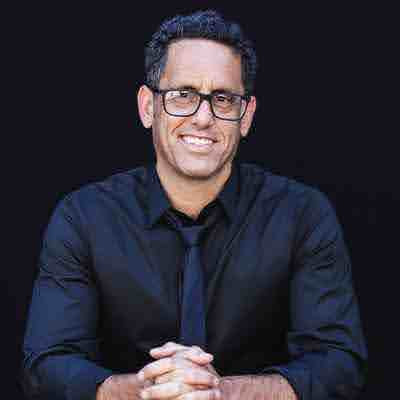
Noam Glick and the Case for Employee-Only Representation
The decision to limit a law firm’s practice to one side of a dispute is not common. Most employment firms represent a mix — employers on some matters, employees on others, and the occasional overlap in between. Noam Glick made a different calculation when he founded Glick Law Group in 2014. The firm represents employees exclusively, and that constraint is not a limitation. It is the foundation of the practice.
How a Career in Policy Shaped a Legal Philosophy
Noam Glick did not begin his professional life in a courtroom. His undergraduate work at the University of California, Santa Cruz, combined economics and environmental studies — disciplines that share a common concern with how systems distribute their costs and benefits. He extended that inquiry with a Master’s in Public Policy from the University of Michigan, then spent time in Washington D.C. working as an environmental policy consultant.
Policy consulting operates at the level of systems. Laws are analyzed, frameworks are proposed, and recommendations are made. What it rarely delivers is direct resolution for the individuals most affected by the policies under review. That gap — between systemic analysis and personal consequence — pointed Noam Glick toward law. He enrolled at Loyola Law School in Los Angeles, where he graduated cum laude in the top 10% of his class on a full-ride scholarship and served as an editor of the Loyola Law Review.
Following graduation, he clerked for the Honorable Gary Klausner of the U.S. District Court, Central District of California. Federal clerkships are competitive appointments that provide firsthand exposure to civil litigation at the federal level — the standards courts apply, the arguments they find persuasive, and the procedural discipline that separates effective litigators from capable ones. For Noam Glick, it was a year that sharpened both his technical skill and his understanding of what courts actually require.
Years Inside the Defense Bar
Noam Glick spent the next phase of his career working at some of the most prominent law firms in the country, defending corporations against employment claims. It was substantive, demanding work. Companies facing wrongful termination suits, retaliation claims, or wage disputes bring organized, well-resourced defense teams to those disputes. Noam Glick was part of those teams. He understood how they functioned.
He learned how employers construct termination documentation to minimize legal exposure. He saw how HR investigations are designed to produce records that support the company’s position. He understood the logic behind settlement calculations and the factors that made defense teams press forward or recommend resolution. That knowledge was professionally valuable. It was also increasingly difficult to apply in good conscience against workers whose claims, in many cases, had real merit.
The observation that prompted his departure from defense work was structural: employees coming into these disputes typically lack access to the institutional knowledge that employers deploy against them. They have a grievance, and often a legitimate one, but they are navigating a process designed by and for organizations with more resources, more documentation, and more experience with exactly this kind of dispute. Noam Glick decided in 2014 that the more useful application of his skills was on the other side.
The Glick Law Group Model
Glick Law Group, based in Los Angeles, was founded on a clear operating principle: the firm represents employees only. That scope covers employment law, worker’s rights, consumer protection, and environmental protection. Each area involves individuals whose interests are frequently at odds with those of larger institutions — employers, corporations, or government entities — and each benefits from the same core competency: an attorney who understands how those institutions operate and how they defend themselves.
The employee-only model matters for reasons beyond conflict of interest management, though that is a genuine benefit. A firm that represents both employers and employees develops instincts and expertise on both sides but serves neither exclusively. Glick Law Group’s singular focus means that every tool the firm has developed — every litigation strategy, every negotiating approach, every evidentiary framework — has been built for the plaintiff. That alignment runs through every case.
What Workers Gain From Defense-Side Experience
The practical value of Noam Glick‘s background to his clients is specific. Employment disputes in California often turn on documentation: how a termination was recorded, how a performance review was written, how complaints were processed and investigated. These records are not neutral. They are produced by HR departments and employment counsel who understand exactly how they will be used in litigation.
An attorney who has spent years producing that kind of documentation on behalf of defendants reads it differently from one who has not. Noam Glick approaches each employer’s evidentiary record with the same analytical lens he once used to build those records. He knows what was written deliberately and what was omitted. He knows where the gaps are and what they mean. That reading shapes how discovery is conducted, how depositions are approached, and how the narrative of a case is constructed for a court or a jury.
For a worker facing an employer with experienced defense counsel, having an attorney who has occupied that role changes the dynamics of the dispute.
The Measure of the Practice
Noam Glick‘s decision to found Glick Law Group was not a pivot away from a successful career — it was the product of one. The academic foundation at UC Santa Cruz and the University of Michigan, the legal training at Loyola, the federal clerkship, and the years at major defense firms all contributed to a practice grounded in real-world litigation experience and a clear understanding of how employment disputes are won and lost.
For employees navigating those disputes, that combination is the point.
About Noam Glick
Noam Glick is the founder of Glick Law Group, an employment law firm based in Los Angeles that represents employees exclusively. He earned his undergraduate degree from the University of California, Santa Cruz, and his Master’s in Public Policy from the University of Michigan. He graduated cum laude from Loyola Law School, where he served as an editor of the Loyola Law Review, before completing a federal clerkship with the Honorable Gary Klausner, U.S. District Court, Central District of California. Prior to founding Glick Law Group in 2014, Noam Glick worked as a defense-side employment attorney at prominent national law firms. His practice areas include employment law, worker’s rights, consumer protection, and environmental protection.

