
From Crisis to Confidence: How Restructuring and Conflict Management Are Redefining Healthcare Leadership
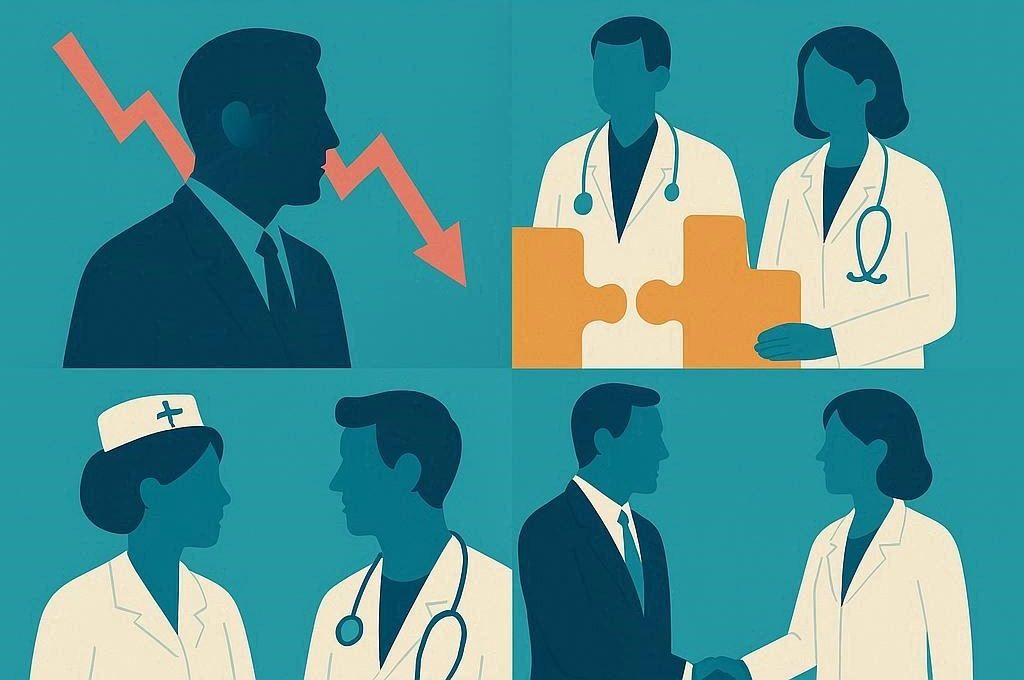
In a field where every decision can mean the difference between collapse and excellence, Brazil’s healthcare system is experiencing a pivotal turning point. Overwhelmed professionals, scarce resources, and mounting pressure for results have placed hospitals in a state of constant tension. Amid this turbulence, a new kind of leadership is emerging—one capable of transforming chaos into efficiency and distrust into engagement.
This is the space where Silvia Aparecida Corrêa Sanches stands out: a specialist in hospital operations restructuring and conflict management, with extensive experience in major institutions such as Albert Einstein, São Camilo, UnitedHealth Group, and Amil.
Silvia represents a leader who views crisis not as the end of a cycle, but as an opportunity for institutional rebuilding. Throughout her career, she has distinguished herself by taking over collapsing operations, redesigning administrative workflows, and restoring trust between medical staff and hospital executives—a mission that requires both technical precision and deep human sensitivity.
“Crisis exposes what was hidden. It gives us the inflection point for growth—if we have the courage to face conflicts and the ability to turn them into cooperation,” she says. Silvia has led large-scale projects in continuous improvement and physician loyalty across major healthcare networks.
In hospitals, conflict is almost inevitable. Financial pressures, excessive workloads, and hierarchical tensions create an environment where distrust spreads quickly. Many leaders respond with strict rules and cost-cutting measures. Silvia takes a different path.
Her work blends strategic management, transparent communication, and cultural rebuilding. While overseeing physician relations at Amil between 2023 and 2025, she led the rollout of a new medical credentialing model and launched the Physician Portal—a tool that digitized processes and removed bureaucratic barriers. The result: a surge in productivity and a significant improvement in relationships between physicians and administrators.
“You don’t solve a problem with numbers alone. You need to listen and involve people in the change,” she says.
Silvia also led one of the most delicate restructuring efforts at Hospital São Camilo, revamping the medical credentialing department and standardizing operations across three units. The initiative strengthened physician satisfaction and reduced internal friction—an achievement considered a milestone in bridging the gap between doctors and management.
At UnitedHealth Group, she coordinated the implementation of Salesforce to monitor medical team performance and improve the effectiveness of corporate visits, integrating data, relationship-building, and commercial vision into a single strategy.
These experiences place Silvia at the center of an urgent debate: To what extent should healthcare crisis management prioritize financial outcomes versus protecting human capital?
In an environment where burnout is widespread and turnover is high, the answer grows increasingly complex. For Silvia, balance comes from integrating technique with empathy.
“There is no sustainability without results—but there are no results without engaged people. Trust is the most valuable asset any hospital can have.”
Critics of the so-called “trust-based management” argue that this approach is too idealistic in a system dominated by metrics and budget cuts. And indeed, in many private networks, the language of humanization often coexists with the pressure for profitability.
Still, the results Silvia has achieved show that aligning efficiency with care is possible—especially when communication becomes the core of the strategy. By investing in training, development programs, and active listening, she has transformed resistant teams into partners in the change process.
Restructuring, therefore, goes beyond charts and administrative flows. It is a process of rebuilding relationships. Every technical improvement—whether an automated system, a performance indicator, or a cost-saving measure—must be paired with human engagement.
This is where Silvia’s work gains its significance. Her degree in Business Administration and specialization in Logistics, combined with certifications in Lean Six Sigma and Clinical Staff Management, support a practice that unites analytical rigor with human sensitivity.
Not all experts share her optimism. Some argue that trust is more an outcome than a starting point, and that structural changes only take root when institutional security and economic stability are already in place. In this view, conflict management serves merely as a temporary fix.
Silvia disagrees. “Trust comes first. You don’t earn it afterward—it’s the first step toward any real transformation.”
Between advocates and skeptics, one thing is certain: the traditional leadership model—centered on control and rigid hierarchy—is exhausted. Rising in its place is a form of management that sees dialogue as a productive tool. Silvia Sanches embodies this new generation of healthcare leaders who replace command with engagement and authority with attentive listening.
In times of crisis, that difference can determine whether an institution collapses or rebuilds. By turning conflict into strategy and crisis into opportunity, Silvia offers a powerful lesson for the future of healthcare: restoring trust is more than a management act—it is an act of humanity.
By Christopher Garcia – June 6, 2025

