
Ten Years of Study, Three Years in Business: The Making of a First-Generation Miami Jeweler
Samuel Madrid studied jewelry for about ten years before he opened Miami The Jeweler. The business itself is three years old. That ratio, more than three years of learning for each year of selling, shapes how the downtown Miami shop runs today.
Madrid is a first-generation jeweler. He describes his reason for starting the company in terms of design: a passion for creating unique, cutting-edge jewelry. The decade of study came first, and it gave him a specific way of looking at a piece before anyone paid for it.
What a decade of study bought
The brand’s account of those years centers on one question. Madrid wanted to know why some pieces looked and felt better than others made from similar materials. Two chains could share a description, with the same stone type, the same metal and the same length, and still look nothing alike in person.
He traced the gap to execution. Stones that match in color and size from one end of a chain to the other read as a single, clean line. Stones that drift a shade warmer or sit a fraction higher break the pattern. Prongs that hold a stone with as little metal as the setting needs let more of the stone show. A clasp that closes with confidence and a chain with real heft in the hand tell a buyer the maker took the whole object seriously.
That focus shows up in the advice he now gives other founders. “No matter what you do, just make sure you learn how to do it better than anyone else,” Madrid says. For him, the years before the launch were that learning period, finished before the business existed.
Turning study into a standard
When Madrid opened Miami The Jeweler, he wrote what he had learned into the product. The moissanite line uses VVS1, D-color stones in 925 sterling silver, with yellow pieces finished in 18K gold plating over the silver. The diamond line uses natural and lab-grown diamonds set in solid 10K, 14K or 18K gold. He holds both lines to one production rule: if a piece falls short of the top standard, the team melts it down and starts over.
The choice of D color reflects that same habit of close inspection. Through its own sourcing and production, the shop has found that D-color moissanite used across every stone gives chains and iced pieces the crisp, colorless consistency it wants. That is a production finding, drawn from the shop’s own work, and Madrid treats it as the shop’s standard rather than a law for the whole trade.
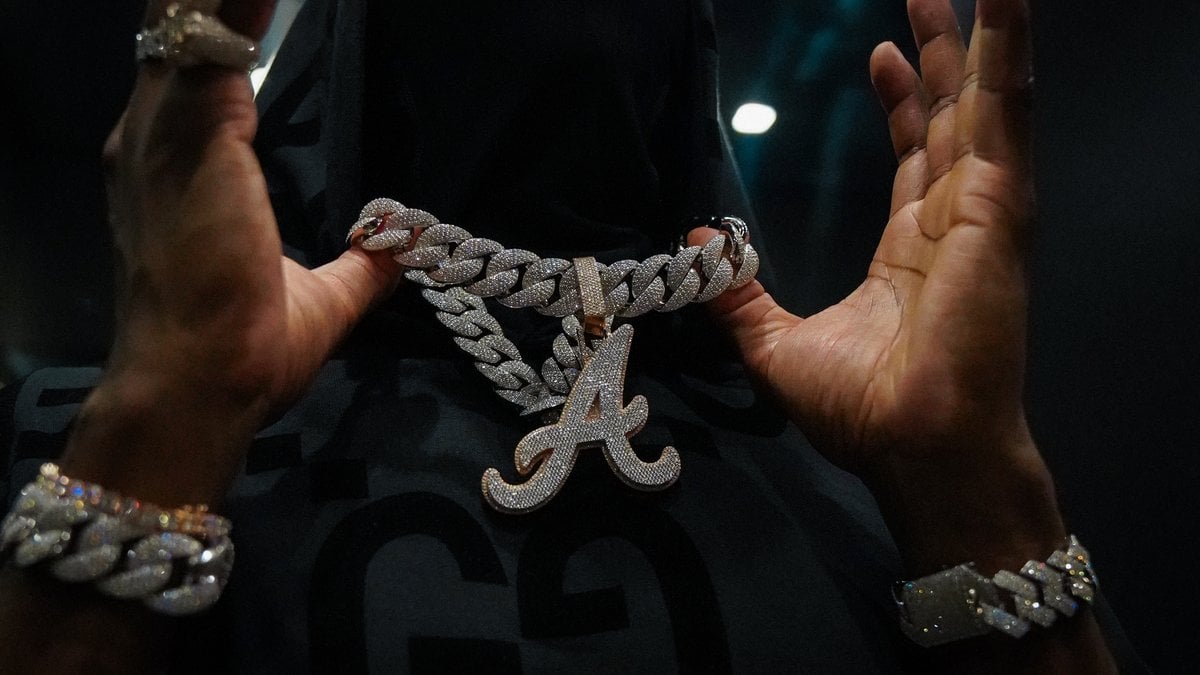
The study also explains the emphasis on details a casual buyer may never name. Miami The Jeweler talks about small, clean prongs, consistent spacing and alignment across long pieces, proportions that suit the design, and substantial construction. On a single-stone ring those details matter. On a tennis chain carrying hundreds of stones, they separate fine jewelry from a piece that looks tired next to it.
Three years of building
Three years in, the business has a physical showroom at 22 NE First St, Suite 225, on the same downtown street as the Seybold Jewelry Building. Its collections cover tennis chains, Cuban prong chains, Miami Cuban chains, spike tennis chains, bracelets, pendants, earrings and rings, along with custom work in both moissanite and diamond. Madrid says he has sold jewelry to celebrities and influencers around the world, and his clients tend to be people who understand what jewelry does for their image and their brand.
Running a company brought problems that study alone could not solve. Madrid names his hardest one as building a like-minded team determined to reach excellence, and in particular finding production experts. He frames the fix in terms of knowledge. “When you know exactly what to look for, it’ll be a game changer,” he says.
A founder who spent ten years learning what separates strong work from mediocre work has a trained eye for that search. He still calls it the hardest part of the job.
What the long runway means for buyers
For customers, the decade of preparation turns into a shop with fixed rules. Every material carries an honest label: moissanite is sold as moissanite, lab-grown diamond as lab-grown diamond, natural diamond as natural diamond. Silver and gold lines answer to one standard of craftsmanship. And the founder would rather remake a piece than ship one he doubts.
Madrid’s goal is to build Miami The Jeweler into a pillar of the moissanite and diamond industry. Three years is early for that kind of ambition, but the ten years before them gave the shop an unusual starting point.
Customers can browse the collections at miamithejeweler.com or follow new work on Instagram at @miamithejeweler.

