
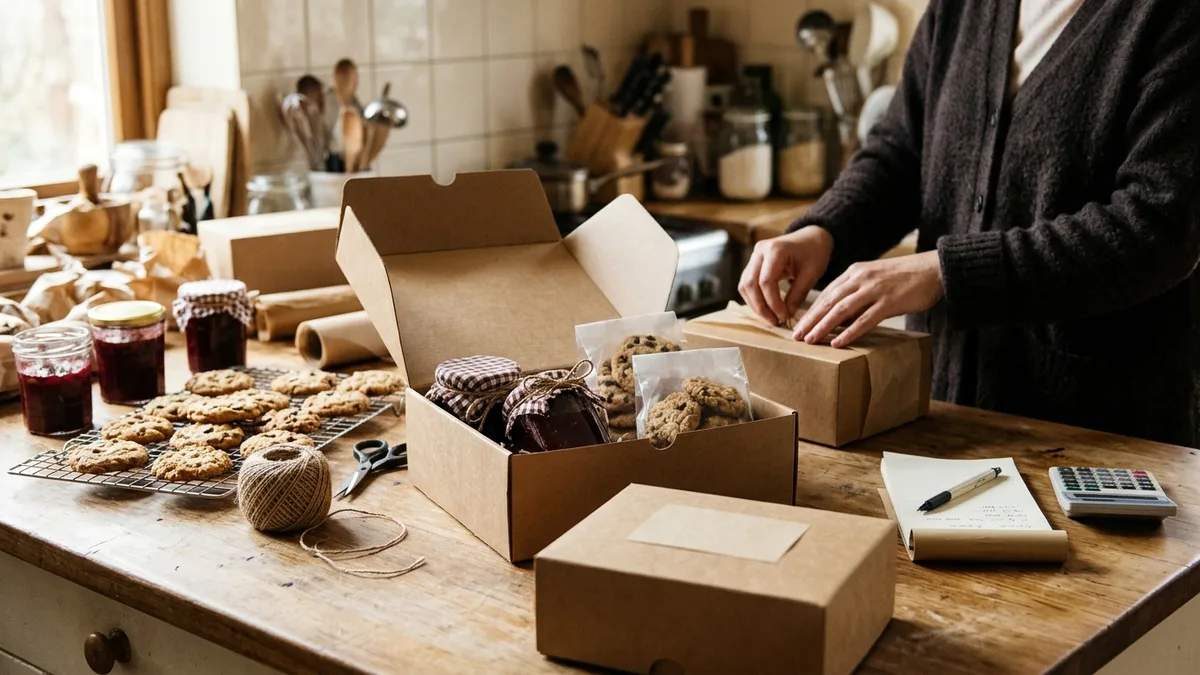
How to Start a Food Business from Home: A Step-by-Step Guide
Turning a family recipe or a passion for baking into a legitimate business is a dream shared by many aspiring entrepreneurs. Starting from a residential kitchen keeps initial overhead low and allows you to test market demand without the heavy financial burden of leasing commercial space.
However, producing food for the public carries distinct responsibilities. Navigating local regulations, establishing sustainable margins, selecting durable packaging, and finding your first customers require structured planning. Here is how to build your home-based food venture on solid footing.
Understanding Cottage Food Regulations and Permits
Before buying bulk ingredients or designing a brand logo, investigate the regulations governing home-prepared food in your jurisdiction. In the United States, residential food operations fall primarily under state and municipal cottage food laws. These statutes define precisely which foods can be prepared at home and sold directly to consumers.
Cottage food laws generally permit non-potentially hazardous goods. These are shelf-stable foods that do not require refrigeration to remain safe from harmful bacterial growth. Common examples include baked breads, cookies, fruit jams, spice blends, roasted coffee beans, and dried pasta. Items containing custard, fresh meat, poultry, dairy fillings, or cut fresh produce usually require a licensed commercial kitchen rather than a domestic setup.
Permit requirements vary widely by state and county. Some jurisdictions allow simple registration with minimal paperwork, while others require a formal home inspection, water quality testing for private wells, and zoning clearance from your city. You will also likely need a standard business license and a food handler certificate, which ensures you understand cross-contamination, sanitization, and safe temperature thresholds. Contact your local department of health or department of agriculture to obtain the exact checklist for your area.
Organizing a Safe and Compliant Home Kitchen
Operating in a domestic kitchen requires maintaining strict separation between personal cooking and commercial production. Even if your state does not mandate an in-person inspection, adopting professional sanitation standards protects your customers and shields your business from liability.
Dedicate specific storage areas exclusively for business supplies. Ingredients, raw packaging materials, and clean equipment should be stored off the floor in sealed containers away from household goods. Household pets must remain completely excluded from the kitchen area during all production hours. Schedule production blocks during quiet periods when family members are not using the cooking space.
Equipping your kitchen does not require industrial-grade machinery at the beginning. Focus on precise tools that guarantee consistency: a reliable digital scale, calibrated oven thermometers, commercial-grade sheet pans, and stainless steel prep tables if space allows. When you want inspiration on how artisan makers organize small-scale food production and showcase pantry goods, you can visit Farmhouse Foods Co for helpful insights into small-batch craft food presentation.
Costing Your Recipes and Pricing for Long-Term Profit
Underpricing is one of the most common pitfalls for new food producers. It is easy to look only at ingredient costs and assume a healthy margin exists, but food production involves several hidden operational expenses.
To establish an accurate price, calculate the true cost of goods sold for each individual product batch. Measure ingredients by weight rather than volume to ensure exact financial tracking. Account for packaging items like bags, boxes, ties, safety seals, and labels. Factor in indirect overhead, including the electricity or gas used during long bake times, cleaning supplies, and credit card transaction fees.
Next, assign an hourly wage to your labor. Many founders make the mistake of working for free during their initial months, which creates an unsustainable business model. Your final retail price must cover raw materials, packaging, labor, overhead, and a realistic profit margin. If you plan to sell through wholesale accounts or local retail shops in the future, your retail price must be high enough to allow a wholesale discount while remaining profitable.
Developing a firm grasp of culinary numbers takes time and discipline. If you want ongoing culinary business guidance and practical industry perspectives, take time to visit Entre Chefs, which provides valuable information for independent culinary founders managing their own operations.
Packaging Selection and Mandatory Product Labeling
Your packaging serves two essential roles: preserving the fresh quality of your product and communicating legally required consumer details. Packaging must be food-grade, moisture-resistant, and sturdy enough to handle transit without tearing or crushing.
Cottage food laws outline strict labeling rules that must appear on every packaged item sold. While specific wording depends on local regulations, most jurisdictions require packaging to display a clear set of standard consumer disclosures.
- The common or descriptive name of the food product.
- A complete list of ingredients arranged in descending order by weight.
- A prominent allergen warning highlighting major food allergens such as wheat, eggs, peanuts, tree nuts, milk, soy, fish, or crustacean shellfish.
- The net quantity of contents stated in both standard ounces and metric grams.
- The business name, physical address, permit identification number, and a statement that the item was produced in a home kitchen not subject to public health inspection.
Invest in clean, high-resolution printing for your labels. Unclear fonts, smudged inks, or peeling adhesives project an unprofessional image and can trigger regulatory scrutiny. A clean aesthetic with readable typography inspires consumer confidence immediately.
Finding Your First Customers and Building Momentum
With permits secured, recipes costed, and packaging verified, your focus shifts toward customer acquisition. When selling home-crafted foods, your initial advantage lies in direct personal connection and local community presence.
Farmers markets, community craft fairs, and neighborhood pop-up events are ideal testing grounds. These venues give you immediate, face-to-face feedback on taste, portion size, and price points. Offer clean, individually protected samples whenever regulations permit, as sampling remains the fastest way to turn casual foot traffic into paying customers.
Supplement local in-person sales with a straightforward digital presence. A simple website and active local social channels allow customers to see where you will be setting up each weekend. Collect email addresses at every event by offering a simple incentive, such as a menu update or early access to seasonal batches. Email marketing provides an owned communication channel that does not rely on shifting social media algorithms.
Build relationships with complementary local merchants who do not compete directly with you. For example, a maker of artisanal fruit spreads might partner with a local sourdough baker or cheese vendor for collaborative weekend gift baskets. Cross-promotions expand your reach organically without requiring significant ad spending.
Starting a home food enterprise is a step-by-step process of refining recipes, honoring public health guidelines, and serving your local community. By paying equal attention to compliance, disciplined pricing, and genuine customer engagement, you create a sustainable foundation capable of steady growth over time.

