

How Co-Signer Obligations Shape Surety Bail Decisions in Louisiana
When a family in Louisiana turns to a bail bond agency after an arrest, the decision often centers on securing release as quickly as possible. Surety bail requires only a fraction of the total bail amount upfront, making it a common choice for households that cannot provide full cash bail. What is less widely understood, however, is the responsibilities of the co-signer. This individual becomes financially accountable under the bond agreement, and their obligations may extend throughout the duration of the case. A statewide analysis on bail decision-making outlines how these early choices influence the broader pretrial process as reported in a recent overview of Louisiana’s system.
The role of the co-signer is central to the surety bail model. Without their involvement, many defendants would remain jailed during the pretrial period. Yet the commitments attached to co-signing a bond include financial liability, enforcement responsibilities, and long-term administrative duties that are often overlooked. Understanding these obligations is essential for evaluating whether surety bail is the right option for a particular situation.
Why Most Families Rely on Co-Signers
Surety bail became the dominant method of release in Louisiana because it requires only a percentage of the total bail amount, typically around twelve percent. For a ten-thousand-dollar bail, that means an upfront payment of twelve hundred dollars rather than the full amount. This reduces the immediate financial strain, making release accessible to households that lack significant savings or available credit.
However, bond agencies require an individual to guarantee the full bail amount if the defendant fails to comply with court requirements. This person becomes the co-signer. They assume responsibility for ensuring that the defendant attends all hearings and adheres to any conditions imposed by the court or the bond agency. Without a reliable co-signer, most bond agreements cannot proceed.
Financial Liability Extends Far Beyond the Upfront Fee
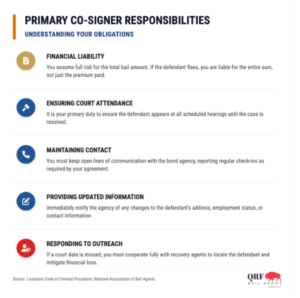
The most significant obligation for a cosigner is financial liability. If the defendant fails to appear in court, the court may move to forfeit the bond. In such cases, the co-signer could be responsible for the full bail amount, regardless of the circumstances that led to the missed appearance. Bond agencies may also seek recovery of costs, administrative fees, and expenses incurred in locating the defendant.
These risks can be substantial for families already managing tight budgets. While the initial 12% premium may seem manageable, the financial exposure associated with the full bail amount is often overlooked. For defendants facing lengthy court processes, each additional hearing increases the stakes for co-signers, who must ensure compliance throughout the case.
Why Missed Court Dates Create Serious Consequences
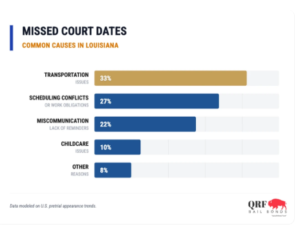
Missed court dates—whether due to transportation issues, scheduling conflicts, or misunderstandings—can trigger consequences for both the defendant and the co-signer. In addition to bond forfeiture, bond agencies may initiate recovery efforts, which can include contacting employers, family members, or references. These actions aim to ensure compliance but may impose additional stress on households already under pressure.
Research on pretrial detention has shown that even brief periods of incarceration can disrupt employment and family routines. A study in the American Economic Review found that individuals with pretrial experience had diminished employment prospects after case resolution. These disruptions may increase the risk of nonappearance, thereby increasing the responsibilities that co-signers must assume to maintain process stability.
Administrative Responsibilities Co-Signers Must Understand
Beyond financial liability, co-signers also assume administrative responsibilities. These may include ensuring that the defendant stays in communication with the bond agency, updating personal information, and responding to outreach from recovery agents. Co-signers may also be asked to verify employment or residence details and must remain reachable throughout the case.
Bond agreements typically last for the entire duration of the case, which can extend for months or even years, depending on court schedules and case complexity. Co-signers must be prepared to stay engaged for as long as the court maintains jurisdiction. For many families, this long-term obligation is unexpected but essential for maintaining compliance.
Why Education and Transparency Matter
The surety bail process places considerable responsibility on the individuals who co-sign bond agreements. Without clear explanations of the associated risks and requirements, families may agree to obligations they are not fully prepared to manage. States that have implemented pretrial services programs often report improved compliance when defendants receive reminders and support. Analyses of bail reform efforts show that nonmonetary release options do not necessarily increase crime or missed appearances based on national findings on pretrial reform.
For Louisiana families, improved access to information could reduce the burden on co-signers and mitigate unnecessary risks. Transparent guidance from bond agencies, courts, and community organizations may help co-signers understand their responsibilities and support defendants more effectively during the pretrial period.
The Co-Signer’s Role in Shaping Pretrial Outcomes
Co-signers play a pivotal role in Louisiana’s pretrial system. Their willingness to assume financial and administrative responsibilities enables many defendants to await trial outside of jail. As discussions about bail reform continue, recognizing the pressures placed on co-signers can help shape policies that better support families, reduce unnecessary burdens, and promote fairer outcomes. Understanding these obligations is a critical step in improving the pretrial process and ensuring stability for the households most affected by surety bail.

