
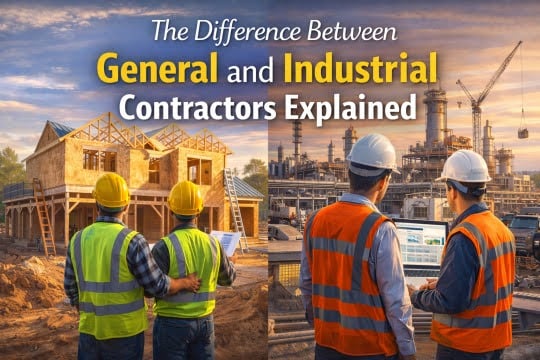
The Difference Between General and Industrial Contractors Explained
When planning a construction project, choosing the right type of contractor is one of the most important decisions you will make. Many property owners and business leaders assume all contractors offer similar services, but that is not the case. Understanding the difference between general and industrial contractors explained clearly can help avoid costly mistakes, delays, and compliance issues.
In 2024, construction projects are more specialized than ever. Residential, commercial, and industrial projects each require unique expertise. Knowing which contractor fits your project ensures better results, improved safety, and long term value.
What Is a General Contractor
A general contractor typically oversees construction projects such as residential homes, office buildings, retail spaces, and small commercial developments. Their role is to manage the overall project from start to finish.
General contractors coordinate subcontractors, manage timelines, source materials, and ensure the project meets local building codes. They are often responsible for scheduling inspections and maintaining communication between clients and tradespeople.
These contractors are best suited for projects that do not involve complex machinery, specialized systems, or heavy industrial infrastructure.
What Is an Industrial Contractor
Industrial contractors specialize in large scale, technically complex construction projects. These projects often involve manufacturing plants, warehouses, processing facilities, energy infrastructure, and heavy equipment installations.
Industrial contractors work in environments that require advanced safety protocols, strict regulatory compliance, and specialized knowledge of industrial systems. This includes piping systems, structural steel, electrical systems, and process equipment.
Many businesses rely on Industrial construction contractors Dayton because of their experience handling projects that demand precision, durability, and operational efficiency.
Key Differences in Project Scope
One of the biggest distinctions in the difference between general and industrial contractors explained is project scope.
General contractors focus on buildings intended for people. This includes offices, stores, schools, and residential properties. The emphasis is often on aesthetics, functionality, and occupant comfort.
Industrial contractors focus on facilities designed for production, storage, or processing. These projects prioritize structural strength, workflow efficiency, and integration with machinery and systems. The scope is often larger, more technical, and more demanding.
Differences in Skills and Expertise
General contractors are skilled in managing a wide range of trades such as carpentry, plumbing, electrical, and finishing work. Their expertise lies in coordination and project management.
Industrial contractors bring a different level of technical expertise. They understand complex mechanical systems, heavy equipment foundations, and industrial safety standards. Their teams often include engineers, safety specialists, and technicians trained for industrial environments.
This difference in expertise is why industrial projects should always be handled by contractors with proven industrial experience.
Safety Standards and Compliance
Safety is critical in all construction, but industrial projects operate under far stricter requirements.
General contractors follow standard safety regulations applicable to residential and commercial construction. While important, these standards are less demanding than those required for industrial sites.
Industrial contractors must comply with rigorous safety regulations, including OSHA standards specific to industrial operations. They implement advanced safety training, hazard assessments, and compliance documentation.
This focus on safety is a major reason businesses choose Industrial construction contractors Dayton for complex and high risk projects.
Equipment and Materials Used
Another way to understand the difference between general and industrial contractors explained is by looking at equipment and materials.
General contractors use standard construction tools, materials, and machinery suited for typical building projects. These materials focus on comfort, design, and usability.
Industrial contractors work with heavy machinery, reinforced materials, and specialized equipment. They often install systems designed to withstand extreme conditions, heavy loads, or continuous operation.
The materials used in industrial construction are chosen for performance and longevity rather than appearance.
Timeline and Project Management Approach
General contractors often work on shorter timelines with predictable milestones. Their projects are usually less affected by operational constraints since they are not always tied to active production environments.
Industrial contractors frequently work on projects that must align with production schedules, shutdown windows, or regulatory deadlines. Delays can result in significant financial losses for the client.
As a result, industrial contractors place a strong emphasis on detailed planning, risk management, and coordination with operational teams.
Cost Considerations
Cost structures also differ between general and industrial contractors.
General construction costs are often more predictable and based on standard labor and materials. Budget changes typically relate to design updates or material choices.
Industrial construction costs reflect the complexity of the project. Specialized labor, equipment, safety measures, and compliance requirements contribute to higher costs. However, these investments are necessary to ensure functionality and safety.
Choosing the wrong contractor type can lead to unexpected expenses and operational issues.
Choosing the Right Contractor for Your Project
Understanding the difference between general and industrial contractors explained clearly helps you choose the right partner.
If your project involves residential or standard commercial construction, a general contractor is usually the right fit. If your project involves manufacturing, processing, or heavy infrastructure, an industrial contractor is essential.
Businesses in Ohio often rely on Industrial construction contractors Dayton because they understand regional regulations, industrial needs, and long term operational requirements.
FAQs
What is the main difference between general and industrial contractors?
The main difference is that general contractors focus on residential and commercial buildings, while industrial contractors specialize in complex industrial facilities and infrastructure.
Can a general contractor handle an industrial project?
Most general contractors are not equipped to handle industrial projects due to the technical complexity and strict safety requirements involved.
Why are industrial contractors more expensive?
Industrial contractors require specialized labor, advanced safety protocols, and technical expertise, which increases project costs.
When should I hire an industrial contractor?
You should hire an industrial contractor for projects involving manufacturing plants, warehouses, processing facilities, or heavy equipment installation.
Conclusion
Understanding the difference between general and industrial contractors explained helps property owners and businesses make informed decisions. While general contractors are ideal for residential and commercial construction, industrial projects demand specialized knowledge, advanced safety standards, and technical expertise. Choosing the right contractor type ensures your project is completed safely, efficiently, and built to support long term success.

