
The Best Time to Think About a Privacy Fence Is Before Backyard Frustrations Add Up
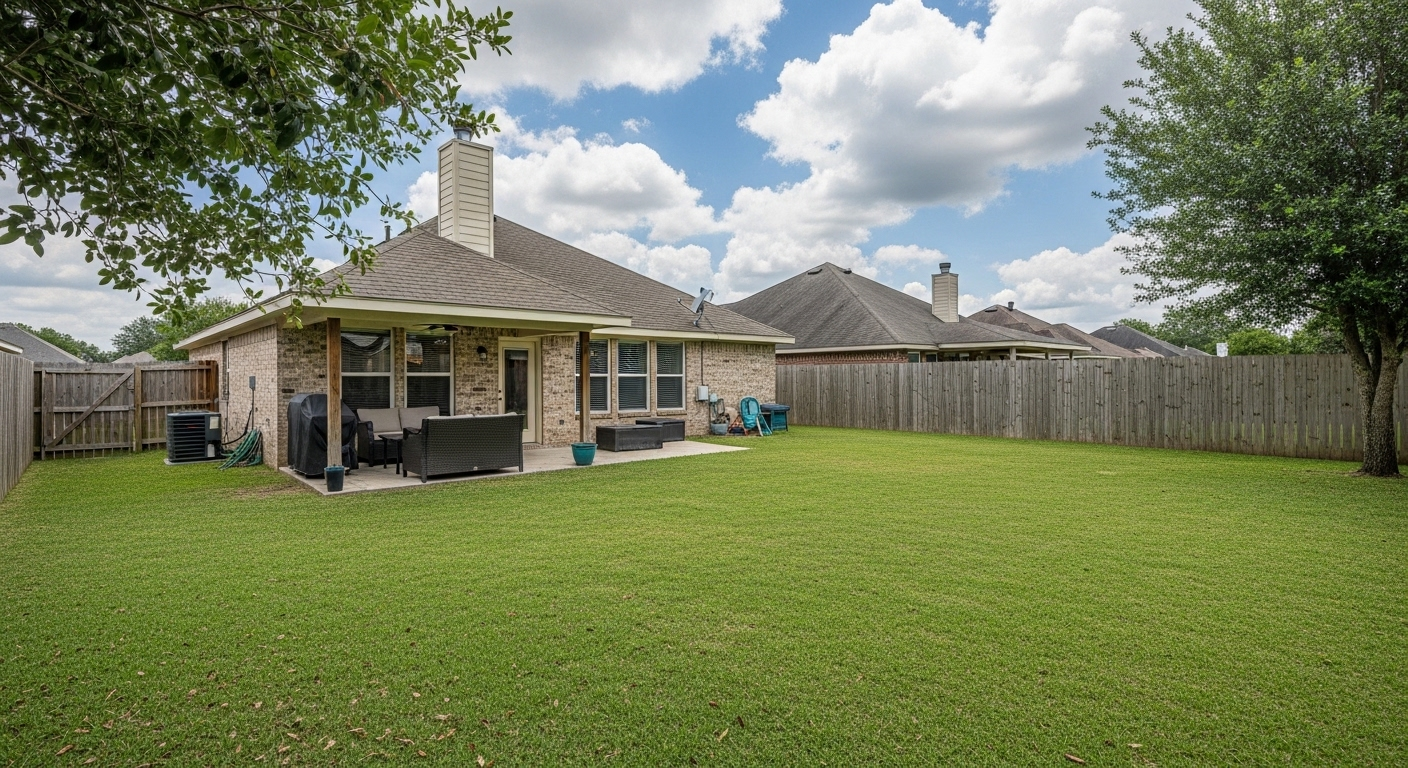
Most homeowners do not begin thinking seriously about a privacy fence on the day they move in. The decision usually builds slowly. A backyard that once seemed fine starts to feel a little too exposed. A patio conversation feels less relaxed than expected. Children and pets use the yard often enough that the lack of a stronger boundary becomes more noticeable. A neighboring sightline that seemed minor at first begins to feel like a regular annoyance. This is why the best time to think about a privacy fence is usually before those frustrations become part of daily life. Once the irritation becomes routine, the homeowner is no longer planning. The homeowner is catching up to a problem that has already been shaping how the yard feels and functions.
Why Backyard Frustrations Tend to Build Gradually
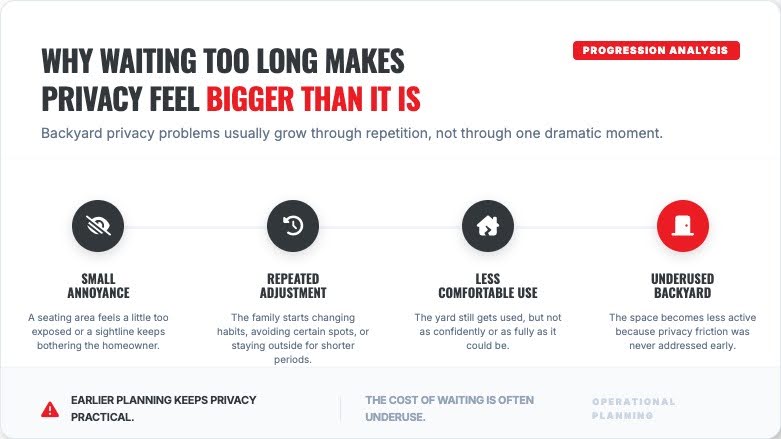
One reason privacy projects are often delayed is that the underlying frustrations rarely look urgent at first. A homeowner may notice that the backyard feels more open than expected, but not enough to act immediately. Over time, however, these small discomforts become more consistent. A family uses the yard more frequently. A pet needs a clearer boundary. A seating area never quite feels private enough to enjoy fully. None of these concerns is dramatic on its own, yet together they begin to define the experience of the space.
That gradual buildup is exactly why earlier planning matters. The yard often begins signaling what it needs long before the homeowner puts a name to it. If the same concern keeps returning, it is usually worth paying attention to before it grows into a more obvious limitation. Thinking ahead gives homeowners more room to make a practical decision rather than waiting until frustration turns the project into a reactive one.
Privacy Planning Works Better Before the Yard Feels Underused
Many homeowners assume they can simply wait until the need becomes obvious. The problem with that approach is that the yard may already be seeing less use due to the lack of privacy. People do not always stop using the backyard altogether. More often, they use it less comfortably. They stay outside for shorter periods. They avoid certain parts of the yard. They hesitate to host, linger, or fully settle into the space. In that sense, the cost of waiting is not only future inconvenience. It is currently underused.
A recent Denham Springs-focused article, Why Backyard Privacy Is Becoming a Bigger Homeowner Priority in Denham Springs, made this point by framing privacy as a livability issue rather than a cosmetic one. That local perspective matters because it reflects what many homeowners discover in practice. Privacy concerns are often less about appearance and more about whether the backyard is truly functioning as part of the home.
 Earlier Thinking Helps Homeowners Plan Around Real Yard Use
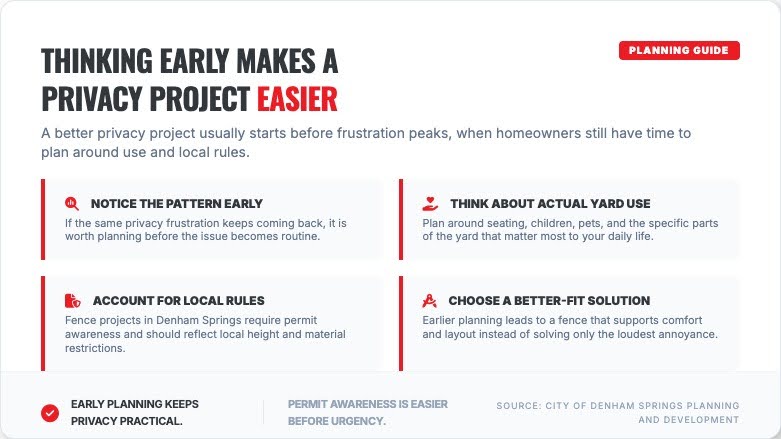
One of the clearest benefits of planning is that homeowners can shape the project around how the yard is actually used. A privacy fence works best when it is considered in relation to seating areas, play zones, pet movement, gate placement, and the parts of the yard that feel most exposed. When the project is delayed too long, people sometimes focus only on solving the most obvious annoyance instead of taking a broader look at how the space should work overall.
Earlier planning gives more room for better decisions. Homeowners can ask what parts of the property matter most to daily life, where privacy would make the biggest difference, and how the backyard should feel once the work is complete. Those questions tend to lead to better outcomes than waiting until one repeated frustration forces a rushed response.
Privacy Is Easier to Address Before It Starts Affecting Routine
Once a backyard frustration becomes part of normal routine, it often starts affecting the household in ways that seem small but consistent. A child is asked to stay closer to the house. A dog’s outdoor time feels less settled. A homeowner repositions chairs or changes habits to compensate for exposure. These are not major disruptions, yet they represent the yard adjusting to a missing element instead of functioning the way the homeowner would prefer.
This is why earlier thinking is usually more practical. Privacy improvements tend to work best when they are made before the family has fully adapted to the yard’s limitations. It is easier to improve a space that still has clear potential than to keep living around the same friction until it finally feels impossible to ignore.
Local Permit Awareness Is Part of Thinking Ahead
Planning early also matters because privacy fencing is not only a design or comfort decision. In Denham Springs, homeowners need to account for local rules before building. The City of Denham Springs fence regulations and permit form make clear that permits are required and that fence placement is subject to local restrictions. This is one more reason it helps to think ahead instead of waiting until the project feels urgent.
Permit awareness may not be the most exciting part of a backyard upgrade, but it plays an important role in whether the process feels smooth or frustrating. A homeowner who starts thinking early can consider privacy goals, lot conditions, and local requirements together. That is much easier than reaching the point of strong frustration and then discovering that planning steps still need to happen before the project can move forward.
Backyard Privacy Is Usually About Daily Life, Not Just Appearance
Homeowners sometimes delay privacy decisions because they think of them as aesthetic upgrades that can always wait. In reality, backyard privacy is usually more connected to function than style. The question is often not how the fence will look from a distance. It is how the yard will feel on ordinary days. Will outdoor meals feel calmer? Will children and pets use the space more comfortably? Will the backyard finally feel like a clearer extension of the home?
That is why waiting can be more costly than it appears. The household may already be missing out on a better version of the property while treating the issue as optional. Once privacy is understood as part of daily comfort, earlier planning makes much more sense.
What Kip McDonald Says Homeowners Often Realize Too Late
Kip McDonald, owner of Prime Scape Fence, says many homeowners reach out only after the same backyard annoyance has been bothering them for a while. In his experience, the decision often comes after people realize they are not using the yard as comfortably as they want to. That is important because it shows how privacy projects typically develop in practice. The issue is rarely sudden. It is cumulative. A homeowner notices the same limitation often enough that it finally becomes worth solving on purpose.
That pattern is useful for other homeowners to keep in mind. If the same privacy concern keeps coming up, it is probably worth taking seriously before it becomes a larger source of dissatisfaction with the yard as a whole.
Earlier Planning Usually Leads to a Better-Fit Solution
Homeowners who think ahead typically have more time to make a better-fit decision. They can consider which type of privacy matters most, how the fence should support the yard’s layout, and what kind of boundary will make the most practical difference for family life. That often leads to a stronger long-term result than treating the project as a quick fix once the frustration becomes too familiar.
A local example of that next step appears on this Denham Springs fence service area page, which reflects the kind of local support homeowners often seek after deciding that privacy should be planned intentionally rather than postponed indefinitely.
Why Waiting Often Makes the Decision Feel Harder
Another reason to think early is that delay can make the project feel bigger than it is. Once frustrations pile up, the privacy fence starts to represent every unmet expectation the homeowner has for the yard. That can make the decision feel more emotionally loaded than it needs to be. Earlier planning keeps the issue smaller and more practical. The homeowner is simply improving how the property works before the problem becomes a recurring source of dissatisfaction.
That mindset tends to produce better choices. Instead of reacting to irritation, the homeowner is responding from a clear understanding of how the yard should function and what is currently preventing it from functioning as smoothly as it could.
Conclusion
The best time to consider a privacy fence is before backyard frustrations add up, because privacy problems usually grow through repetition, not through a single dramatic moment. A yard that feels slightly too exposed today may feel significantly underused a year from now. By thinking earlier, Denham Springs homeowners can plan around real yard use, account for local requirements, and improve outdoor comfort before minor annoyances become part of everyday routine. In most cases, the smartest time to solve a privacy issue is before the yard starts teaching the same lesson over and over.

