
Social Media’s Direct Role in Pest Control Conversions
From “Likes” to Leads: Why Social Media Now Plays a Direct Role in Local Pest Control Conversions
Local service marketing has traditionally focused on three things: search rankings, directories, and paid advertising. For decades, the logic was simple: if a homeowner finds you, they will call you. While these channels remain the foundation of lead generation, the landscape has shifted. Today, for pest control companies, the line between discovery and conversion is narrowing, and social media has become the bridge that connects the two.
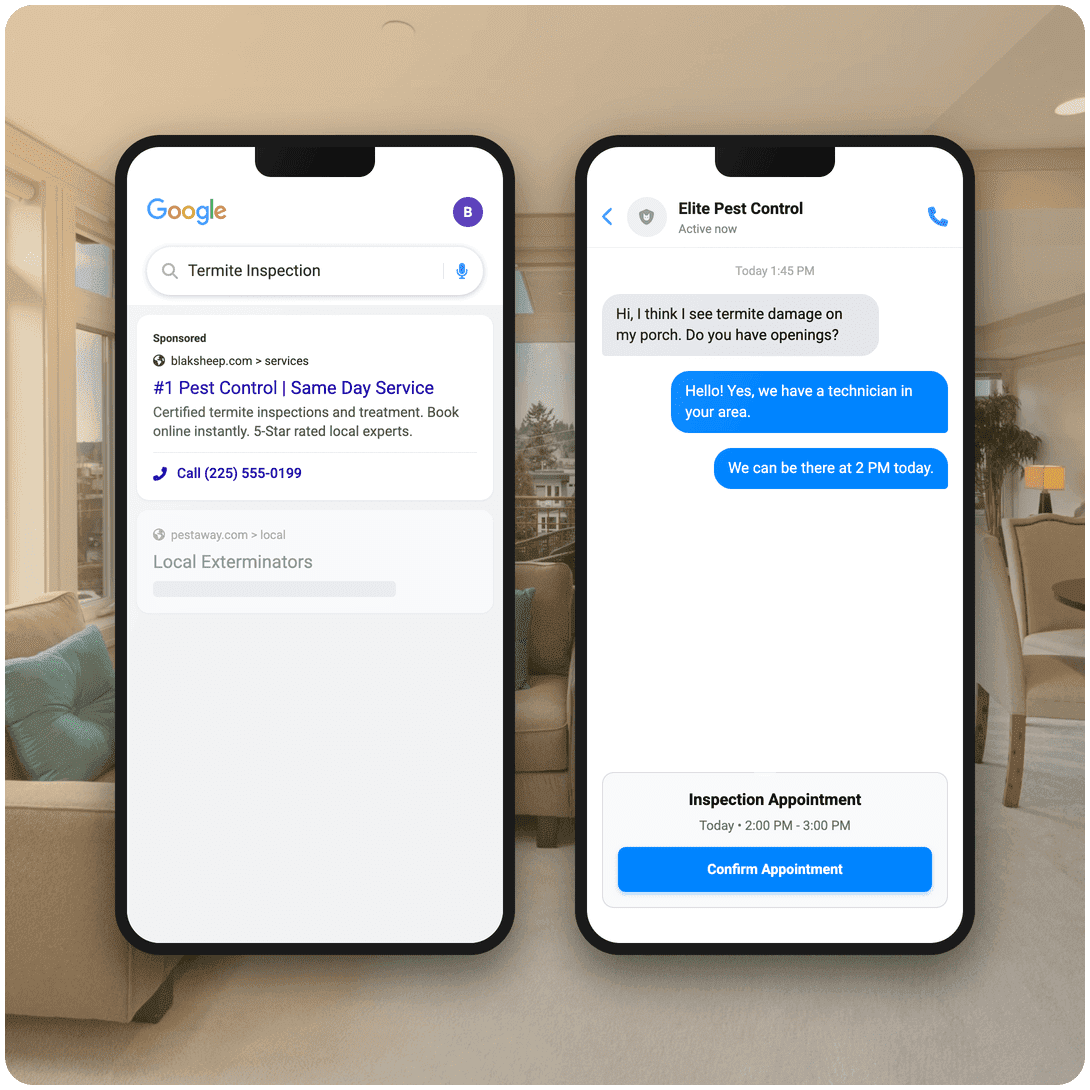
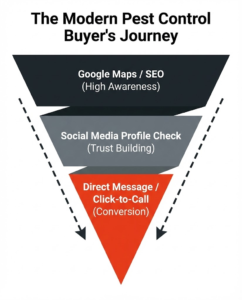
Homeowners facing pest issues often start with a panic-induced Google search. However, the process rarely ends with the first click. After identifying a few nearby providers, many potential customers pause. They look for additional confirmation—a second opinion—before inviting a stranger into their home to handle chemicals or wildlife. Social media profiles frequently provide that confirmation, offering insight into how a company presents itself, communicates with customers, and demonstrates expertise.
This secondary step is where the conversion actually happens. A homeowner might find a business on Google Maps, but they choose the business based on what they see on Facebook or Instagram. In this new ecosystem, social media is no longer about vanity metrics like follower counts; it is a conversion engine that turns tentative searchers into booked appointments.
The Bridge Between Discovery and Action
A recent industry report published on Social Media Explorer explored how pest control companies are leveraging social media to support this conversion journey. The analysis noted that social platforms often act as a critical bridge between search visibility and direct contact. This is particularly true for the “anxious buyer”—the homeowner who needs reassurance that the technician they are hiring is professional, safe, and effective.
This dynamic is consistent with how consumers behave across other service categories. Social media offers visual and contextual information that traditional directory listings simply cannot match. A Google listing provides an address and a phone number. A Facebook page provides a video of a technician explaining how they treat for termites, photos of the team at a local charity event, and real-time responses to customer questions.
For pest control, where uncertainty can delay action, this clarity is decisive. It removes the friction of “unknowns.” When a customer can see the face of the person who might show up at their door, the psychological barrier to booking a service drops significantly.
Data-Driven Trust: Why “Visual Proof” Converts
Conversion is not just about being found; it is about being trusted immediately. According to BrightLocal research, consumers are increasingly using social platforms as alternative search engines to validate local businesses. Their data suggests that a significant percentage of consumers view a business’s transparency on social channels as a key indicator of trustworthiness. In pest control, transparency translates to “visual proof.”
Effective social strategies now rely on showing the work. Posts that feature “before and after” comparisons of pest exclusions or videos identifying local seasonal pests (such as spring swarming termites) demonstrate competency. This content does more than educate; it proves to the prospect that the company knows the local environment and has solved this specific problem before.
Responsiveness as a Conversion Trigger
Beyond content, conversion is heavily influenced by responsiveness. In the on-demand economy, homeowners expect immediate answers. They may message a company directly via Facebook Messenger or Instagram DMs, or simply observe how quickly the brand responds to public comments.
This is where “speed-to-lead” moves to social media. Data from HubSpot indicates that 90% of customers rate an “immediate” response as important or very important when they have a customer service question. In the context of a pest infestation, “immediate” creates a massive competitive advantage. Fast, professional responses signal availability and reliability—two traits that are non-negotiable in an emergency situation.
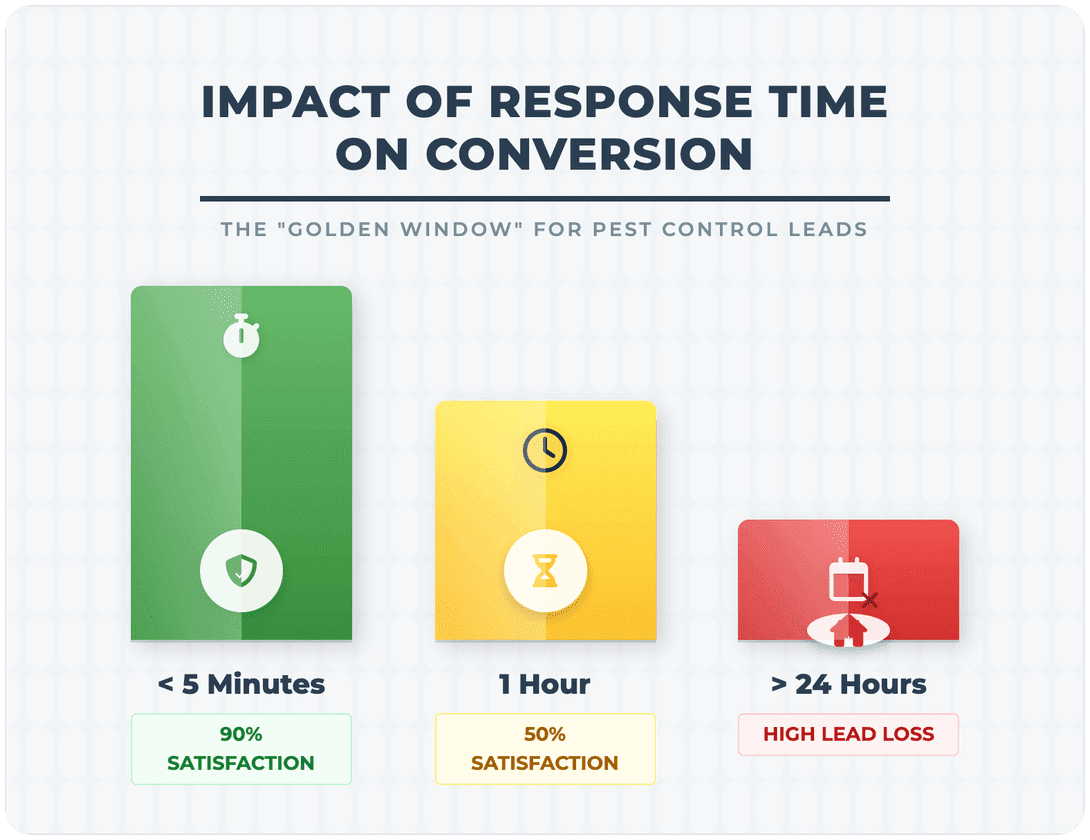
Conversely, a delayed or absent response does not just annoy the customer; it quietly redirects them to a competitor. If a homeowner asks, “Do you handle wasp nests?” in a Facebook post and gets no response, they will return to Google and call the next number on the list. The marketing budget spent to get them to the page is wasted because the operational response was missing.
Integrated Marketing: The Agency Perspective
From a marketing perspective, this means social media performance can no longer be evaluated in silos. Its impact is measured in confidence and momentum. When a homeowner feels informed and reassured, they are more likely to move forward with a call or booking.
Agencies working with pest control companies are increasingly aligning social media strategies with local conversion goals. BlakSheep Creative, for example, has positioned social media as a supporting channel that reinforces visibility and trust rather than a separate branding effort. This reflects a broader shift toward integrated local marketing systems.
By conducting a “snapshot audit” of a company’s digital presence, these agencies can identify where conversion leaks occur. Often, they find that while a company has great SEO, its social presence raises doubts. By tightening the integration between search and social—ensuring that the brand promise made on Google is kept on Facebook—pest control operators can see a measurable lift in booked jobs.
The Bottom Line for Operators
The takeaway for pest control operators is clear: Social media influences outcomes even when it is not the first point of contact. It functions as the “closing argument” in the court of consumer opinion. As homeowners move quickly from problem to solution, every touchpoint that reduces doubt contributes to conversion.
In 2026, a pest control company’s social profile is not just a bulletin board; it is a landing page. It is a customer service desk. It is a trust signal. Treating it with the same seriousness as a website or a PPC campaign is no longer optional—it is essential for capturing high-intent demand in a crowded local market.

