
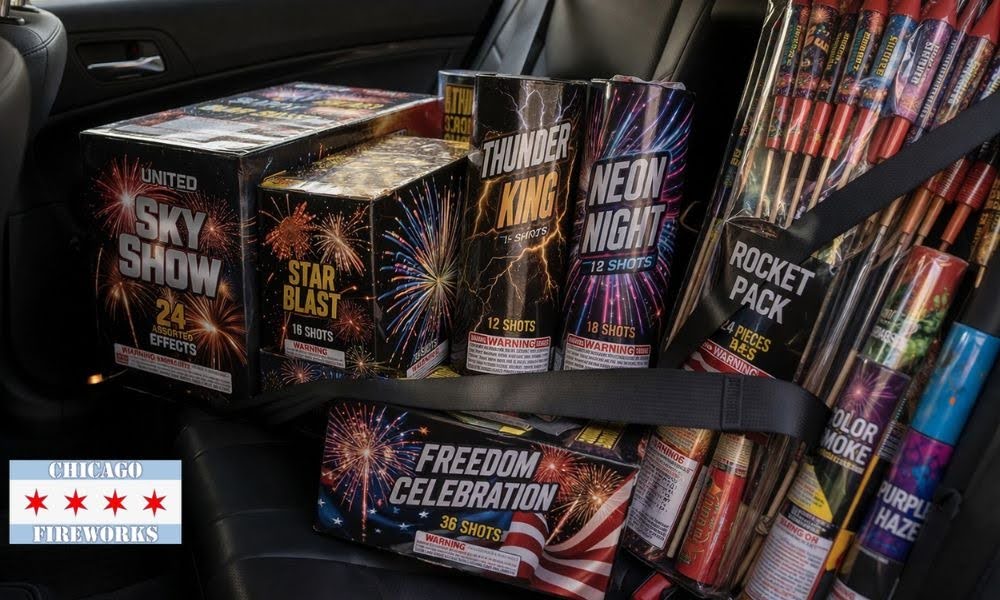
Is It Safe to Transport Fireworks in a Hot Car from Hammond?
You found fireworks near me, loaded your bags at the store, and now you’re sitting in a hot car in a Hammond, Indiana parking lot in July. The question hits: is this safe? Consumer fireworks sold in Hammond contain oxidizers, fuel compounds, and binders that are sensitive to prolonged heat exposure.
A closed car in summer can reach 130°F to 170°F within 60 minutes, according to the National Highway Traffic Safety Administration. That temperature range does not typically trigger ignition in properly manufactured consumer fireworks, but it does create conditions that degrade performance and increase accident risk. Understanding the exact risks before you drive helps you make the right calls from the moment you leave the store.
What Actually Happens to Fireworks in a Hot Car
Consumer fireworks are classified as Division 1.4G explosives by the U.S. Department of Transportation. This classification means they are low-hazard and designed to resist accidental ignition under normal transport conditions. The pyrotechnic compounds inside, typically potassium nitrate or potassium perchlorate mixed with metal fuel powders, have autoignition temperatures that range from 300°F to 500°F depending on formulation.
A car interior reaches those thresholds only under extreme, prolonged conditions. The real risk from heat is not spontaneous combustion. Heat accelerates moisture loss from the paper casings and cardboard tubes, which weakens structural integrity. A weakened tube can cause unpredictable burn patterns or misfires when you eventually light the product. Products stored above 120°F for extended periods may also show fuse degradation, which affects burn timing.
How Long Is Too Long in a Hot Vehicle
The U.S. Consumer Product Safety Commission recommends storing fireworks in a cool, dry place away from heat sources. “Cool” in this context means below 75°F. A car parked in direct July sun in Hammond can exceed 130°F within 30 minutes of the engine shutting off, based on data from the National Renewable Energy Laboratory’s vehicle thermal testing studies.
Practical guidance from fire safety experts sets a safe window of about 30 minutes max for fireworks sitting in a hot, unventilated vehicle. Beyond that, degradation risk rises. The fix is straightforward:
- Park in shade when loading fireworks.
- Run the air conditioning before placing products in the car.
- Keep fireworks in the coolest part of the vehicle, typically the rear floor or trunk with ventilation.
- Never leave fireworks in a parked car for hours, especially on a sunny summer day.
- Drive directly home after purchase.
The Trunk vs. Cabin Question
Many buyers default to tossing fireworks in the trunk. This is generally the right call, but it depends on the car. In sedans, a closed trunk can trap heat at levels equal to or higher than the cabin. A ventilated trunk or the rear passenger floor with the air conditioning running is the better option for longer drives.
SUVs and hatchbacks present a different scenario. The cargo area sits inside the climate-controlled cabin space, which means air conditioning reaches it directly. This setup is better for keeping products cool. Place bags flat to avoid shifting and position them away from direct sunlight through rear windows. Tinted windows reduce solar heat gain by up to 60%, according to research published by Lawrence Berkeley National Laboratory, making a meaningful difference on a long drive.
What Chicago Fireworks Store Recommends
Fireworks near me bring thousands of buyers to the Chicago Fireworks Store at 4220 Calumet Ave, Hammond, IN each season. The store carries only name-brand products with no re-labels, which matters for transport safety. Name-brand products are manufactured to consistent structural standards, meaning casings and fuses are less likely to degrade under moderate heat stress compared to low-quality re-labeled alternatives.
Staff at Chicago Fireworks routinely advise customers on safe transport at the point of sale. Their in-store video displays show exactly how each product performs, which helps buyers understand what they have in the car. If you have questions before or after your visit, call (312) 620-5830. Buying quality products from the start reduces transport risk because the materials are built to tighter tolerances.
Safe Storage Once You Get Home
Getting home safely is only half the equation. Where you store fireworks between purchase and use matters just as much. The Indiana State Fire Marshal recommends storing consumer fireworks in a locked, dry location away from heat sources, open flames, and flammable materials.
Specific storage rules that reduce risk:
- Store in a metal or wood box, not plastic containers that can trap moisture unevenly.
- Keep away from water heaters, furnaces, and direct sunlight through windows.
- Do not store in a garage where vehicles produce heat and exhaust.
- Keep out of reach of children at all times.
- Separate fused products from loose sparklers and novelty items.
- Check the U.S. Consumer Product Safety Commission fireworks safety guidelines for full storage requirements.
What the Indiana Code Says About Transport
Indiana Code 22-11-14 governs the purchase, use, and possession of consumer fireworks. It does not restrict the act of transporting legally purchased fireworks in a personal vehicle within the state. However, Illinois law significantly restricts what can be brought across the state line, and buyers who purchase fireworks near me in Hammond and drive back to Chicago should be aware that Illinois law limits consumer fireworks to sparklers and certain novelty items.
Transporting products that exceed Illinois’s legal threshold puts buyers at legal risk regardless of where the purchase was made. The Indiana-Illinois border sits less than one mile from the Chicago Fireworks Store. That short distance means the legal landscape changes almost immediately after you leave the parking lot heading west. Know your destination state’s rules before you buy.
Getting the Most from Your Purchase
Fireworks degrade in quality when exposed to repeated heat cycles, even if they never reach ignition temperatures. A product that went from a 70°F store to a 140°F car and back to a 65°F basement multiple times before use will not perform the same as one stored consistently at room temperature.
Buy fireworks products from Chicago Fireworks close to your planned use date when possible. This reduces the number of storage and transport cycles. The store is open May through August, 9am to 9pm, with extended hours through July 4th. Planning your purchase within a week of your event keeps products in their best condition and reduces the time they spend in storage waiting to be used.

