
What Are the Disadvantages of Standing Mats?
A standing mat is widely recommended as an ergonomic essential, but it is not without drawbacks. Like any product, the wrong mat or the wrong setup creates problems rather than solving them. Understanding the limitations upfront helps you avoid common mistakes and get the most out of the investment. This article covers the real disadvantages of standing mats, who they may not suit, and what to watch for before buying.
They Can Create Instability Underfoot
The cushioning that makes a standing mat comfortable can also work against you. A mat that is too thick or too soft reduces the sense of ground contact underfoot. That loss of stability affects balance, particularly for:
- Older users with reduced proprioception
- People with ankle instability or previous ankle injuries
- Users who wear thick-soled shoes on top of an already soft mat
- Anyone standing on an uneven surface beneath the mat
When instability is an issue, the body compensates by gripping the floor with the toes and tensing the lower leg muscles. That creates the exact kind of fatigue the mat was supposed to prevent.
The fix is straightforward: choose a mat in the 0.5 to 0.75 inch thickness range and avoid gel-core mats that compress too fully under body weight. Pairing the right thickness with firm, flat footwear eliminates most instability complaints from the start.
Low-Quality Mats Degrade Quickly
Not all anti-fatigue mats are built to last. Low-density foam compresses permanently within weeks of regular use. Once the foam bottoms out, the mat provides no more cushioning than the bare floor beneath it.
Signs a mat has degraded past usefulness:
- Visible compression lines where you stand most often
- The mat feels firm rather than giving when you press it with your thumb
- Edges have started to curl upward from repeated use
- Surface has cracked or flaked
A degraded mat is worse than no mat in one specific way: it creates a false sense of support. Users assume they are getting ergonomic benefits when the material is no longer performing. Low-density mats typically last three to six months under daily use. High-density options last several years and hold their shape through consistent pressure.
Buying a cheap mat and replacing it every few months costs more over time than investing in a high-density option from the start. Factor longevity into the price comparison before choosing based on upfront cost alone.
They Take Up Floor Space
A standing comfort mat adds a permanent footprint to the area around a desk. In small home offices, studio apartments, or shared workspaces, that extra 2 to 3 square feet becomes a real problem.
Common space-related complaints include:
- The mat extends beyond the desk frame and creates a tripping hazard in walkways
- Chair wheels roll onto the mat when transitioning to a seated position, causing the chair to tilt
- The mat bunches or shifts when pushed by furniture
- Pets or children treat the mat as a play surface, moving it out of position
- Oversized mats collect dust and debris along the edges where they extend past the desk
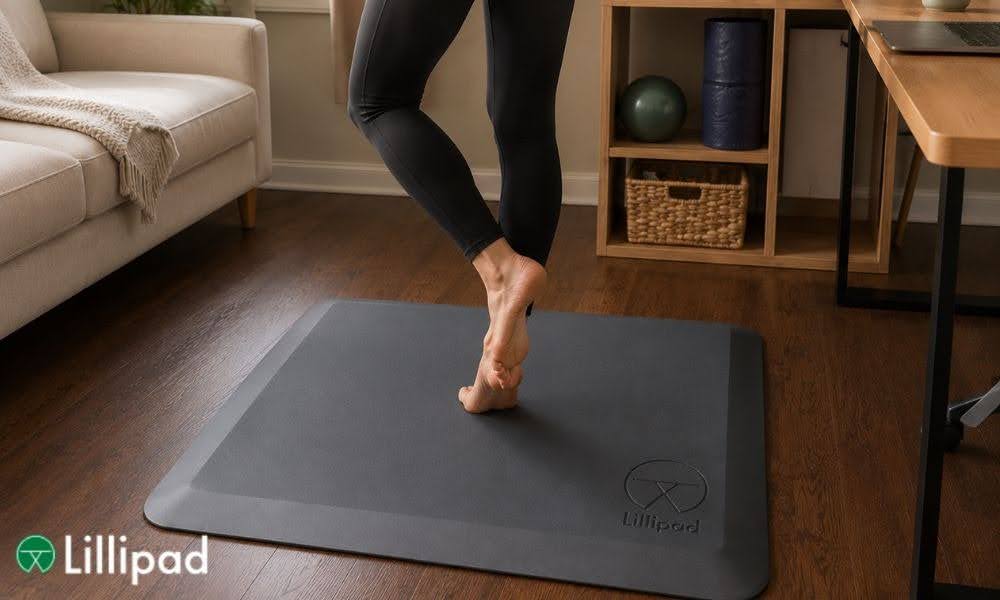
Choosing a right mat sized to fit within the desk’s leg frame solves most of these issues. The Lillipad anti-fatigue standing mat measures 24 x 17 inches, engineered to sit inside the desk frame at any height rather than extending into the surrounding space. That keeps the workspace tidy and removes the tripping risk entirely.
They Do Not Replace Movement Breaks
A standing mat reduces fatigue from static standing, but it does not eliminate the need to move. Standing in one place for hours, even on a cushioned surface, still restricts circulation compared to walking and causes muscle fatigue in the hips and lower back.
What a mat cannot do:
- Replace the cardiovascular benefit of walking
- Prevent stiffness from remaining in one position too long
- Compensate for a poorly adjusted desk height
- Offset the effects of standing with locked knees or poor posture
- Eliminate swelling in the lower legs from prolonged static standing
The mat works best as part of a routine that includes alternating between sitting and standing every 20 to 30 minutes and taking short movement breaks every hour. Without that habit, even the best mat has limited effect. Think of it as a support tool, not a complete solution on its own.
They Can Be Difficult to Keep Clean
Standing mats collect dust, debris, and moisture over time. Open-cell foam mats absorb spills and are difficult to dry fully, which creates conditions for odor buildup. Textured surfaces trap fine particles that require detailed cleaning to remove.
Maintenance issues by mat type:
- Open-cell foam: Absorbs liquid. Cannot be submerged or machine washed. Spills are difficult to fully remove.
- Closed-cell foam: Wipes clean easily but may feel slightly firmer underfoot than open-cell options.
- Rubber mats: Most durable and easiest to clean but heavier and harder to move around the workspace.
- Gel-core mats: The gel layer can shift or leak if the outer casing is punctured during cleaning or moving.
For desk environments where drinks are nearby, a closed-cell foam mat with a smooth, wipeable surface is the most practical choice. Wiping the mat down weekly prevents buildup and extends its lifespan significantly.
They Are Not Suitable for Every Floor Type
Most anti-fatigue mats perform well on hard floors like tile, hardwood, and concrete. On carpet, performance changes significantly and often for the worse.
On thick carpet, a standing mat:
- Sits unevenly and creates a rocking surface underfoot
- May slide or shift without a non-slip backing specifically designed for carpet use
- Adds height that can feel awkward when transitioning on and off repeatedly
- Compresses the carpet beneath it, leaving permanent marks over time
On low-pile commercial carpet, most mats perform adequately. On plush residential carpet, a thinner, denser mat with a non-slip base is the better option. Always check the manufacturer’s floor compatibility before buying.
They Require the Right Footwear to Work Properly
A standing mat works best when paired with appropriate footwear. Barefoot standing on a mat can feel comfortable initially but places strain on the plantar fascia over longer sessions. Very thick-soled shoes reduce the proprioceptive benefit the mat provides.
Best footwear options for mat use:
- Thin-soled supportive shoes with arch support
- Lightweight indoor sneakers
- Supportive slides or sandals for home office use
- Avoid completely flat shoes with no arch support for sessions longer than 30 minutes
Knowing the Limits Helps You Choose Better
Every ergonomic product has trade-offs. A standing mat is not a universal fix, and buying the wrong one creates new problems. The disadvantages above are avoidable with the right thickness, density, and size for your specific setup.
At Lillipad, the standing mat is designed to work specifically within the desk frame, eliminating the space and tripping issues that affect oversized mats. Pair it with our foldable electric standing desk for a setup where every component is built to work together and built to last.

