
Can You Do Water Remediation Yourself?
Yes, you can do water remediation yourself for small to mid-sized water damage situations. Remediation equipment rental makes DIY viable by giving homeowners access to the same professional-grade dehumidifiers, air movers, and extraction tools that contractors use. The key is acting fast, using the right equipment, and knowing when the damage is beyond DIY scope. Here is exactly what the process involves.
What Water Remediation Actually Involves
Water remediation is the process of removing water, drying structural materials, and preventing mold growth after a leak, flood, or pipe failure. It is not simply mopping up visible water. Moisture penetrates drywall, subfloor, insulation, and wall cavities within hours of exposure. Addressing only the surface leaves hidden moisture that causes mold within 24 to 48 hours.
A complete remediation covers four stages:
- Water extraction: Removing standing water using a wet vacuum or water extractor
- Structural drying: Using air movers and dehumidifiers to dry walls, floors, and ceilings
- Moisture monitoring: Tracking drying progress with a moisture meter daily
- Mold prevention: Keeping relative humidity below 50 percent throughout the drying period
Skipping any stage increases the risk of mold colonization and long-term structural damage.
When DIY Is a Realistic Option
DIY water remediation works well for clean water damage from a burst pipe, overflowing sink, or appliance leak that is caught within 24 hours. Clean water, classified as Category 1 by the Institute of Inspection Cleaning and Restoration Certification, does not carry sewage or contaminants and is safe to handle without specialized protective equipment.
Small to mid-sized affected areas, typically under 100 square feet, are manageable for a homeowner with the right equipment. The conditions where DIY makes practical sense include:
- Water source is clean and has been stopped
- Damage is limited to one room or zone
- No sewage or floodwater is involved
- Affected materials are hard surfaces or carpet, not structural framing
- Drying can begin within the first few hours of the water event
When You Should Not DIY
Some water damage scenarios require licensed professionals regardless of the homeowner’s capability. Category 2 water, which includes washing machine overflow or dishwasher discharge, contains biological contaminants. Category 3 water, which includes sewage backup or floodwater from outside, is classified as grossly contaminated and requires full protective gear and licensed remediation.
Other situations where DIY is not appropriate:
- Water has been present for more than 48 hours
- Visible mold growth is already present
- Water has reached electrical panels, outlets, or structural framing
- Affected area exceeds 100 square feet across multiple rooms
- The building has asbestos-containing materials that may have been disturbed
FEMA’s flood cleanup safety guidelines recommend wearing long pants, gloves, goggles, and masks when handling any flood-related debris and consulting professionals when structural damage is suspected.
Equipment You Need for DIY Water Remediation
Professional-grade equipment is what separates effective DIY remediation from incomplete drying that leads to mold. Consumer-grade fans and shop vacuums do not move enough air volume or extract moisture efficiently enough for structural drying. Remediation equipment rental gives homeowners access to the correct tools without the cost of purchasing them.
Core equipment for a DIY water remediation job:
- Water extractor: Pulls standing water from carpet, subfloor, and hard surfaces
- Air movers: High-velocity fans that push moisture off surfaces and into the air
- Commercial dehumidifier: Captures airborne moisture and maintains safe humidity levels
- Moisture meter: Measures moisture content in walls, floors, and ceilings to confirm drying
- HEPA air scrubber: Filters airborne particles and mold spores during the drying process
At LA Restoration Rentals, all of these tools are available for daily or weekly rental with same-day delivery throughout Los Angeles and surrounding counties.
How to Dry a Water-Damaged Space Correctly
Drying order matters. Start with water extraction before running any air movers or dehumidifiers. Attempting to dry a space with standing water present wastes equipment capacity and extends the drying timeline. A water extractor removes the bulk of moisture from carpet and flooring in the first pass.
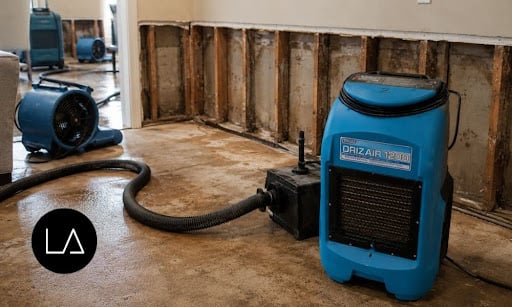
Once standing water is removed, position air movers at floor level facing walls at a 45-degree angle. This creates a circular airflow pattern that lifts moisture from floor surfaces and wall bases simultaneously. Run one air mover per 50 to 100 square feet of affected area. Pair each air mover with a commercial dehumidifier sized for the space. The Dri-Eaz Drizair 1200, available through LA Restoration Rentals, removes up to 18 gallons of water per day and includes an automatic pump-out system, making it suitable for single-room residential drying jobs.
Mold Risk During DIY Remediation
Mold begins colonizing wet organic materials within 24 to 48 hours at temperatures between 60 and 80 degrees Fahrenheit. Drywall paper, wood framing, and carpet backing are the most common colonization points after water damage. Visible mold is not always present even when active growth is occurring inside wall cavities.
To reduce mold risk during DIY remediation:
- Begin extraction and drying within the first 24 hours of the water event
- Keep indoor relative humidity below 50 percent throughout the drying process
- Check moisture meter readings daily and reposition equipment as dry zones shift
- Remove and discard saturated drywall, insulation, or carpet padding that cannot be dried within 48 hours
- Do not close off the affected area, adequate airflow is required for effective drying
How Remediation Equipment Rental Works
Renting remediation equipment is straightforward. Most rental providers offer daily and weekly rates, with delivery and pickup included. Equipment is delivered clean and calibrated. The rental provider typically advises on equipment quantity based on the affected square footage and material types involved.
Remediation equipment rental costs significantly less than hiring a full restoration contractor for clean water damage scenarios. A typical residential drying job using rented equipment runs $200 to $600 for a week of rental, compared to $2,000 to $5,000 for a contracted remediation on a similar sized loss. Rental is cost-effective when the damage scope is clear and manageable.
What to Do Before Returning Equipment
Before ending the rental period, confirm that all affected materials have reached safe moisture levels. Wood framing should read below 19 percent moisture content on a pin-type moisture meter. Drywall should read below 1 percent using a non-invasive moisture meter. Carpet and padding that did not reach safe levels within 48 hours should be removed rather than dried further.
Document all moisture readings with photos before returning equipment. This creates a record that drying was completed correctly, which is useful for insurance claims. Dehumidifier and air mover rentals at LA Restoration Rentals include a handheld moisture meter with every unit so drying progress can be tracked accurately throughout the job. Call (310) 493-2162 to reserve equipment for same-day delivery across Los Angeles.

