
Why More Richmond Homeowners Are Switching to Ductless HVAC Systems
Richmond summers are no joke. When it’s 95 degrees out with humidity thick enough to feel like you’re walking through a warm towel, your HVAC system stops being a convenience and starts being a necessity. And for a growing number of Richmond homeowners — especially those with older homes, recent additions, or rooms that never seem to get comfortable no matter what the thermostat says — ductless HVAC systems have become the answer they’ve been looking for.
If you’ve heard the term but aren’t totally sure what ductless means or whether it applies to your situation, here’s a straightforward breakdown of what these systems are, how they work, and why they’ve caught on so quickly in the Richmond market specifically.
What a Ductless System Actually Is
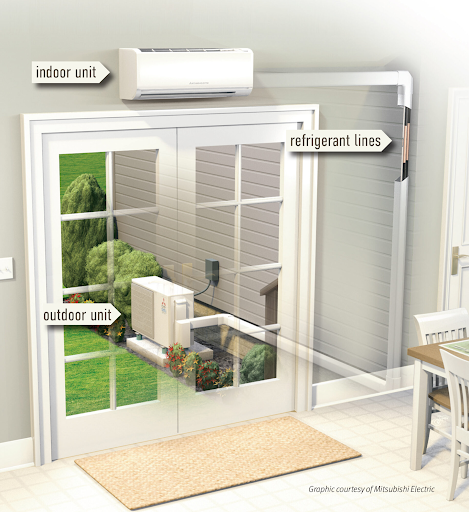
A ductless HVAC system — also called a mini-split — consists of two main components: an outdoor compressor unit and one or more indoor air-handling units mounted on the wall or ceiling inside the home. The two components are connected by a small conduit running through the wall that carries refrigerant, power, and a condensate drain line. No ductwork required.
Each indoor unit operates independently, which means you can set different temperatures in different rooms or zones. One bedroom can stay cooler while a living room runs warmer, all pulling from the same outdoor unit. That level of control is something a traditional ducted system simply can’t match. With conventional setups, you’re heating or cooling the entire house to one temperature whether you’re using every room or not — which wastes a significant amount of energy every single day.
Why Richmond Specifically Makes a Strong Case for Ductless
Richmond’s climate is one of the main reasons ductless systems have gained so much traction here. The region deals with genuinely cold winters and genuinely hot, humid summers — which means you need a system that performs reliably at both extremes. Modern ductless heat pumps are built for exactly that. High-efficiency models maintain effective heating even when outdoor temperatures drop well below freezing, which takes care of the concern homeowners traditionally had about heat pumps struggling through Virginia winters.
Richmond also has a large share of older housing stock — homes built well before central air conditioning was standard, where adding ductwork is either extremely difficult, expensive, or both. Crawl spaces too tight to run ducts through, plaster walls that can’t be disturbed, historic properties where duct installation would cause real damage — these situations come up constantly across Richmond neighborhoods. Ductless systems bypass the duct question entirely, making them the practical path forward when traditional options just don’t fit the house.
For homeowners who’ve added a sunroom, converted a garage, finished a basement, or built any kind of addition that the existing duct system doesn’t reach, ductless is almost always the fastest and most cost-effective way to get that space comfortable year-round. Running new ductwork to a single room addition rarely makes financial sense. A single-zone mini-split almost always does.
The Energy Efficiency Argument
One of the biggest selling points of ductless systems is efficiency, and it’s worth understanding why the gap is as large as it is. Traditional ducted systems lose a meaningful percentage of their conditioned air through leaks and heat transfer in the ductwork — estimates suggest this can account for 20 to 30 percent of energy loss in many homes. Ductless systems deliver conditioned air directly into the living space with no ductwork losses at all.
On top of that, the ability to condition only the zones you’re actively using means you’re not paying to heat or cool empty rooms around the clock. For homeowners who work from home, keep irregular schedules, or have sections of the house they rarely use, the monthly savings add up quickly — especially through a Richmond summer when the system is running hard for months at a stretch.
That efficiency only gets realized with proper installation, though. An undersized outdoor unit will run constantly and still struggle to keep up. An oversized one will short-cycle, which is hard on the compressor and leaves the air feeling clammy because the system isn’t running long enough to properly dehumidify the space. Getting a proper load calculation done before installation is what separates a system that performs the way it’s supposed to from one that disappoints from day one. Scheduling HVAC services in Richmond with a technician who does that calculation correctly upfront makes all the difference in long-term performance and satisfaction.
Is a Ductless System Right for Your Home?
Ductless isn’t the right answer for every situation, and it’s worth being honest about that. For a newer home with well-sealed, properly sized existing ductwork and a system that’s still performing well, a traditional central system makes perfectly good sense. Ductless earns its place when the existing setup isn’t working, when ductwork isn’t an option, or when you need flexibility and zone control that a conventional system can’t provide.
The best way to know for sure is to have a technician actually look at your home, assess the existing system, and give you an honest comparison. Richmond homeowners who want to explore whether ductless heating and cooling makes sense for their specific situation can get a straightforward assessment without any obligation — just a real answer based on what’s actually in the house.
Richmond heat will keep coming every summer. Having a system that handles it efficiently, consistently, and in every room of the house is worth getting right.

