
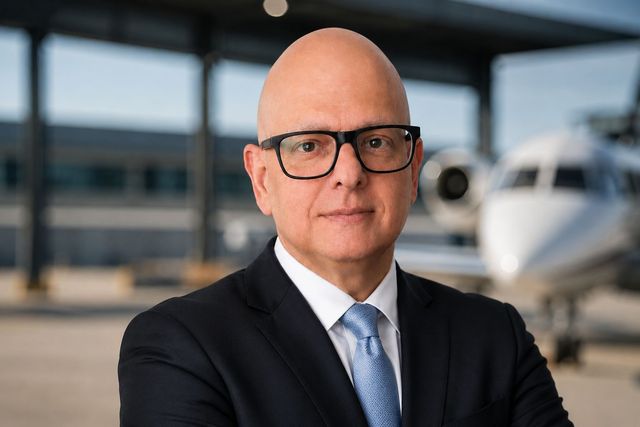
The Brazilian Executive Who Rewrote the Rules of Aviation Logistics — and What the U.S. Industry Can Learn From Him
Luiz Tenório spent three decades navigating the intersection of international aviation law, Brazilian customs regulation, and offshore helicopter operations. The framework he built from scratch — adopted into national law — offers a blueprint for emergency logistics that resonates far beyond Brazil’s borders.
Aviation & Logistics
WHEN HOURS DETERMINE OUTCOMES
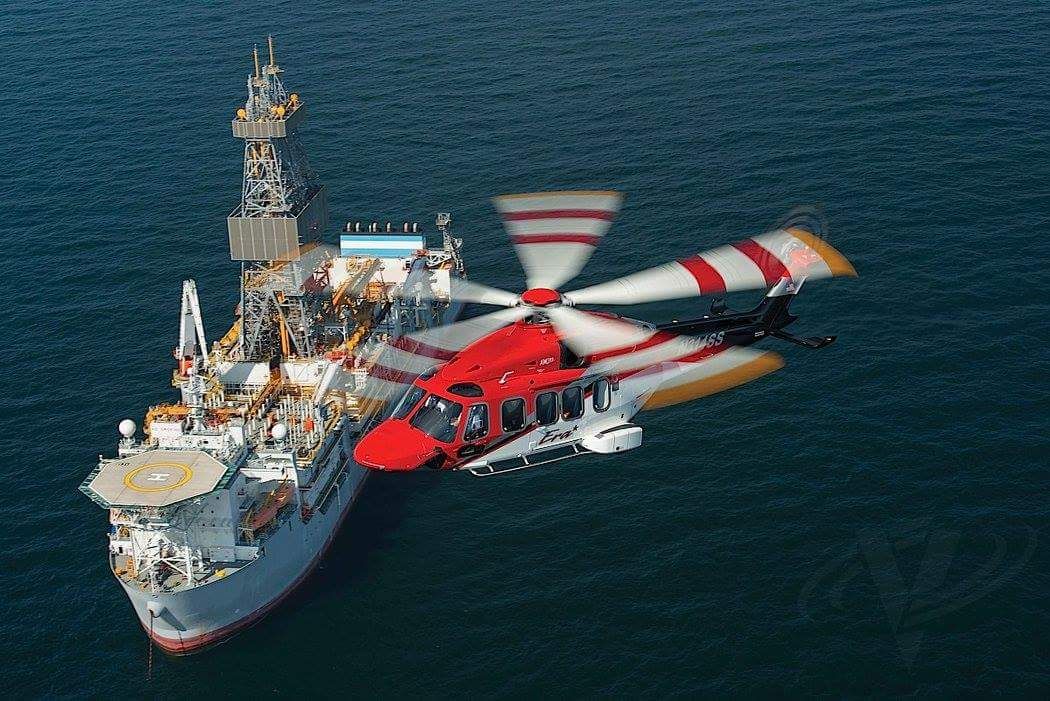
In the world of offshore helicopter operations, time is not an abstraction. When an aircraft is declared AOG — Aircraft on Ground, grounded pending maintenance — every hour of downtime carries a price tag measured in thousands of dollars and, in some cases, in the safety of workers who depend on that machine for transport, supply runs, and medical evacuation from offshore oil platforms. A medium-capacity offshore helicopter like the Leonardo AW139 can cost an operator an estimated USD 3,000 per hour of grounding — before accounting for contractual penalties or cascading disruptions to the fleet schedule.
It was precisely this pressure that Luiz Tenório Alves Pereira, founder and CEO of Aeroimport Logística Aduaneira, set out to relieve. Over the course of thirty years building one of Brazil’s most specialized aviation logistics companies, Tenório did something that had not been done before in Latin America’s largest economy: he designed, negotiated, and institutionalized a formal emergency customs clearance framework for aeronautical parts — a framework that the Brazilian Federal Revenue Service subsequently adopted as binding national regulation, applicable to every customs office in the country.
The result was a reduction in AOG clearance times from two to three business days — or an entire weekend when cargo arrived on Fridays — to three to seven hours from the moment of arrival, available around the clock, seven days a week, including weekends and public holidays. For an industry that cannot afford to wait, this was not a marginal improvement. It was a structural change.
A GAP BETWEEN TREATY AND PRACTICE
To understand the significance of what Tenório built, it helps to understand what existed before him. Brazil, as a member of the International Civil Aviation Organization (ICAO) — the United Nations specialized agency founded in 1944 with 191 member states — was formally committed to the standards and recommended practices established in Annex 9 of the Chicago Convention. That annex mandates that signatory states facilitate the expedited handling of aviation-critical cargo across international borders, including AOG shipments.
In practice, however, that international commitment had not been operationalized within Brazil’s domestic customs system. Emergency aeronautical parts arriving at Brazilian airports were processed identically to general commercial cargo. The Federal Revenue Service’s duty officers — the plantonistas authorized to work outside regular business hours — prioritized only a narrow set of categories: perishable foods, pharmaceuticals, live animals, radioactive products, and diplomatic pouches. Aviation, despite its status as a sector of national strategic importance and the subject of multiple international treaties, did not qualify.
Resolving this gap required a combination of capabilities that was rare in the market: deep knowledge of international aviation law, mastery of Brazilian customs regulatory architecture, and the institutional credibility to engage the Federal Revenue Service — one of Brazil’s most technically demanding bureaucracies — in a sustained negotiation. Tenório had spent years building precisely that combination.
| “The international framework already treated aviation as a priority. The question was why Brazil hadn’t implemented it. All it required was someone willing to make the case — and to see it through.”
— Luiz Tenório Alves Pereira, CEO, Aeroimport |
BUILDING THE PROTOCOL FROM SCRATCH

Tenório’s approach was deliberate and legally grounded. Beginning in the late 1990s, while serving as the logistics partner of Turbomeca do Brasil — the Brazilian subsidiary of French helicopter engine manufacturer Turbomeca, now part of the Safran Group — he initiated negotiations with the Customs Division of Rio de Janeiro’s Galeão International Airport, the country’s busiest air cargo hub for aeronautical imports.
His argument drew directly on ICAO’s instruments: if international norms already recognized AOG cargo as a priority category deserving expedited treatment, Brazilian customs authorities had both the legal basis and the institutional obligation to reflect that in their internal procedures. The negotiations were not brief, and the initial solutions were imperfect — individual authorizations obtained case by case, limited initially to business hours and later extended to weekends through successive negotiations. But they established a proof of concept.
The defining step came around the year 2000, when Tenório formalized his approach through an official administrative petition to the Federal Revenue Service, using Turbomeca do Brasil as the petitioning party. The protocol he proposed was elegantly simple: if an inbound shipment’s international airway bill (AWB) carried the AOG designation in the document body, the cargo would be automatically routed to duty officers for same-day priority clearance — no supplementary letters, no individual approvals, no dependence on office hours. The petition was formally approved by the Customs Delegate of Galeão Airport.
The ripple effect was swift. Within a year, the Customs Authority at Galeão issued an internal standard extending the AOG protocol to all eligible importers at the airport. By 2002, Brazil’s national customs administration (COANA / Receita Federal do Brasil) had incorporated the framework into federal law through Normative Instruction SRF No. 206/2002. A subsequent update — Normative Instruction SRF No. 680/2006 — remains in force today, making the AOG clearance protocol available to any aeronautical importer at any customs office in Brazil.
What began as a private negotiation became national infrastructure.
VALIDATED BY INDUSTRY LEADERS
The practical impact of Tenório’s work is best understood through the organizations that depend on it. OMNI Táxi Aéreo, the largest helicopter company in Brazil and one of the world’s major offshore operators, has maintained an uninterrupted partnership with Aeroimport since 2006. Roberto Coimbra, CEO of OMNI’s parent group (OHI), has stated that Tenório’s company has imported more than 90 helicopters into the OMNI fleet over that period — growing the operator from a small-scale fleet to one of the largest in the offshore segment — and that average AOG clearance times now stand at approximately two hours following the implementation of Tenório’s procedures.
“His contributions are not simply high performance within existing frameworks,” said Diego Medeiros de Faria, former CEO of Bristow Taxi Aéreo — the Brazilian subsidiary of Bristow Group, the world’s largest offshore helicopter operator — and later CEO of Helipark Aeronautical Maintenance, one of Latin America’s leading helicopter MRO organizations. “They are original solutions that changed how organizations like ours plan and execute supply-chain-critical tasks in offshore aviation.”
From a safety and operational standpoint, the assessment is equally direct. Shailon Ian, South and Central America Representative for HeliOffshore — the UK-based global offshore aviation safety association representing operators, manufacturers, and MROs worldwide — has noted that Tenório’s work addresses one of the most sensitive points in offshore aviation logistics: the time required to move critical aircraft components across borders and into service. “By reducing delays and creating reliable logistics pathways,” Ian stated, “his work directly contributes to maintaining operational continuity and reducing safety risks across multiple organizations.”
| “Mr. Tenório is one of the few professionals I have encountered who consistently delivers solutions at this level — original solutions that changed how we plan and execute supply-chain-critical tasks in offshore aviation.”
— Diego Medeiros de Faria, former CEO, Bristow Taxi Aéreo / Helipark |
BEYOND AOG: A THREE-DECADE BODY OF WORK
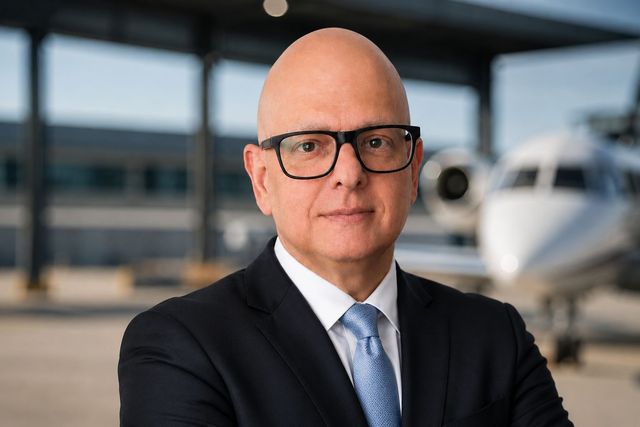
The AOG protocol is Tenório’s most structurally significant contribution, but it sits within a broader body of work that has shaped how aviation logistics operates in Brazil. Over thirty years, Aeroimport has managed the inaugural importation of multiple advanced helicopter models into the Brazilian market — including the Leonardo AW139, AW189, the Airbus Helicopters H175 and H160 — each requiring the construction of an entirely new customs and regulatory architecture, given that no prior template existed for each model’s first arrival.
Tenório also pioneered the structured management of aircraft under Brazil’s Special Temporary Admission regime, a technically demanding customs modality that allows foreign-registered aircraft to operate in Brazil under strict compliance requirements. His portfolio currently exceeds 170 active airframes, with aircraft deployed across multiple Brazilian states and, more recently, in cross-border operations in South America — including deployments to Guyana to support energy sector clients.
More recently, Aeroimport extended its work into the emerging UAV and commercial drone sector, developing the first structured customs logistics frameworks for drone imports within the Brazilian aviation industry — an area that multiple analysts expect to become a significant segment of aviation logistics globally within the next decade.
THE GLOBAL RELEVANCE: WHAT U.S. OPERATORS AND REGULATORS CAN TAKE FROM THIS
The United States operates the world’s largest and most complex aviation market. Its offshore helicopter sector — concentrated in the Gulf of Mexico but extending to international operations supporting U.S. energy companies — faces the same fundamental challenge that Tenório addressed in Brazil: the friction between the urgency of aviation maintenance logistics and the procedural requirements of customs administration.
U.S. Customs and Border Protection (CBP) already maintains specific provisions for expedited entry of aircraft parts in AOG situations, and the FAA’s regulatory framework is among the world’s most rigorous. But the lesson from the Brazilian experience is not about regulatory gaps — it is about implementation and institutional architecture. What Tenório demonstrated is that the gap between international standards and operational practice can be closed through sustained, legally grounded institutional engagement, and that closing it generates measurable, lasting industry-wide benefits.
For U.S. aviation companies operating internationally — particularly those with fleets or maintenance operations in Latin America, where regulatory frameworks often lag behind operational needs — Tenório’s work offers a practical model. He has built and maintained, over three decades, a logistics infrastructure that bridges the gap between international aviation standards and domestic regulatory practice, in one of the hemisphere’s most complex customs environments. That expertise is directly applicable to cross-border operations involving U.S. aircraft, parts, and operators.
There is also a broader policy dimension. As global aviation continues to expand — and as offshore energy development accelerates across multiple jurisdictions — the demand for harmonized, efficient customs treatment of aeronautical cargo will only grow. The ICAO framework is already in place; the challenge, as Tenório’s career illustrates, is implementation at the national and local level. His experience in navigating that implementation — from concept through regulatory adoption through day-to-day operational management — represents precisely the kind of knowledge that international aviation logistics increasingly needs.
| “Aviation is a matter of national security. If the international legal framework already treats it as a priority, there is no justification for customs procedures that don’t reflect that. The work of making those two things align is the work of our sector.”
— Luiz Tenório Alves Pereira |
A QUIET ARCHITECT OF CRITICAL INFRASTRUCTURE
The federal normative instrument that today governs emergency aeronautical customs clearance across Brazil does not mention Luiz Tenório by name. Regulations rarely credit their architects. But within Brazil’s aviation and customs community, the origin of that framework is well understood — as is the years of institutional persistence required to bring it into existence.
What Tenório built is not a product or a patent. It is a protocol — a set of institutional agreements and operational procedures, anchored in international law, that allow a critical industry to function with the speed and reliability it requires. It is, in the truest sense, infrastructure: invisible when it works, and catastrophically evident when it doesn’t.
For an industry that moves billions of dollars in aircraft and components across international borders every year, that kind of invisible architecture matters more than it is often given credit for. Luiz Tenório spent thirty years building it. The Brazilian aviation sector is the direct beneficiary. And the international industry — including U.S. operators navigating an increasingly complex global logistics environment — has much to learn from what he figured out.
Luiz Tenório Alves Pereira is the founder and CEO of Aeroimport Logística Aduaneira, based in Rio de Janeiro, Brazil. He is a licensed Customs Broker authorized by the Brazilian Federal Revenue Service, a member of ADAB (Associação dos Despachantes Aduaneiros do Brasil), and South America Representative for HeliOffshore.

