
Understanding Futures and Derivatives Before Entering the Market
Financial markets offer investors a wide range of opportunities beyond traditional stock investing. Among the most widely discussed financial instruments are futures and derivatives, which play a significant role in modern trading and risk management. While these products can provide opportunities for experienced market participants, they also involve higher levels of complexity and risk. Understanding how they work is essential before deciding whether they fit your investment or trading strategy.
What Are Futures and Derivatives?
A derivative is a financial contract whose value is based on the performance of another asset, such as stocks, commodities, currencies, interest rates, or market indices. Instead of owning the underlying asset directly, traders gain exposure to its price movements through the derivative contract.
A futures contract is one of the most common types of derivatives. It is an agreement between two parties to buy or sell an asset at a predetermined price on a specified future date. Futures are widely used in equity markets, commodities, energy products, and agricultural sectors.
These instruments are commonly used by institutional investors, professional traders, and businesses seeking to manage financial risk.
Why Traders Use Futures
Futures contracts serve several purposes in today’s financial markets. Some participants use them to hedge against unfavorable price movements, while others use them to speculate on short-term market trends.
Common reasons traders use futures include:
- Managing portfolio risk during volatile markets.
- Taking positions with relatively lower capital through margin trading.
- Gaining exposure to major market indices.
- Diversifying trading strategies across different asset classes.
Despite these advantages, leverage can magnify both profits and losses, making proper risk management essential.
Understanding Market Preparation
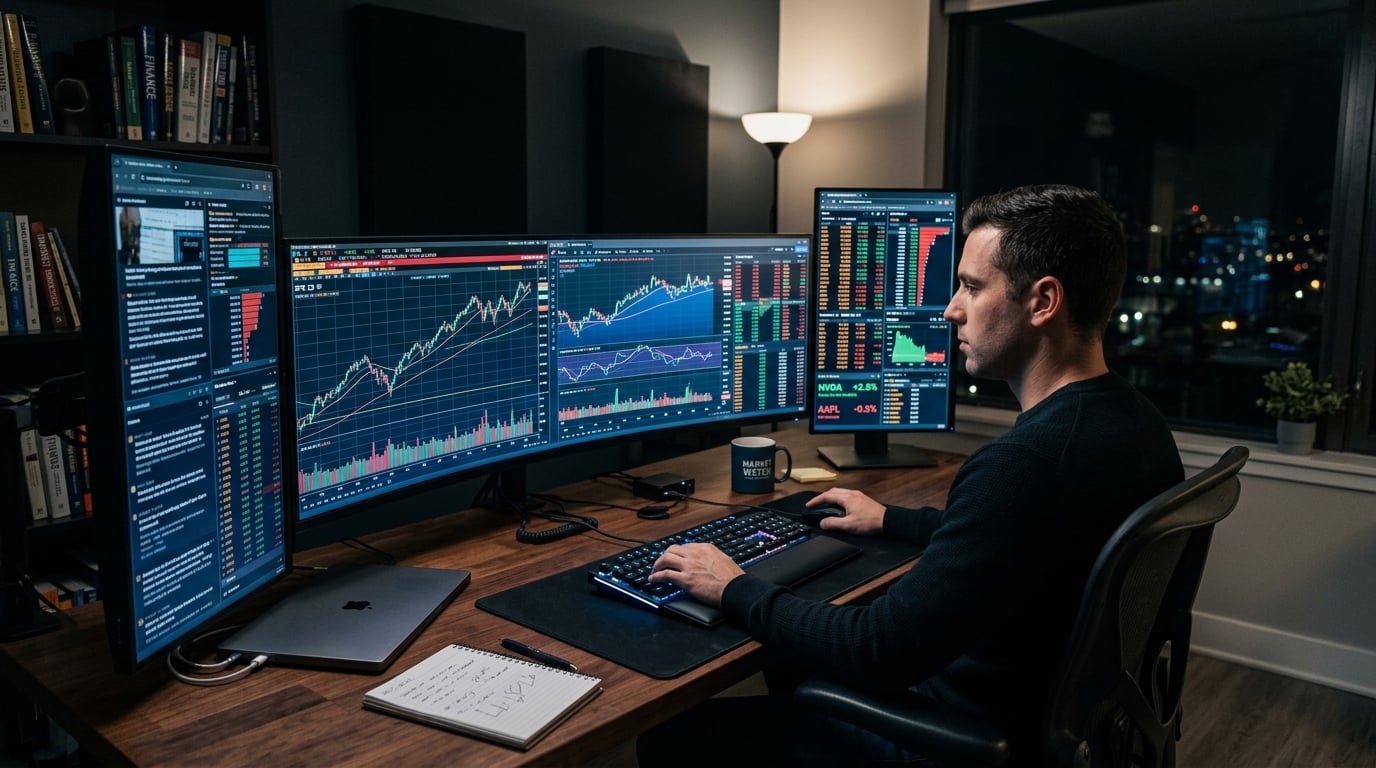
Many successful traders spend considerable time analyzing market conditions before placing their first trade of the day. They monitor overnight developments, international markets, economic announcements, and futures activity to estimate potential market direction.
A useful resource explaining how pre-market futures and derivatives influence trading decisions can be found in this detailed guide:
https://www.brokermarkets.in/2026/05/how-pre-market-futures-and-derivatives.html
Studying market behavior before the opening bell allows traders to prepare for possible volatility rather than reacting emotionally after the market opens.
Risks Every Beginner Should Know
While derivatives can be valuable financial tools, beginners often underestimate their risks. Some of the most common challenges include:
- Leverage Risk: Small market movements can produce significant gains or losses.
- Market Volatility: News events and economic data can trigger sudden price swings.
- Liquidity Differences: Some contracts are more actively traded than others.
- Emotional Trading: Fear and greed often lead to poor decision-making.
New investors should avoid risking money they cannot afford to lose and should always establish clear exit strategies before entering any trade.
Building a Strong Foundation
Learning technical analysis alone is not enough. Successful traders combine multiple forms of research before making investment decisions. This often includes:
- Fundamental analysis
- Technical chart analysis
- Economic calendar monitoring
- Risk management planning
- Position sizing
- Continuous learning and performance review
Practicing with paper trading accounts or simulated environments can also help beginners understand market behavior without exposing real capital.
Final Thoughts
Futures and derivatives are important components of today’s financial markets, offering flexibility for both hedging and speculation. However, these instruments require education, discipline, and a clear understanding of risk before they should be used in live trading.
Rather than rushing into leveraged positions, investors should focus on building strong market knowledge, developing a structured trading plan, and learning how different economic events influence price movements. With the right preparation and continuous education, traders can make more informed decisions and approach the market with greater confidence.