
The Challenges of Fleet Management and the Path to Technical Leadership
06-30-25
In the dynamic and complex world of logistics and transportation, fleet management emerges as a fundamental pillar for the operational success of companies across various sectors. From the transportation of goods to the movement of equipment in large construction projects, efficiency and effectiveness in managing vehicles and machinery are decisive for business competitiveness and sustainability.
However, fleet management is far from a trivial task. It involves a series of challenges ranging from route optimization and preventive maintenance to cost control and ensuring the safety of employees and assets. In this context, technical leadership stands out as a critical factor in overcoming these obstacles and driving operational excellence.
The pursuit of efficiency in fleet management inevitably requires the adoption of innovative technologies and practices. The implementation of tracking systems, for example, enables real-time monitoring of vehicle location and performance, optimizing routes, reducing fuel consumption, and increasing safety. In addition, predictive maintenance—based on data and analysis—makes it possible to anticipate mechanical failures, avoiding unscheduled downtime and high corrective costs.
Yet technology alone is not enough. It is essential to have qualified and engaged professionals to interpret data, make strategic decisions, and lead operational teams. This is where the role of the technical leader becomes indispensable. In addition to possessing in-depth technical knowledge of vehicles and management systems, this professional must have strong communication, leadership, and problem-solving skills.
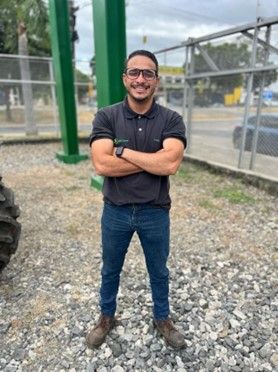
Iure Cardoso Maciel is a remarkable example of a professional who has built a path toward technical leadership in fleet management. With more than 10 years of experience in the field, he has closely witnessed the challenges and transformations of the sector. His career is marked by constant progression, from working with heavy machinery and fleet management to assuming technical leadership at a John Deere authorized dealer.
“Over these 10 years of experience, I consider teamwork and good management as my strongest points,” says Iure.
This ability to work collaboratively and manage people is fundamental to success in fleet management, where cooperation among mechanics, drivers, managers, and other professionals is essential.
Iure also emphasizes the importance of technical responsibility and ensuring customer satisfaction. In a sector where efficiency and reliability are crucial, the ability to guarantee that processes are followed and that client expectations are met becomes a true competitive advantage.
The experience of Iure Cardoso Maciel illustrates the path to technical leadership in fleet management. It is not enough to master only the technical aspects of vehicles and systems; it is also necessary to develop management, leadership, and communication skills. One must have a strategic vision, the ability to anticipate problems, and make assertive decisions. Above all, one must have passion for the work and a commitment to excellence.
In a scenario of constant change and challenges, technical leadership is becoming an increasingly important factor for success in fleet management. Companies that invest in the development of their professionals and foster a culture of innovation and collaboration will be better prepared to face obstacles and seize the opportunities in this dynamic and essential sector for the economy.
