
Refuse Containers, Food Rules and the Restaurants of North Alabama
Most business owners think about trash in terms of pickup day. The truck comes, the cart is emptied, and the problem goes away for another week.
The rules that govern food businesses in Alabama look at it differently. They treat the container itself as equipment, with its own standards for how it is built, covered, stored, and cleaned.
What Alabama Adopted for Refuse Containers
Alabama’s food establishment rules are short on refuse language because they borrow it. Chapter 420-3-22 of the Alabama Administrative Code, the State Committee of Public Health’s food establishment sanitation chapter, incorporates Chapters 1 through 8 of the 2013 federal Food Code by reference and makes them part of the state rules.
That means the refuse sections of the 2013 edition of the FDA Food Code are the working standard for restaurants and other permitted food businesses in the state. Part 5-5 of that code covers refuse, recyclables, and returnables, and it is more specific than many operators expect.
Receptacles that hold waste with food residue must be durable, cleanable, leakproof, nonabsorbent, and resistant to insects and rodents. Outside receptacles need tight-fitting lids, doors, or covers, and they must be kept covered. If a receptacle has a drain, the drain plug has to be in place.
The outdoor pad gets attention too. The code calls for a storage surface of nonabsorbent material such as concrete or asphalt that is smooth, durable, and sloped to drain. It also says the refuse area and any enclosure must be kept clean and free of unnecessary items.
The Cleaning Standard Is Written as a Result
The most useful line for a business owner is the one about cleaning. Section 5-501.116 says soiled receptacles must be cleaned at a frequency necessary to keep them from building up soil or becoming attractants for insects and rodents.
There is no fixed number of days in that sentence. The standard is the outcome, so a busy kitchen in August may need far more attention than a small coffee shop in January.
The same section says containers must be thoroughly cleaned in a way that does not contaminate food, equipment, utensils, linens, or single-use articles. The wash water also counts as sewage under the code, which means it has to reach an approved sanitary sewage system or another approved means of disposal.
The code also speaks to tools. It lists high-pressure pumps, hot water, steam, and detergent as examples of what should be available for cleaning receptacles. Where a business does not keep that equipment on site, it allows off-premises cleaning services if they are approved.
Alabama adds one wrinkle for the smallest permit class. A Priority Category 1 establishment, which sells only prepackaged food, must have refuse cleaning facilities or show other effective means of keeping its containers clean.
How Many North Alabama Businesses This Touches
The scale of this in North Alabama is larger than it looks from any one parking lot. The Census Bureau’s County Business Patterns counts establishments with paid employees by industry and county, and its latest release covers 2023.
We pulled the county file for the five counties that run from the Shoals to Huntsville: Colbert, Franklin, Lauderdale, Limestone, and Madison. In the food services and drinking places sector, the count came to 1,310 establishments.
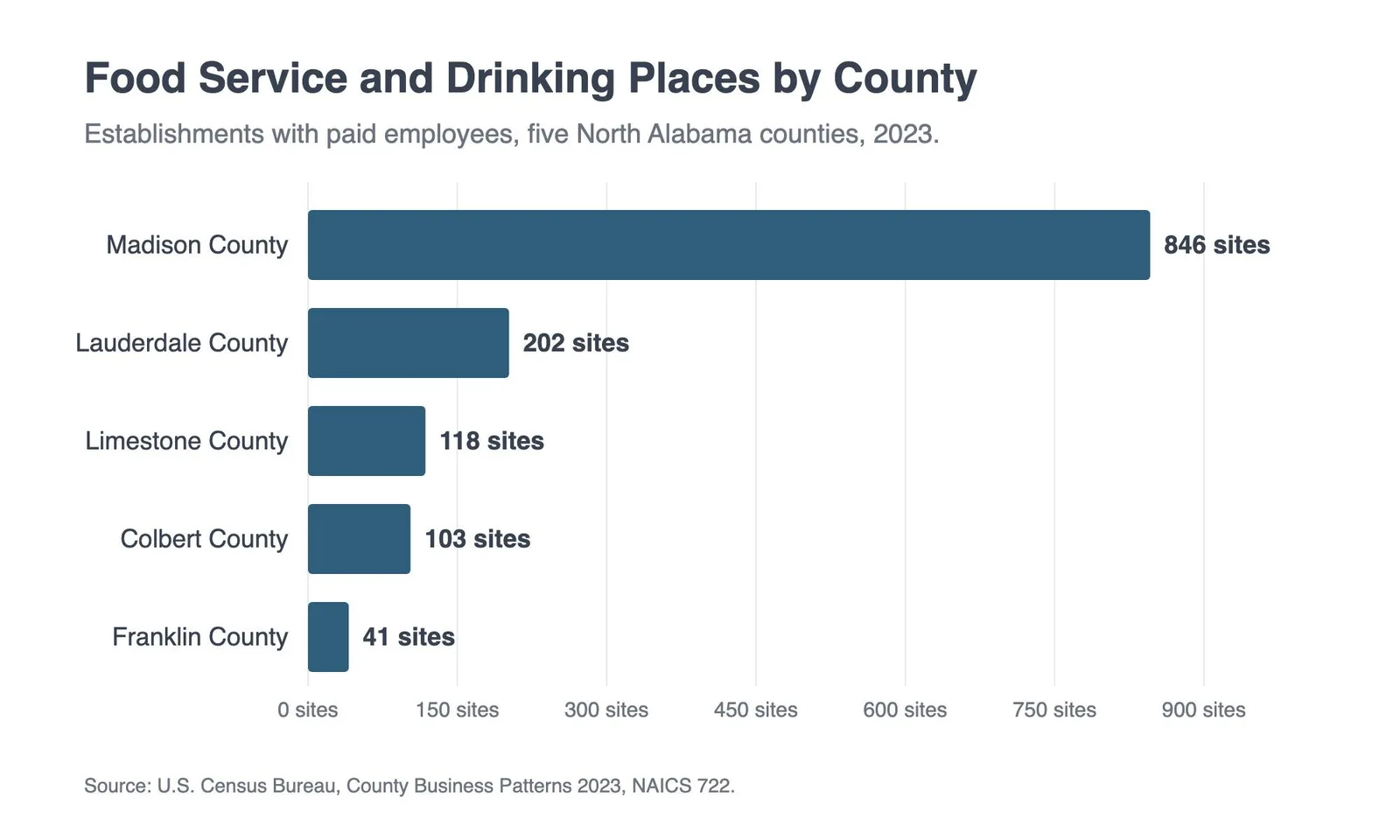
Food service and drinking places by county, North Alabama, 2023.
Madison County alone accounts for 846 of them, about 65% of the five-county total by our arithmetic. Lauderdale, home to Florence, follows with 202, then Limestone with 118, Colbert with 103, and Franklin with 41.
Restaurants and other eating places make up most of that sector, at 1,174 establishments across the five counties. The Food Code calls for a receptacle in each area where refuse is generated, so most of them keep several between the kitchen door and the pickup point.
Restaurants Are Only Part of the Count
Grocery stores also hold food permits, so the same refuse rules reach them. Apartment properties, offices, and many hotels fall outside the food rules, but they still collect food waste in shared carts every day.
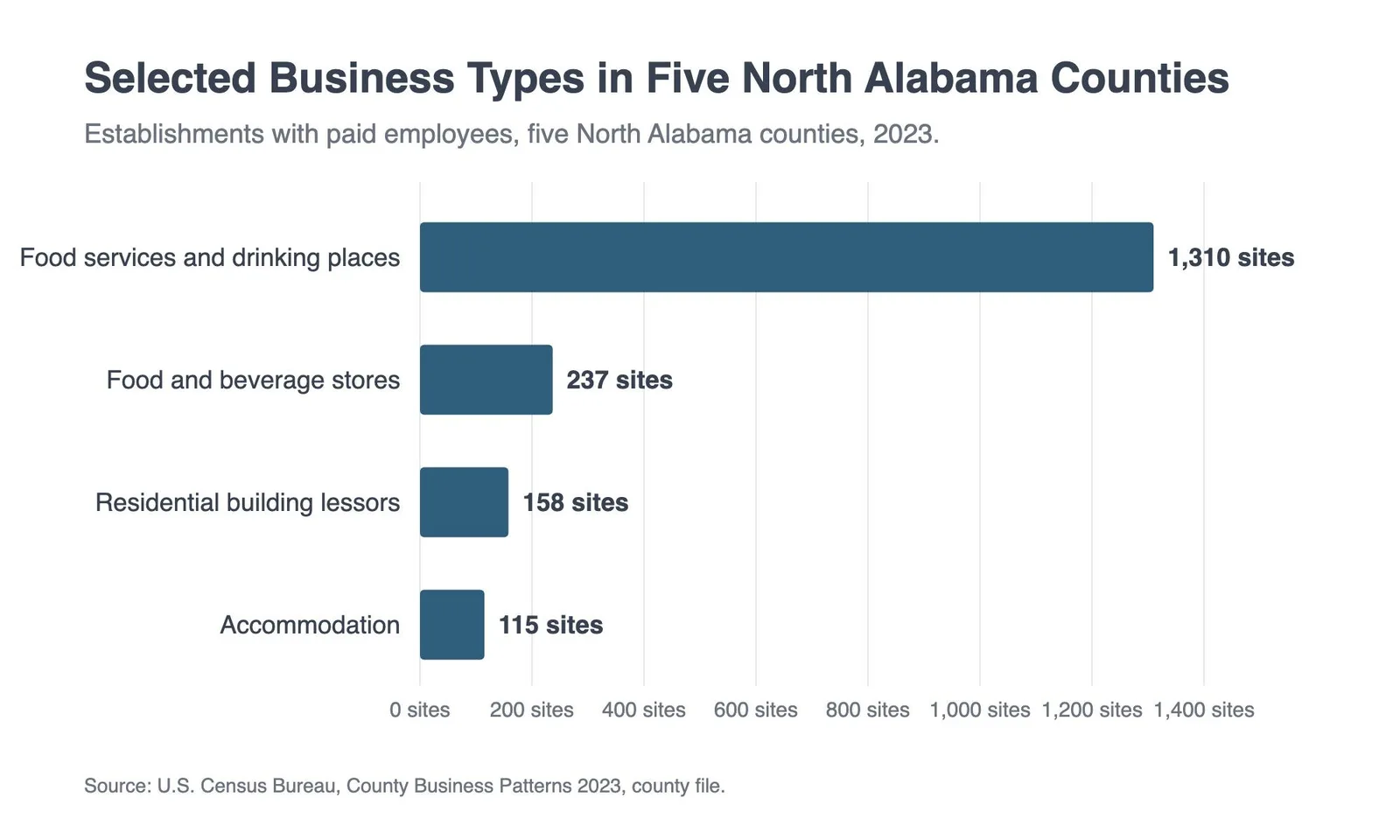
Selected business types in five North Alabama counties, 2023.
The same Census file counts 237 food and beverage stores, 158 lessors of residential buildings, a category that includes apartment owners, and 115 accommodation businesses such as hotels and motels across the five counties.
Two cautions apply to all of these numbers. County Business Patterns counts only establishments with paid employees, so owner-run shops are left out. It also does not count homeowners associations, which manage shared trash areas in many subdivisions.
Where the Container Problems Show Up
For a restaurant, the container is part of a health inspection. For an office park or apartment complex, it is part of how the property looks and smells to the people who walk past it every day.
The common trouble spots tend to be the same across property types:
- Lids that no longer close fully, which leaves food waste open to flies and rain.
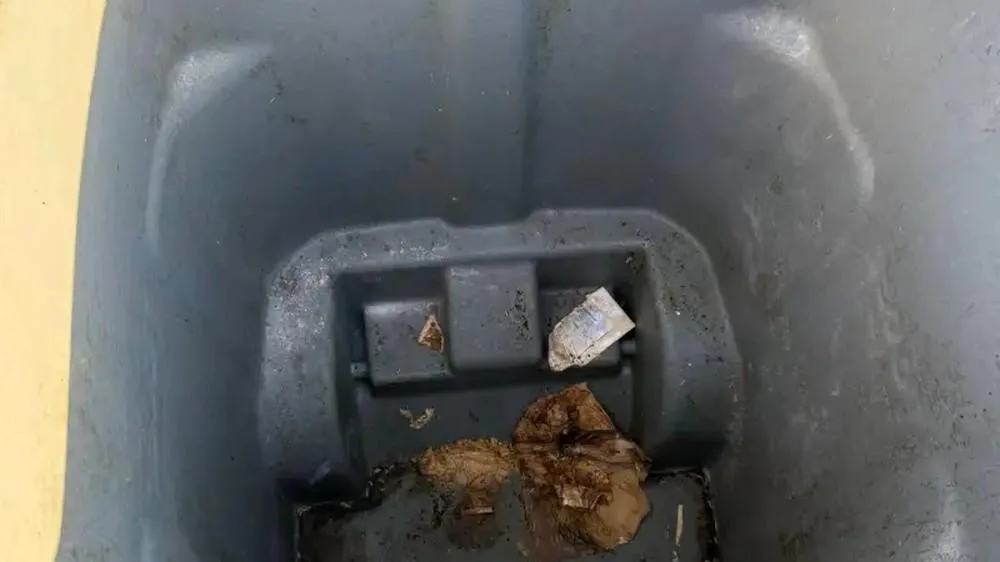
- Liquid that collects in the bottom of carts after a bag tears.
- Residue on the outside of carts that sit near an entrance or loading door.
- Pads and enclosures that collect spilled debris between pickups.
- Carts that are emptied on schedule but never washed.
Emptying a container does not clean it. Pickup removes the bag, but it leaves behind whatever leaked through, and that residue is exactly what the Food Code’s cleaning standard is written to address.
Who Handles the Washing
Many businesses wash their own carts with a hose behind the building. The Food Code’s rule on where wash water ends up makes that harder than it sounds, especially for a site with no approved drain for the job.
Others use an outside service.
In North Alabama, TidyCan Alabama is one company that describes commercial bin cleaning in North Alabama on its website. It lists a high-pressure, 200-degree hot water clean, interior and exterior sanitization, and a deodorizing treatment with no harsh chemicals.
The company says it handles multiple bin types and sizes on a recurring or one-time basis, works with homeowners associations and property managers, and serves an area from the Shoals to Huntsville, including Florence, Muscle Shoals, Russellville, Athens, Madison and Huntsville.
A Line Item Worth Writing Down
None of this requires a new program. It mostly requires putting containers on the same list as the walk-in cooler and the grease trap.
A practical starting point for any North Alabama business:
- Count every container on the property, including recycling carts and the ones near entrances.
- Check that each lid closes fully, and that each drain plug is in place.
- Set a cleaning interval based on what builds up, and shorten it in summer.
- Keep the pad and enclosure clear of stored items and loose debris.
- Know where wash water goes before anyone picks up a hose.
The Food Code frames refuse as part of running a sanitary operation, not as something that ends when the truck leaves. With more than 1,300 food service businesses across five counties, that standard reaches a lot of North Alabama back doors.

