
Mice in Winter, Flies in Summer: A Year of Restaurant Pest Citations
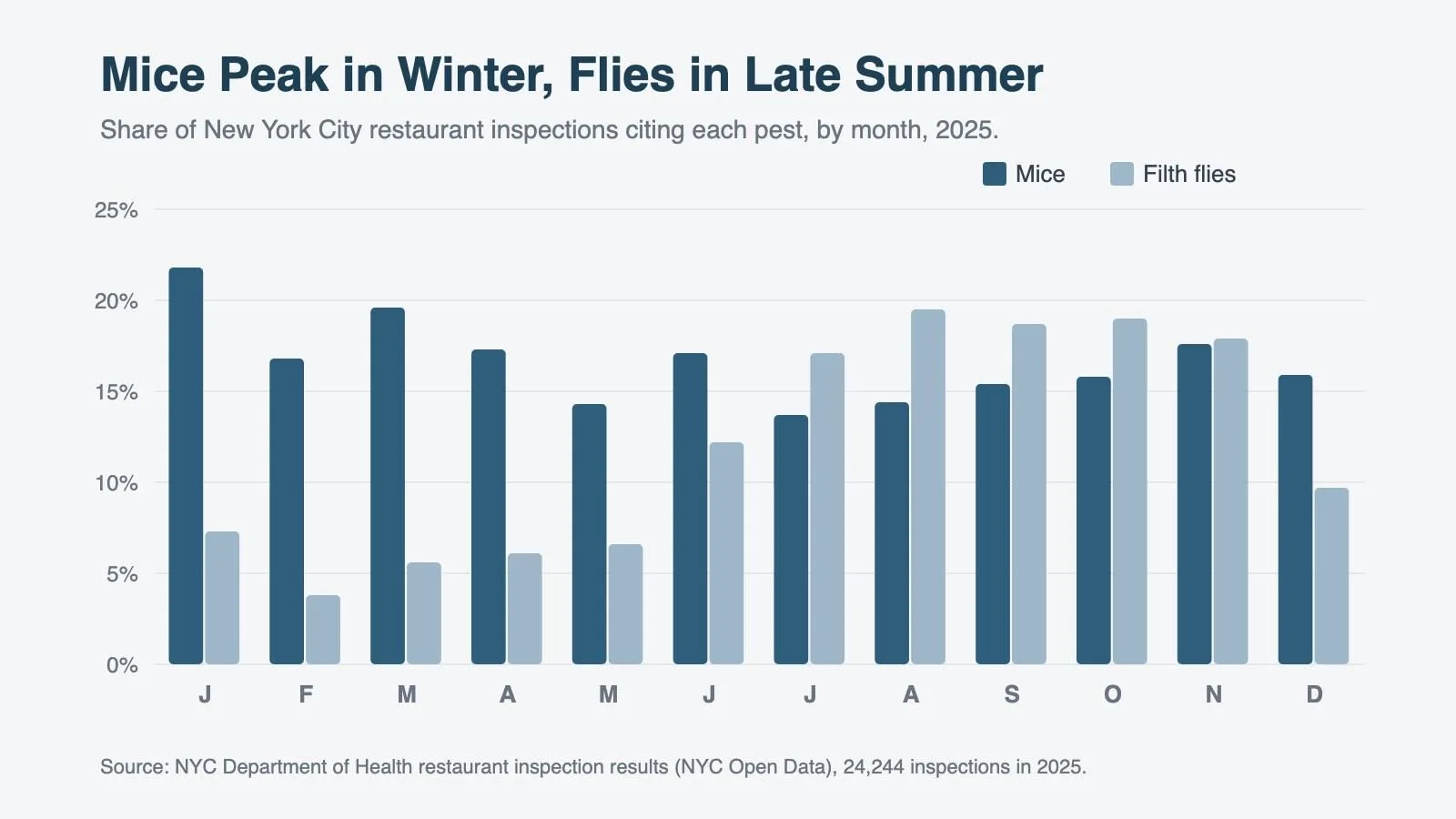
Mice citations ran highest in winter, while fly citations climbed from June through November.
Most restaurant owners know a pest sighting can cost them a good inspection. Fewer know which pests inspectors actually write up, or when in the year those citations tend to land.
New York City publishes enough detail to answer both questions, and a year of its records offers a useful look at how pest problems show up on inspection reports.
What the Inspection Records Show
New York City's public restaurant inspection records list every violation cited at each inspection, with separate codes for mice, rats, roaches, and flies. The file covers restaurants that are still open, so it leaves out places that have since closed.
In 2025, inspectors made 24,244 inspections at 17,664 restaurants in that file. About 31 percent of those inspections cited live pests or signs of them: mice, rats, roaches, or flies.
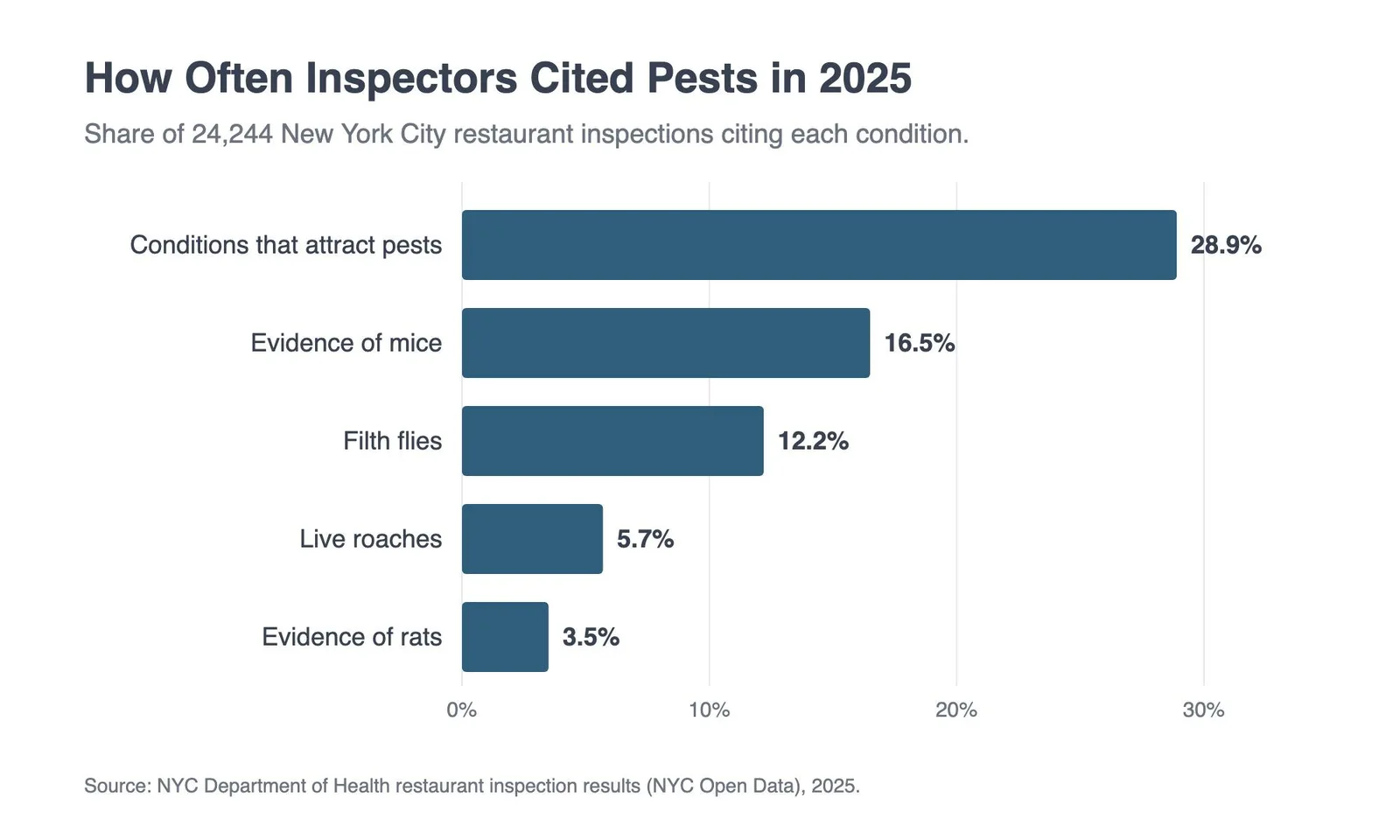
Conditions that attract pests were cited more often than any single pest.
Mice led the pests themselves, cited at 16.5 percent of inspections. Filth flies came next at 12.2 percent, then live roaches at 5.7 percent and evidence of rats at 3.5 percent.
The Most Common Citation Is About Conditions
The single most frequent pest-related citation was not an animal at all. At 28.9 percent of inspections, inspectors found the restaurant was not free of harborage or conditions that invite rodents, insects, or other pests.
That finding matters because it describes problems a restaurant can see and fix before any pest moves in. Gaps around pipes, clutter in storage rooms, food residue under equipment, and open dumpsters all fall into this category.
It also shows how inspectors work. They are not only looking for a mouse or a roach on the day of the visit. They are checking if the building and the daily routine give pests a place to live.
Mice and Flies Keep Different Calendars
The monthly numbers show that pest pressure in a restaurant shifts through the year. Mice were cited at 21.8 percent of inspections in January, the highest month, and at 13.7 percent in July, the lowest.
Flies moved almost the opposite way. Fly citations sat at 3.8 percent in February, climbed to 12.2 percent in June, and reached 19.5 percent in August. They stayed near that level through November, at 17.9 percent, before falling to 9.7 percent in December.
For an owner, the takeaway is practical. A pest plan that only reacts to the problem in front of it will always be a season behind. Rodent exclusion work pays off before winter, and fly control needs to be in place before early summer.
What the Food Code Asks of Every Kitchen
The FDA's model for state and local restaurant rules is the 2022 Food Code, and its pest section is short and direct. Section 6-501.111 says the premises shall be maintained free of insects, rodents, and other pests.
The code then lists how a food establishment is expected to get there:
- Routinely inspecting incoming shipments of food and supplies.
- Routinely inspecting the premises for evidence of pests.
- Using trapping devices or other pest control methods if pests are found.
- Eliminating harborage conditions.
Other sections fill in the details. Outer openings must be protected with filled gaps, closed and tight-fitting windows, and solid, self-closing, tight-fitting doors. Doors or windows kept open for ventilation need screens of at least 16 mesh per inch, air curtains, or another effective barrier.
Refuse rules matter too. Outdoor garbage receptacles must be kept covered with tight-fitting lids or doors, and dead or trapped pests must be removed often enough that they do not build up or attract more pests. Electric insect traps cannot hang over food preparation areas.
How This Applies in Mississippi and Louisiana
The New York records come from one city, but the rules behind them are shared. The Mississippi State Department of Health states that the Mississippi Food Code follows the national food safety standards issued by the FDA.
Louisiana regulates a large restaurant sector of its own. The Louisiana Department of Health's retail food program lists nearly 34,000 permitted food establishments, including 16,747 restaurants.
Climate is the biggest local difference. NOAA's 1991 to 2020 climate normals put the average January temperature at 47.0 degrees in Jackson and 52.0 degrees in Baton Rouge, compared with 33.7 degrees in New York's Central Park.
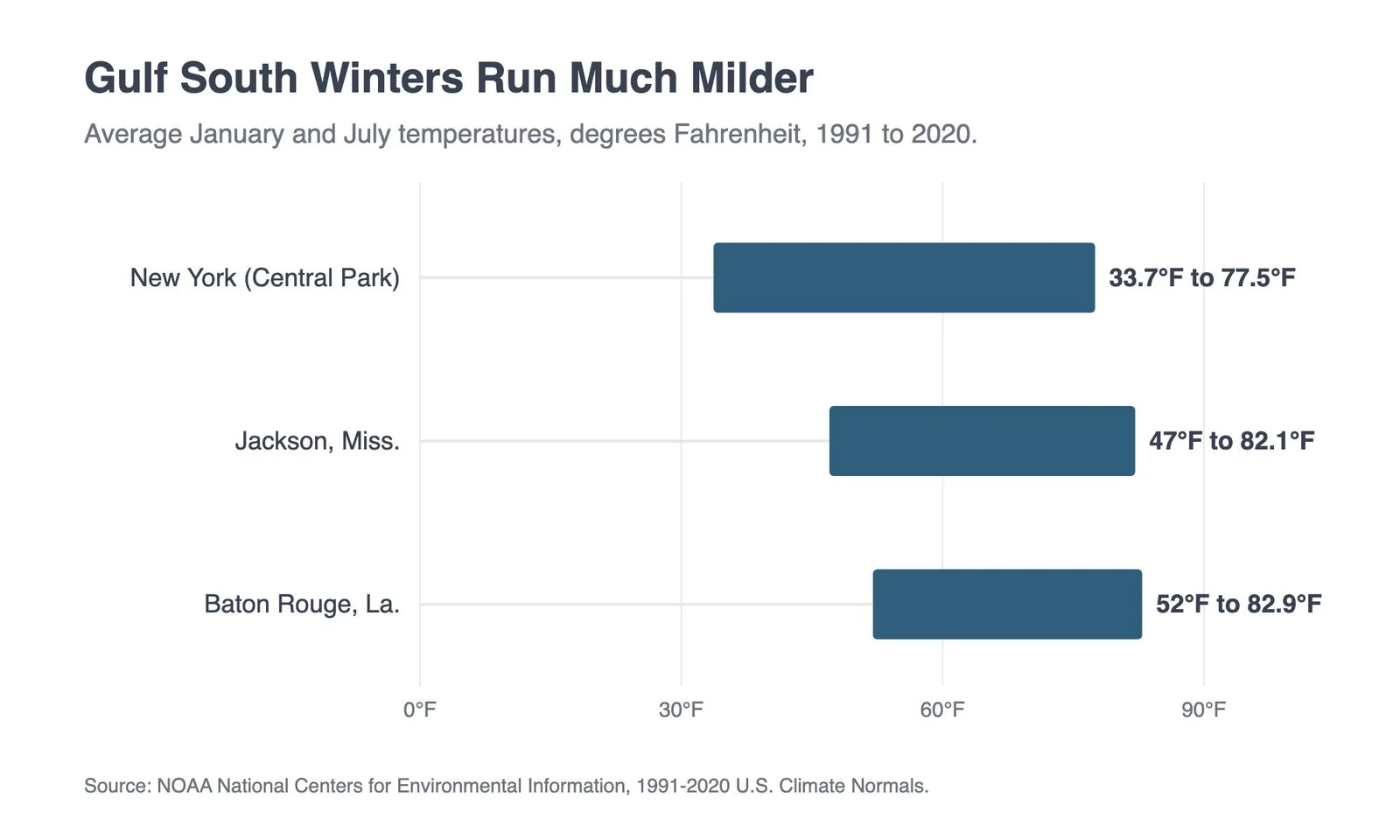
January in Jackson and Baton Rouge averages 13 to 18 degrees warmer than in New York.
July runs warmer in the Gulf South too, at 82.1 degrees in Jackson and 82.9 degrees in Baton Rouge versus 77.5 degrees in New York. Restaurants in Mississippi and Louisiana never get the deep cold that New York kitchens see each winter.
A Practical Checklist for Owners and Managers
The records and the code point to the same habits. None of them require special equipment, and most can be built into opening and closing routines.
- Check every delivery for droppings, gnaw marks, live insects, or damaged packaging before storing it.
- Walk the kitchen, storage areas, and back door each week looking for droppings, rub marks, flies, and new gaps.
- Keep back doors closed, and repair door sweeps and screens as soon as they wear.
- Seal gaps where pipes and lines pass through walls and floors.
- Keep dumpster lids closed and the area around them clean.
- Clear out broken equipment and unused items that create hiding spots.
- Keep written records of what was found, what was done, and when.
Records help in two ways. They show an inspector that the restaurant has a routine, and they make patterns visible, such as flies near the same door every August.
When to Bring in a Professional
Owners can handle much of prevention on their own. A licensed provider adds a trained eye for entry points and structured monitoring. The Food Code also requires that pest control products used in a food establishment follow the label and any certification the law requires.
Restaurants in central Mississippi and south Louisiana that want a scheduled program with dated service reports can look at local options for restaurant pest control built around health inspection standards.
Whichever route a restaurant takes, the inspection data makes one point clear. The pests that cost points tend to follow the calendar, and the conditions that invite them are cited even more often than the pests themselves.

