
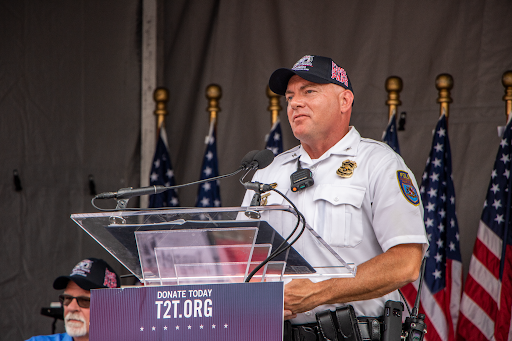
How Chuck Ternent Supports Long-Term Community Recovery in Western Maryland
When severe flooding affected Western Maryland in May 2025, local recovery efforts required more than emergency response alone. Communities faced infrastructure damage, displaced residents, and long-term rebuilding challenges that demanded coordination across multiple agencies and organizations. Chuck Ternent, retired Chief of Police of the Cumberland Police Department, was appointed Chair of the Western Maryland Flood Recovery Committee to help guide that process.
The role drew on more than three decades of public safety leadership across law enforcement, emergency medical services, and the fire service. Throughout his career, Chuck Ternent developed experience managing complex operations, coordinating with regional partners, and maintaining public communication during periods of uncertainty. Those same skills became essential as recovery efforts shifted from immediate response to long-term stabilization.
A Public Safety Career Built Around Service and Coordination
Chuck Ternent joined the Cumberland Police Department in 1993 and advanced through every rank before retiring in 2025. Alongside his law enforcement career, he also served in emergency medical and volunteer fire service leadership roles that expanded his experience in incident management and interagency operations.
As one of Maryland’s youngest certified paramedics at the time of his certification, Chuck Ternent gained firsthand experience making critical decisions in high-pressure environments. His continued involvement in the volunteer fire service, including leadership responsibilities as an Assistant Fire Chief, strengthened his background in emergency coordination and operational planning.
Professional development remained a consistent part of that career progression. Chuck Ternent completed the FBI National Academy, an executive leadership program attended by a small percentage of law enforcement professionals nationwide. He also earned graduate credentials in criminology and criminal justice, along with certifications related to hostage negotiation and tactical medicine.
Rather than functioning as isolated credentials, those experiences contributed to a broader leadership approach centered on communication, accountability, and coordinated problem-solving during complex public safety situations.
Chuck Ternent and Western Maryland Flood Recovery Efforts
The flooding that affected Western Maryland in 2025 created immediate operational challenges for local governments and emergency management organizations. Recovery efforts required collaboration between municipal agencies, nonprofit organizations, state officials, and community stakeholders working under evolving conditions.
As Chair of the Western Maryland Flood Recovery Committee, Chuck Ternent’s disaster recovery leadership focuses on helping those groups coordinate resources, communicate effectively, and maintain long-term recovery objectives. The position requires balancing practical operational needs with ongoing public engagement throughout an extended rebuilding process.
Recovery work differs significantly from emergency response. Initial response operations are often measured in hours or days, while recovery initiatives continue for months or longer. Maintaining consistent communication, tracking recovery priorities, and supporting cooperation among multiple organizations becomes increasingly important over time.
That long-term coordination mirrors many of the challenges public safety leaders routinely manage. During his tenure with the Cumberland Police Department, Chuck Ternent worked through periods involving staffing pressures, evolving public expectations, and complex operational demands that required sustained organizational focus.
Accountability and Institutional Standards in Public Safety Leadership
One of the major institutional initiatives associated with Chuck Ternent’s leadership at the Cumberland Police Department was the department’s commitment to CALEA accreditation. The accreditation process evaluates agencies against hundreds of professional standards related to policies, procedures, training, and accountability practices.
For many public safety organizations, accreditation serves as a framework for maintaining consistency and transparency. In recovery operations, similar principles apply. Communities affected by natural disasters often rely on clear communication, measurable progress, and responsible management of public resources during rebuilding efforts.
The emphasis on structured accountability has remained a consistent part of Chuck Ternent’s approach to public service leadership throughout his career. Whether operating within law enforcement or broader recovery coordination, the focus has remained on maintaining credibility through organization, communication, and practical execution.
Supporting Community Resilience Beyond Immediate Recovery
Flood recovery extends beyond repairing roads, buildings, and utilities. Long-term community resilience also depends on maintaining stability, supporting communication between agencies and residents, and helping local institutions continue operating effectively during prolonged recovery periods.
Western Maryland communities faced economic and demographic challenges before the 2025 flooding occurred. Recovery leadership therefore requires familiarity with the region itself, including the operational realities local governments and residents navigate over time.
Having spent decades serving in Cumberland and the surrounding region, Chuck Ternent brings local institutional knowledge that supports both short-term coordination and longer-term planning discussions. That familiarity can help improve collaboration between public agencies, nonprofit organizations, and community groups involved in rebuilding efforts.
The work also reflects a broader emphasis on mentorship and professional cooperation within public safety. Throughout his career, Chuck Ternent has supported collaboration across law enforcement, fire service, and emergency response disciplines, reinforcing the importance of shared training and coordinated leadership during complex incidents.
Leadership Communication During Long-Term Recovery
Sustained recovery operations require consistent communication with residents, agencies, and partner organizations. Public expectations often evolve throughout the recovery timeline, particularly when infrastructure projects, funding approvals, and rebuilding efforts extend across multiple phases.
Experience in crisis communication can help public officials maintain transparency and organizational stability during those periods. Training related to negotiation, emergency operations, and public safety leadership often emphasizes clear communication under pressure, particularly when circumstances continue changing over time.
That communication-focused approach remains an important part of the public safety leadership experience of Chuck Ternent. Across law enforcement and emergency management settings, maintaining credibility has often depended on delivering practical information clearly while coordinating multiple operational priorities simultaneously.
Continuing Public Service in Western Maryland
The transition from law enforcement leadership into disaster recovery coordination reflects continuity rather than reinvention. Many of the same skills associated with public safety administration — organization, communication, accountability, and interagency cooperation — also apply to long-term recovery management.
As Western Maryland communities continue rebuilding following the 2025 floods, Chuck Ternent’s work in community resilience efforts remains connected to the broader public service principles that shaped his career. The focus continues to center on operational coordination, practical leadership, and sustained support for regional recovery initiatives.
About Chuck Ternent
Chuck Ternent is the retired Chief of Police of the Cumberland Police Department with more than 30 years of experience in law enforcement, emergency medical services, fire service leadership, and public safety administration in Cumberland, Maryland. He is a graduate of the FBI National Academy and currently serves as Chair of the Western Maryland Flood Recovery Committee. His background includes leadership roles in emergency response coordination, public safety operations, and interagency collaboration throughout Western Maryland.
For additional background on Chuck Ternent’s public safety and recovery leadership, professional information is available through publicly accessible profiles and regional coverage.

