
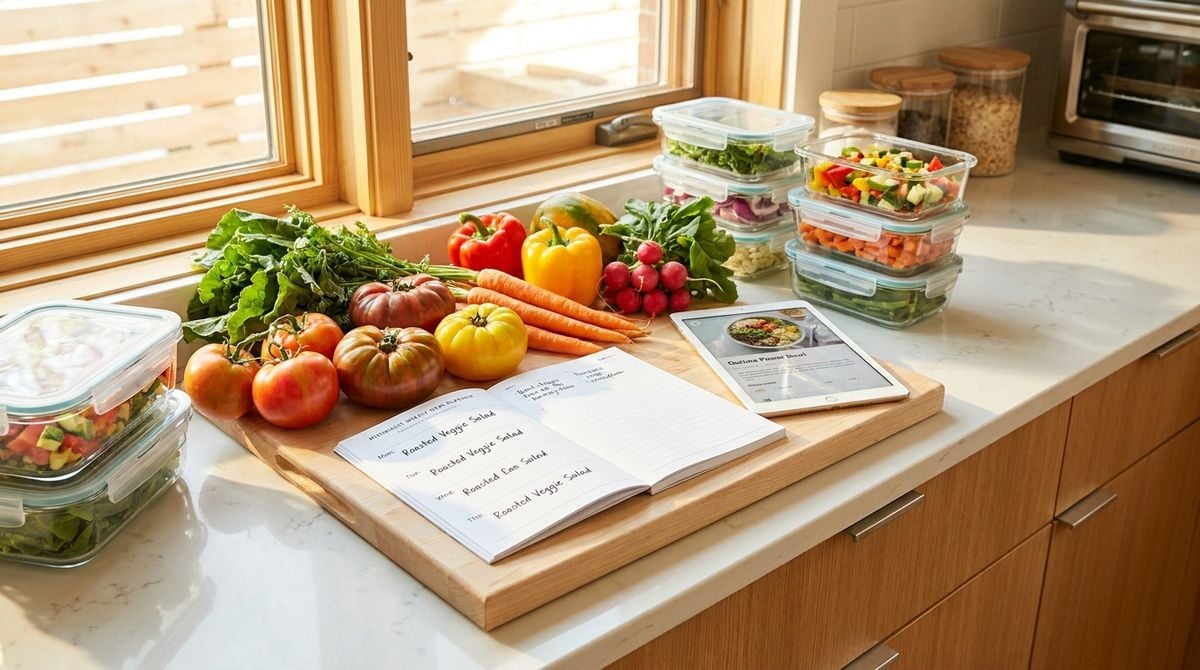
Batch Cooking Balcony Vegetables for a Week of Family Meals Without Waste
A small balcony rarely produces enough vegetables to feed a family every day, but a steady harvest of salad leaves, beans, courgettes and peppers can cover several meals each week. The challenge is that fresh produce arrives in bursts, and a glut can turn into waste if it is not used quickly. Batch cooking offers a practical solution. By preparing vegetables in larger amounts on a planned day, a household can enjoy homegrown food throughout the week without rushing. This article describes how to plan a batch session, store the results safely and keep the meals varied.
Plan the harvest before the cooking day
Start by checking the balcony plants a day or two before you plan to cook. Note which crops are ready, how many leaves or pods you can take without weakening the plant, and whether any vegetables are likely to ripen at the same time. Harvest in the morning, when stems are firm and cool, and keep the produce in a shaded bowl until you are ready to prepare it. This approach keeps flavour high and reduces wilting.
Think about the week ahead as well. A household with a busy schedule may want a few meals that reheat easily, while a more relaxed week may allow fresh salads and quick stir-fries. Writing down the planned dishes helps you decide which vegetables to cook in bulk and which to keep raw. Readers may also want to visit Go And Grow Online.
Cook in stages to keep textures good
Not every vegetable should be cooked in the same way. Hard vegetables, such as carrots and beetroot, hold up well when roasted in bulk and stored in the fridge. Soft leaves, such as spinach and chard, are better wilted briefly and then cooled quickly. Beans and courgettes sit between these, and they can be blanched or lightly sautéed before storage. Cooking in stages prevents the batch from turning soft and watery by the end of the week.
Cool cooked vegetables quickly by spreading them on a tray rather than leaving them in a deep pot. Once they are cool, transfer them to containers and refrigerate. Label each container with the date, so that you can use the oldest first. Many households find that a clear shelf for batch dishes keeps the routine tidy and makes it easy to see what needs eating soon.
Build meals from the batch
- Roast a tray of mixed vegetables and use it in wraps, salads and grain bowls.
- Make a simple soup from leafy greens, beans and herbs, then freeze portions.
- Blanch green beans and keep them ready for quick stir-fries.
- Prepare a basic tomato or pepper sauce that can be stirred into pasta or rice.
- Store cut herbs in a glass of water, loosely covered, for use across several days.
Varying the meals keeps the household interested in homegrown food. A batch of roasted vegetables can become a warm lunch on Monday, a cold salad on Wednesday and a filling soup at the end of the week. Adding a fresh herb or a squeeze of citrus at serving time brings back brightness and makes reheated food feel new.
Reduce waste from start to finish
Waste often happens when vegetables are forgotten at the back of the fridge. To avoid this, place the batch containers at the front of the shelf and keep a short list of what is inside. Use vegetable trimmings in stock, freezing the scraps in a bag until you have enough for a pot. Compost any leftovers that cannot be eaten, and use the compost on the balcony beds in the next season.
Many home cooks find that a small kitchen works best with a predictable rhythm. Choose one day for chopping and roasting, and another for lighter tasks such as washing leaves and making simple dressings. You can also visit usamarketarea.com for more reading. For a related read on this site, see Cooking Make-Ahead Meals for the Final Week Before. Writing the plan on the fridge door keeps everyone in the household involved and reduces last-minute scrambling. Shared plans also make it easier to decide which surplus vegetables can be given to neighbours before they start to fade. A short tasting at the end of the session helps decide which dishes deserve another batch next time.
Food safety matters as much as flavour. Keep cooked vegetables chilled, reheat them thoroughly, and discard anything that smells unusual or has been left at room temperature for a long time. If anyone in the household has a health condition or a food allergy, check the ingredients carefully and consult a qualified professional for personal advice. A calm, planned approach to batch cooking can turn a small balcony harvest into a reliable source of meals, with less waste and more time to enjoy the food.

