
Selling Baked Goods From Home in Louisiana: The Rules, the Limits and Taking Orders Online
Plenty of small food businesses in Louisiana start the same way: a relative’s recipe, a few orders from coworkers, then a church bake sale that sells out by noon. At some point the question changes from “can I make this?” to “can I legally sell this from my kitchen?”
In Louisiana, the answer for most baked goods is yes, under a short state law with a few firm limits. Here is what the law allows, what it requires, and what changes when a home baker moves orders from text messages to a website.
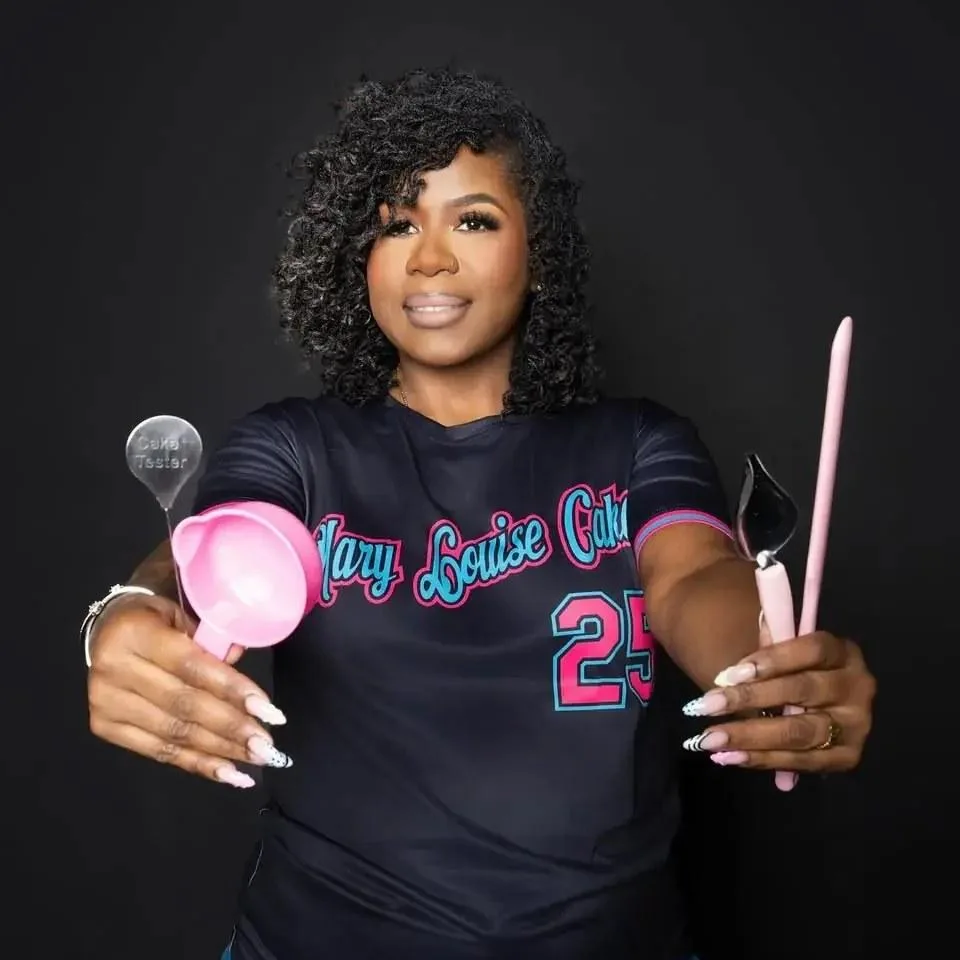
Latosha Harris runs Mary Louise Cakez, a home bakery in Denham Springs. Photo: zdt_photography.
The Law Behind Louisiana’s Home Bakeries
The rule is La. R.S. 40:4.9, titled “Low-risk foods; preparation in home for public consumption.” It says that the state Sanitary Code and similar rules on equipment, design, construction, and preparation do not apply when low-risk foods are made in the home for sale.
That single provision is what makes a home bakery possible without a separate commercial kitchen. The law then spells out what counts as a low-risk food and what conditions come with the exemption.
Which Foods Count as Low Risk
The statute lists nine categories. None of them may contain animal muscle protein or fish protein.
- Baked goods, including breads, cakes, cookies and pies
- Candies
- Cane syrup
- Dried mixes
- Honey and honeycomb products
- Jams, jellies and preserves
- Pickles and acidified foods
- Sauces and syrups
- Spices
The law also bars the sale of any of these foods containing cannabidiol unless the U.S. Food and Drug Administration approves it as a food additive.
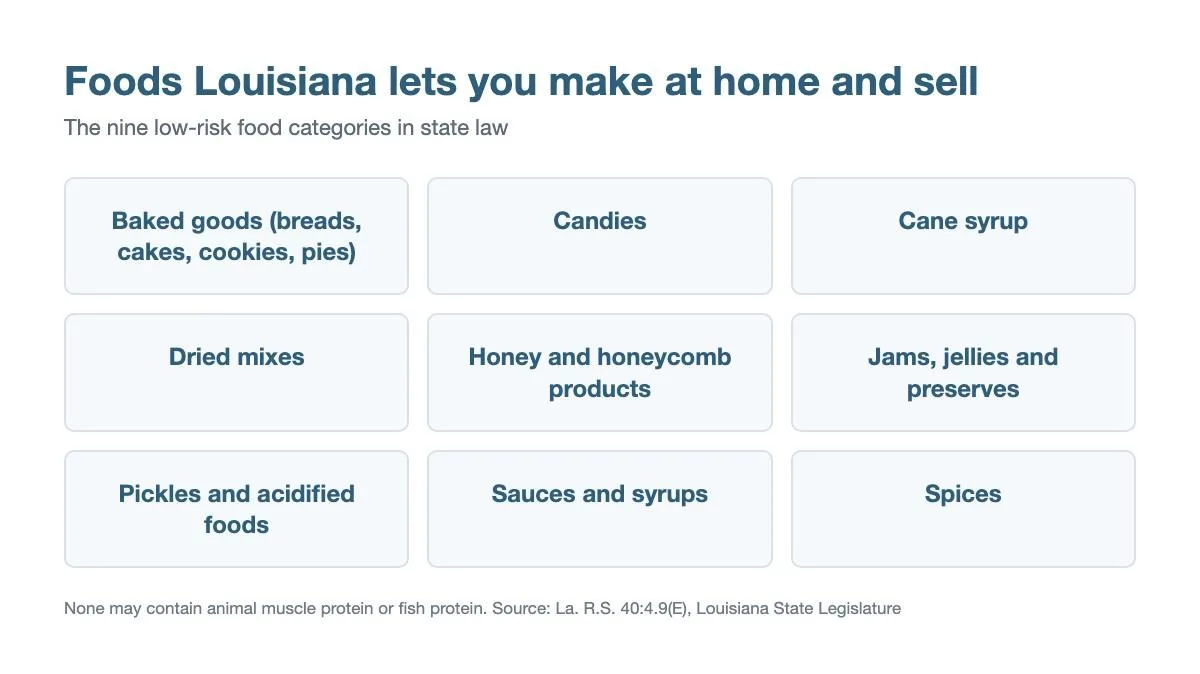
The nine low-risk food categories in La. R.S. 40:4.9(E).
Five Limits Every Louisiana Home Baker Works Within
The exemption is broad, but it comes with conditions. If you sell breads, cakes, cookies, or pies, five things matter most.
- No employees. The exemption does not apply to a preparer of those baked goods who employs anyone to help prepare them for sale. By law, a home bakery is a one-person kitchen.
- A sales ceiling. The section does not apply to a preparer whose gross annual sales equal $30,000 or more.
- Direct sales only. A home baker of breads, cakes, cookies, or pies may not sell to a retail business or to anyone for resale. No consignment at the coffee shop, no wholesale to a restaurant.
- A required label. Each item offered for sale must carry a label that clearly indicates the food “was not produced in a licensed or regulated facility.”
- Sales tax registration. A home preparer may not sell unless registered to collect applicable local sales and use taxes, shown by a current sales tax certificate from the collector for the parish where the sales happen.
The statute also sets kitchen conditions for baked goods. Openings must be protected against flies and other pests, pets must stay out of the baking area, equipment must be kept clean, perishable ingredients must be held at 45 degrees Fahrenheit or below, and food-contact surfaces must be cleaned and sanitized after each day’s production. Custard and cream fillings carry their own cooking and cooling rules, including pasteurized milk products only.
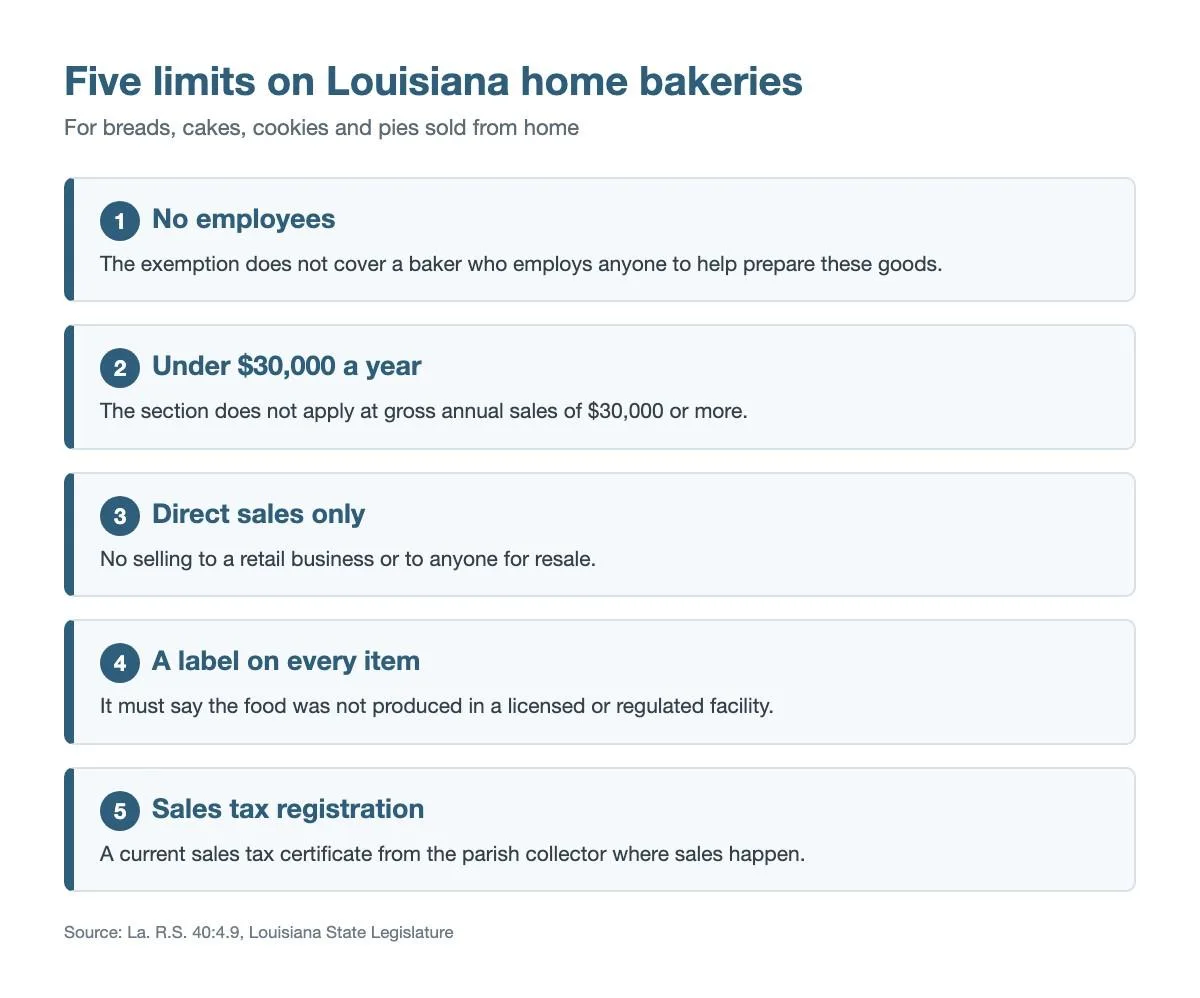
Five limits on home-baked goods sold under La. R.S. 40:4.9. Source: Louisiana State Legislature.
Registering for Sales Tax
The sales tax step is easy to overlook. The statute ties the right to sell directly to it, and the state’s tax agency is plain about the order of operations.
The Louisiana Department of Revenue’s business registration guidance tells new businesses to register for the tax accounts they need before they begin operating, and not to collect Louisiana sales tax unless they are registered. State accounts are set up through the department’s LaTAP system. Local sales tax in Louisiana is collected at the parish level, so a home baker should also contact the collector for the parish where sales take place.
What Changes When Orders Move Online
The statute does not mention websites, social media, or online ordering. It regulates how the food is made, labeled, and sold, not where the order is placed. A home baker can take orders by text, phone, or web form, as long as the sale stays direct to the customer.
That leaves room for a home baker to work online. A website can carry the full menu with prices, the holiday order dates, the pickup and delivery terms, and the required disclosure, all in one place that customers can share.
Mary Louise Cakez is one example. Harris, who bakes from recipes her grandmother taught her, took orders from a printed menu and her phone. She now has a Denham Springs home bakery’s website with an online order form, a posted menu and a Thanksgiving page with order and pickup dates. Customers who prefer it can still text or call the bakery to order.

Harris now takes orders through her website and by text. Photo: zdt_photography.
The site also follows the law’s direct-sale structure. Orders are picked up in Baton Rouge, Denham Springs, or Walker, or delivered for a fee, and the bakery does not ship. The home kitchen disclosure appears at the foot of every page.
Practical Steps Before Your First Sale
For a Louisiana baker thinking about selling from home, a short checklist covers most of the ground:
- Confirm that every item you plan to sell is on the statute’s low-risk list.
- Register for state tax accounts and get your parish sales tax certificate before you sell.
- Print the required label and put it on every item.
- Set up your kitchen to meet the statute’s conditions, including keeping pets out of the baking area.
- Decide how customers will order, pay, and pick up, and write it down where they can see it.
- Keep records of every sale so you know where you stand against the $30,000 threshold.
Room to Grow, Within the Lines
Louisiana’s home bakery law is short, and that is part of its appeal. A baker with a good recipe can start without building a commercial kitchen, as long as the baker works alone, sells direct, labels every item, and registers for sales tax.
A website does not change any of those rules. It makes the business easier to find, easier to order from, and easier to keep within the lines the law draws.

