
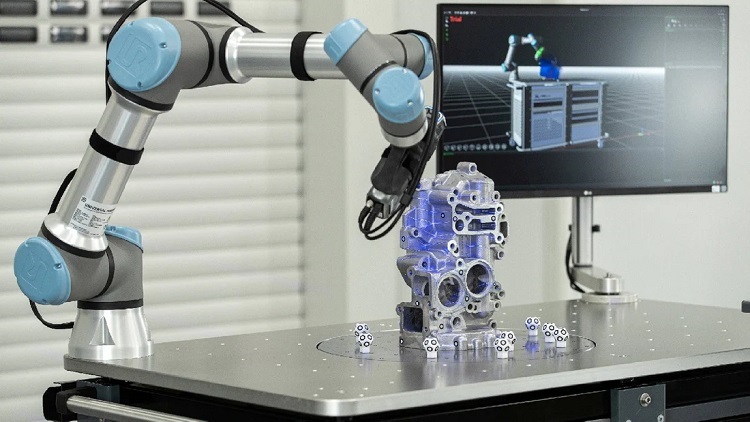
How 3D Scanning Services Improve Accuracy in Engineering
In today’s modern manufacturing environment, accuracy and reliability are paramount. Whether creating new designs or providing quality control, mechanical engineers and quality inspectors often depend upon precision measurement techniques to verify designs, check tolerances, and ensure that a part meets established standards. Professional 3D scanning services are becoming a trusted technology to meet these needs, and enable companies to reduce errors, reduce the time lost, and add production validation in order to accelerate product development.
What Makes 3D Scanning Accurate?
3D scanners are primarily accurate because of the millions of data points being gathered in seconds. With laser or structured light scanners, a mechanical engineer can generate high-resolution 3D Models of parts and assemblies. By contrast, conventional measurement methods measure certain values based on a known method in the design development process where a scan measures and creates a digital equivalency of the part with millions of data points, resulting in no, or few, holes or omissions. Read more on this page.
With a digitally precise level of measurement, mechanical engineers can find deviations in measuring parts dimensional attributes much earlier in the project. In some industries such as aerospace and automotive; just small deviations in measurement can create significant issues, therefore the degree of assurance that parts will in fact behave reliably in the real world is improved. For quality managers in a company, the 3D scanning mandated process can also comply with many of the quality standards that are being established more and more in industry each passing year.
Differences Between Laser Scanning and CMM
Both CMM’s and 3D laser scanning are trusted dimensional measurement systems, but they are inherently different. CMM’s take measured points directly, through some level of contact, making them incredibly precise, but they are typically orders of magnitude slower. Laser scanning, however, does not require contact and can measure entire surfaces quickly.
Both techniques have their advantages. CMM inspection is essential for parts with very critical tolerances, whereas 3D scanning provides speed and flexibility to capture freeform surfaces. Many companies are using both and gaining efficiencies that come with speed and accuracy. This compressing of speed and accuracy into the same part process is particularly advantageous when dependent on 3D Engineering Scanning Services, as efficiency and reliability must work together. Hybrid workflows allow qualified engineers to choose the best method based on geometry and tolerances.
Reducing Errors in Complex Parts
Conventional tools can be challenging to use in measuring complex parts with curved surfaces, internal cavities or geometries that are difficult to visualize. 3D scanning meets this challenge by providing measuring of all surfaces in detail. Engineers can compare as-produce scan data to CAD models and quickly identify deviations that demonstrate whether the parts are within tolerance or not.
- It reduces the chance of leaving features out of inspection.
- It can quantify warping, shrinkage or machining errors early in the process.
- It can ensure consistent parts if being manufactured repetitively at high volumes.
This capability reduces costly rework, and defective components are unlikely to reach the assembly stage. Over time, this drives continuous process improvement, increases confidence in production and leads to consistently better final products.
Benefits for Product Development
3D scanning is also able to decrease product development cycles. In addition to inspection applications, engineers can reverse engineer parts, create digital twins and simulate conditions prior to producing physical prototypes. These advantages effectively simplify the design validation process and minimize the number of prototype iterations with high accuracy.
Manufacturers will also share a significant advantage in terms of better collaboration; teams and suppliers can easily share 3D scan data, and everyone automatically receives the same reference if using a digital model. This reliance on a digital model reference point also minimizes miscommunication that causes timelines and projects to be delayed.
- Promotes rapid prototype protections with reduced risk. Check out https://www.sciencedirect.com/topics/earth-and-planetary-sciences/rapid-prototyping for more details.
- Offers highly accurate reverse engineering of legacy parts
- Provides better signoff and timing for design and production teams
All of the benefits are certainly not limited to accuracy alone, but overall engineering workflow efficiency is enhanced. As companies continue to provide efficiencies and time to market, companies will want to be including 3D scanning as early in the process as possible.
Case Examples in Precision Engineering
There are already industries making measurable improvements by integrating 3D scanning into precision measurement practices. For example, laser scanning within the automotive industry can measure and validate the fit of body panels accurately if there is a chance of assembly misalignment. In the aerospace industry, scanning turbine blades and structural components that require much tighter tolerances to mitigate safety and performance failures.
Even in the energy and heavy equipment sectors, where conventional measurements were conducted traditionally, 3D scanning has become necessary when inspecting the degrading wear of large machines. The expansion of the technology has made it exponentially reliable and versatile to apply to precision engineering in a very short time frame. Compounding speed, precision and flexibility establish 3D scanning as a new benchmark for accuracy in measurements.